


























































































































































































































Which State Leads Star Fruit Production in India
Kerala leads India in star fruit production thanks to its tropical climate and backyard farming. Explore where kamrakh grows and why this fruit thrives here.
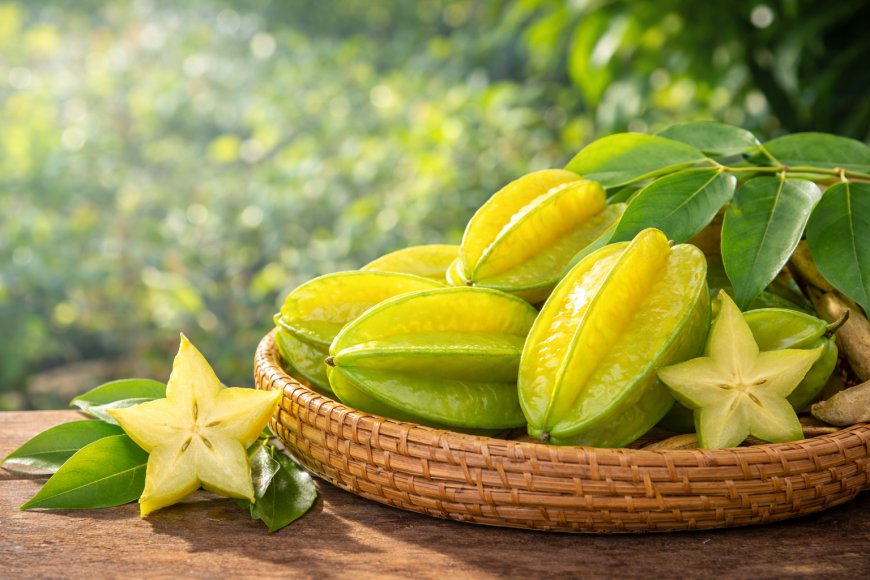
Star fruit, locally known as Kamrakh, is a tropical fruit easily recognised by its star-shaped slices when cut across. Though not as commercially dominant as mango or banana, the fruit has a steady presence in Indian markets, especially in regions with warm and humid climates. Agricultural experts and horticulture reports frequently point to Kerala as one of the country’s leading producers of star fruit because of its favourable growing conditions and widespread backyard cultivation.
The fruit comes from the tree species Averrhoa carambola, which thrives in tropical and subtropical climates. Across India, the fruit appears in local markets during its peak season and is used in juices, salads, pickles, and traditional preparations.
A Crop That Thrives in Tropical Conditions
Star fruit trees grow best in regions that receive consistent rainfall and maintain warm temperatures throughout the year. Unlike plantation crops that require large commercial orchards, star fruit is often grown in home gardens, mixed orchards, and small farms.
The tree can grow between five and twelve meters tall and usually begins bearing fruit within a few years after planting. Its yellow-green fruit develops a glossy surface and five ridges that form the characteristic star shape when sliced.
Farmers generally cultivate two main types of star fruit:
-
Sweet varieties, eaten fresh or used in juices and fruit salads.
-
Sour varieties are commonly used in pickles, chutneys, and cooking.
Because the tree adapts well to mixed farming systems, it is often planted alongside crops such as coconut, banana, or arecanut.
Why Kerala Stands Out
Star Fruit Cultivation Across Other States
Although Kerala leads in production, star fruit is not limited to a single state. The crop grows in several other tropical and subtropical regions of India.
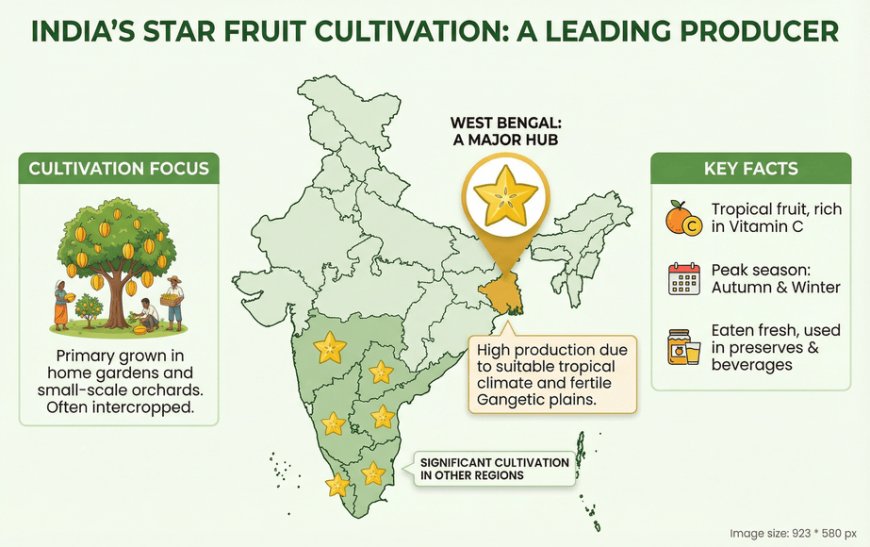
In Karnataka, the fruit is commonly found in coastal districts and the Western Ghats region. Farmers often cultivate it along with arecanut and coconut plantations.
Parts of Tamil Nadu also support star fruit cultivation, particularly in humid districts and hill slopes where tropical fruit trees grow well.
Similarly, West Bengal produces star fruit through small-scale garden farming. The fruit appears in local markets and roadside stalls, especially in rural areas.
The northeastern region, including Assam, offers another favourable environment. With warm weather and high humidity, star fruit trees grow naturally and are sometimes found in semi-wild conditions.
Despite these contributions, Kerala’s climate and widespread household cultivation still place it among the top producers.
Nutritional Value and Culinary Uses
Star fruit is not only visually distinctive but also nutritionally beneficial. The fruit contains several nutrients and antioxidants that make it appealing for healthy diets.
Some of its key nutritional components include:
-
Vitamin C, which supports immune health
-
Dietary fiber beneficial for digestion
-
Potassium, important for heart and muscle function
-
Natural antioxidants, which help combat oxidative stress
In Indian kitchens, star fruit appears in a variety of preparations. Fresh slices are sometimes eaten with salt or spices. The fruit is also used to prepare juices, salads, pickles, and chutneys.
In some regional cuisines, the sour variety acts as a natural souring ingredient, much like tamarind or raw mango.
Market Potential for the Fruit
Despite being widely grown in tropical regions, star fruit remains a niche fruit in India’s commercial agriculture sector. Most production is consumed locally rather than exported.
However, several trends are beginning to draw attention to the fruit:
-
Rising demand for exotic and visually distinctive fruits
-
Growing interest in nutrient-rich tropical produce
-
Increased use in the hospitality and beverage industries
Hotels, restaurants, and juice bars sometimes use star fruit as a garnish because of its unique star-shaped slices.
Agriculture experts suggest that improved supply chains and post-harvest handling could allow farmers to expand the fruit’s commercial potential.
Challenges Facing Farmers
Even though star fruit trees grow easily in tropical environments, the crop faces a few challenges in India.
Some of the main issues include:
-
Limited awareness among farmers about improved varieties
-
Lack of organised commercial orchards
-
Short shelf life, which makes long-distance transport difficult
-
Limited export infrastructure for niche fruits
Addressing these issues could help farmers scale up production and improve market access.
Outlook for Star Fruit in India
Star fruit remains a small but distinctive part of India’s horticulture landscape. The fruit’s adaptability to tropical climates has allowed it to grow across multiple regions, but Kerala continues to stand out as the state most closely associated with its cultivation.
As consumer interest in unusual and nutrient-rich fruits grows, the crop may see wider cultivation in the future. With better farming practices, improved storage systems, and stronger market networks, star fruit could gradually find a larger place in India’s fruit economy.
What's Your Reaction?
 Like
0
Like
0
 Dislike
0
Dislike
0
 Love
0
Love
0
 Funny
0
Funny
0
 Angry
0
Angry
0
 Sad
0
Sad
0
 Wow
0
Wow
0