
Oracle Weighs Major Job Cuts Amid AI Shift Outlook
Oracle weighs significant job cuts as rising AI data-centre spending reshapes strategy, cost structure, and global workforce priorities amid tech sector shifts.
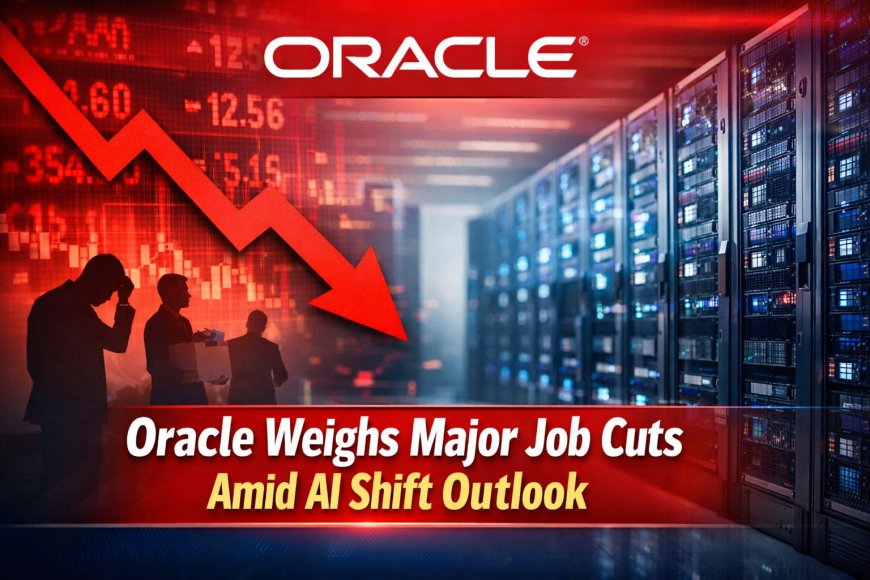
Reports suggest that global software giant Oracle is considering cutting between 20,000 and 30,000 jobs worldwide as part of efforts to free up cash for an ambitious expansion of artificial intelligence (AI) data-centre infrastructure. The potential workforce reduction, if implemented, would be among the largest in the company’s recent history and signifies how capital expenditure (capex) for AI projects is reshaping the financial structure of traditional enterprise software leaders.
Oracle has not released an official statement confirming specific layoff figures. However, financial analysts and investment banks such as TD Cowen have highlighted that the job cuts are being considered in the context of funding challenges for AI data centre buildouts that could run into the hundreds of billions of dollars.
AI Data-Centre Capex and Workforce Strategy
Amazon, Microsoft and Google have all increased their spending on AI infrastructure in recent years, but Oracle’s AI push has distinct financing pressures. TD Cowen’s analysis suggests Oracle may need more than $150 billion in capital expenditure to build and support AI data centres that can handle next-generation workloads and long-term contracts with major AI clients. In part, these commitments are tied to cloud service agreements and capacity provisions for external partners.
Investment banks have reported that as US lenders pull back from funding large-scale AI projects, Oracle is exploring internal funding mechanisms, including workforce reductions, the sale of non-core assets, and other cost-cutting moves. This shift comes amid rising borrowing costs and greater scrutiny from both equity and debt investors.
Job cuts of this size — representing roughly 10–20 per cent of Oracle’s global workforce base of around 140,000–145,000 employees — would mark a sharp strategic pivot away from traditional software operations toward concentrated investment in cloud and AI infrastructure.
Context: Workforce Reductions and Prior Restructuring
Oracle’s workforce has already seen reductions in the past year. A late-2025 restructuring plan included cuts affecting approximately 10,000 employees as part of a broader effort to streamline operations and reallocate resources toward cloud services and emerging business areas.
In addition to the potential future cuts, analysts note that several regions and units tied to legacy software and non-core operations are likely to face the brunt of reductions, while teams working on cloud infrastructure, AI development and enterprise services may be comparatively insulated.
Investor Pressure and Financing Challenges
Sources indicate that several major banks have reconsidered their lending exposure to Oracle’s large AI data-centre projects. With rising interest rates and growing concern about the long payback period for such heavy infrastructure spending, some financiers have stepped back or tightened terms on loans for data-centre builds.
To address these concerns, Oracle has signalled plans to raise between $45 billion and $50 billion through a mix of equity and debt financing this year. Although this capital raise is intended to support the expansion of data-centre capacity, analysts say workforce restructuring remains a key lever to improve cash flow and operational efficiency.
Alongside workforce discussions, reports indicate Oracle is examining the sale of non-core business units such as the Cerner healthcare software division, originally acquired for $28.3 billion, to further reduce capital strain.
Market and Economic Impact
News of the potential job cuts has already influenced investor sentiment. In related developments from late 2025 and early 2026, Oracle’s shares experienced volatility amid broader concerns about debt-backed expansion plans and capital spending forecasts that far exceeded prior guidance.
Market analysts observe that massive AI infrastructure buildouts often carry high upfront costs with highly variable returns. Oracle’s cloud revenue continues to grow, but infrastructure spending has intensely compressed margins and pressured free cash flow, prompting a reevaluation of workforce and capex strategies.
Looking Ahead: Strategy and Execution Risks
The unfolding scenario at Oracle reflects broader industry dynamics where firms with large legacy workforces face difficult choices as they reallocate resources toward cloud and AI computing. Decisions on workforce reductions, asset sales and financing strategies are likely to unfold over the coming quarters, with implications for employee morale, talent retention and operational continuity.
Oracle’s leadership has reiterated confidence in long-term AI partnerships and strategic direction, even as financing challenges require more aggressive internal resource realignment. Analysts will be watching closely for formal announcements on job cuts, data-centre progress and capital allocation in earnings calls and investor presentations later this year.
What's Your Reaction?
 Like
0
Like
0
 Dislike
0
Dislike
0
 Love
0
Love
0
 Funny
0
Funny
0
 Angry
0
Angry
0
 Sad
0
Sad
0
 Wow
0
Wow
0

divya chawla
Author | Business & Startup Writer
Passionate about telling real stories behind business growth, entrepreneurship, and digital innovation. Focused on creating research-backed, human-centred content that highlights how ideas evolve into successful. Covers topics including startups, business strategy, creator economy, digital platforms, and emerging online opportunities.