Pakistan vs Netherlands – Match Report and Analysis
Pakistan face the Netherlands in the T20 World Cup 2026 opener in Colombo. Live updates, key events, match context and analysis from Group A action.
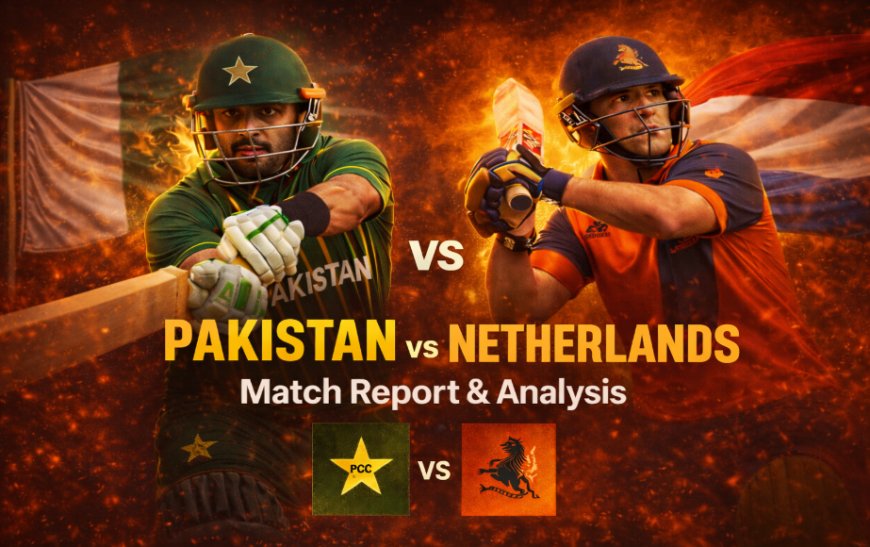
The ICC Men’s T20 World Cup 2026 got underway with its Group A opener on February 07, 2026, when Pakistan squared off against the Netherlands at the Sinhalese Sports Club in Colombo. The match carried particular significance for both teams: Pakistan seeking a confident start after a strong build-up, and the Netherlands aiming to spring a tournament upset on debut day.
The fixture marked the beginning of 55 scheduled matches across India and Sri Lanka, with the top two teams from each group advancing to the Super Eight stage. Group A also features India, Namibia and the United States of America, making every match vital for qualification prospects.
Pre-Match Context and Expectations
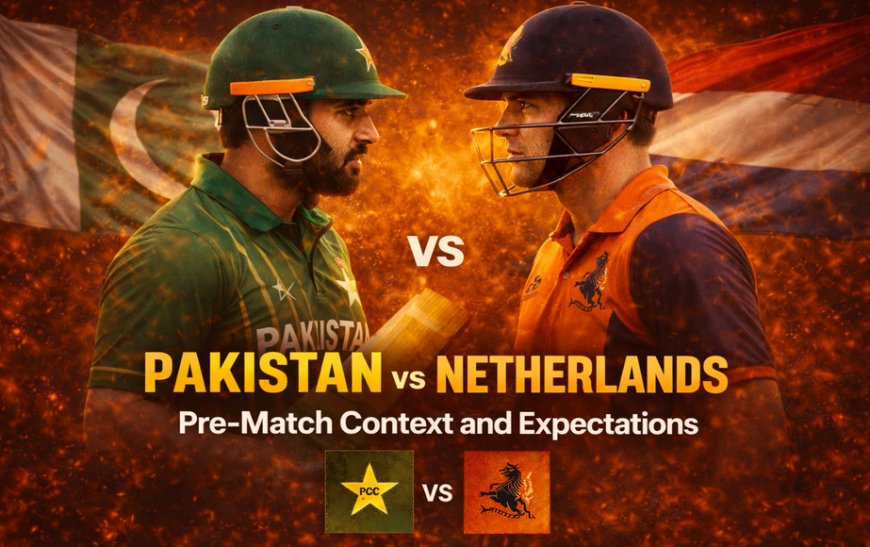
Pakistan entered the match in solid form, having demonstrated a formidable performance in a recent home T20 series. Star batter Babar Azam, widely regarded as one of the modern era’s most consistent T20 performers, was expected to provide focal leadership at the top of the order, especially after surpassing notable records such as numerous half-centuries in the format.
In contrast, the Netherlands came into the tournament with a mix of experienced international campaigners and emerging talents. Players such as Max O’Dowd, Bas de Leede and Scott Edwards offered a blend of attacking intent and tactical awareness; the Dutch squad had earlier secured their World Cup berth by winning the Europe regional qualifier, demonstrating resilience and adaptability.
Early Match Progress: Netherlands Bat First
Pakistan captain Salman Ali Agha won the toss and elected to field first, a strategic decision aimed at exploiting favourable bowling conditions early in the day. The Netherlands responded with measured aggression in the opening overs, with contributions from batters seeking to capitalise on early opportunities. They advanced to 50/2 in the power play, showing signs of momentum before disruptions from Pakistan’s bowling unit.
As the innings progressed, Pakistan’s spin and pace combination gained traction. Bowler Salman Mirza made a notable impact, taking multiple wickets and maintaining disciplined lines that slowed Dutch scoring. By the 19.5-over mark, the Netherlands were dismissed for 147 runs, a competitive total that tested Pakistan’s chasing capabilities.
Pakistan’s Chase: Early Tools and Shifting Momentum
In response, Pakistan’s chase began with intent. Opener Saim Ayub provided a brisk start, striking boundaries and setting a reasonable run rate early in the innings. For a period, Pakistan looked comfortable, with runs flowing at a competitive rate against disciplined Dutch bowling.
However, as the innings entered the middle overs, the match narrative shifted. Pakistan’s batting lost momentum after quick wickets, including the dismissal of captain Salman Ali Agha. The pressure of a stiff required run rate and regular breakthroughs for the Netherlands changed the momentum, leaving Pakistan in a precarious position around 102/5 by the 13th over.
Amidst this pressure, experienced batter Babar Azam attempted to stabilise the innings. Known for his elegant timing and tactical shot selection, Babar worked to rebuild the chase alongside partners lower down the order. Nevertheless, key partnerships were difficult to sustain against incisive Dutch bowling.
Turning Tides and Dutch Resistance
The Netherlands bowling attack, led by players such as Paul van Meekeren and Roelof van der Merwe, showed tactical discipline in executing variations and maintaining tight lines. Their ability to strike at regular intervals stymied Pakistan’s pursuit and occasionally shifted the balance in favour of the underdogs.
The match unfolded as a contest of strategic adaptations : Pakistan attempting to balance aggression and consolidation, and the Netherlands seeking to capitalise on every opportunity to make inroads and maintain pressure.
Match Significance and Broader T20 World Cup Narrative
This Group A encounter not only set the tone for Pakistan’s tournament campaign but also highlighted the unpredictability inherent in T20 cricket. Upsets and momentum swings are defining characteristics of the format, where single performances can alter outcomes rapidly.
Pakistan’s standing, influenced in part by a controversial decision to boycott their scheduled fixture against India later in the tournament, adds another layer of competitiveness and urgency to each match in the group. With the potential for a high-profile clash against India now uncertain, performances in matches like this opener carry added weight for qualification aspirations.
Player Performances Under the Spotlight
Beyond the collective team efforts, several individual performances drew attention:
-
Saim Ayub provided initial impetus in the chase, evidenced by boundary-rich strokes in the early overs.
-
Babar Azam, under scrutiny for consistency, worked to anchor parts of the innings even as wickets fell around him.
-
Dutch bowlers exhibited moments of tactical discipline that prevented extended partnerships from forming during Pakistan’s pursuit.
These performances echoed pre-match predictions that emphasised the need for balance between batting resilience and disciplined bowling in T20 World Cup conditions.
Conditions and Venue Impact
The Sinhalese Sports Club pitch in Colombo is known for offering variable assistance, depending on weather and preparatory conditions. On this occasion, bowlers found aspects of the turf conducive to variations in flight and spin, contributing to the Dutch bowlers’ effectiveness. Similarly, pacing sequences on the pitch required batters to constantly reassess their shot selection.
These factors often shape T20 matches in Sri Lanka, where conditions can shift even within a single session, adding another tactical layer for captains and coaching staff to consider.
Looking Ahead: Group A Dynamics
With this opening match complete, Pakistan’s next steps involve navigating further Group A fixtures where batters and bowlers alike must adapt to diverse conditions and opposition plans. For the Netherlands, competitive performances against higher-ranked teams signal a belief in their capacity to challenge expectations, even if qualification remains an uphill task.
The T20 World Cup 2026 continues to unfold across venues in India and Sri Lanka, with key matchups and emerging storylines capturing global attention. This Group A opener exemplified the blend of skill, strategy, and unpredictability that defines cricket’s shortest international format.
What's Your Reaction?
 Like
0
Like
0
 Dislike
0
Dislike
0
 Love
0
Love
0
 Funny
0
Funny
0
 Angry
0
Angry
0
 Sad
0
Sad
0
 Wow
0
Wow
0