Maharashtra Budget 2026: ₹2L Farm Loan Waiver
Maharashtra Budget 2026 announces crop loan waiver up to ₹2 lakh for farmers and continues the Ladki Bahin Yojana. Key highlights, schemes and economic plans explained.
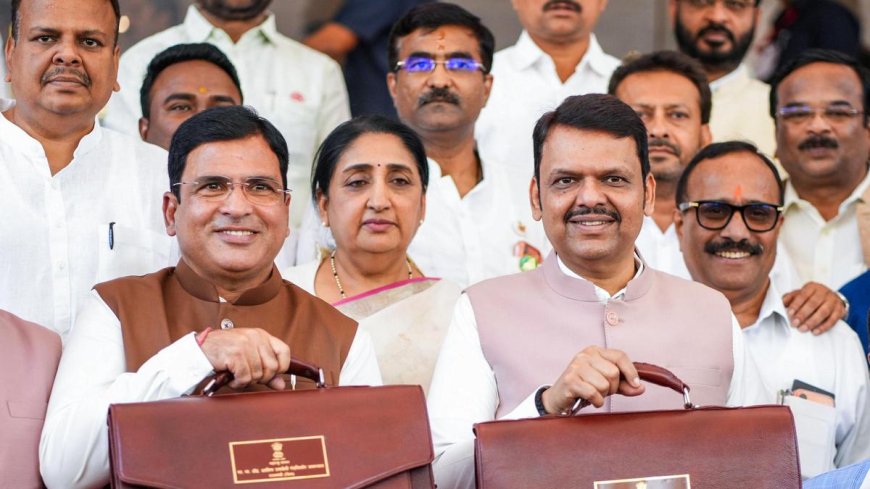
The Maharashtra government presented the Budget for the financial year 2026–27, focusing strongly on welfare measures for farmers and women, two groups that play a major role in the state’s socio-economic structure. Chief Minister Devendra Fadnavis, who also holds the finance portfolio, presented the budget in the state assembly and outlined initiatives aimed at boosting rural livelihoods, strengthening social security and supporting economic growth.
With an estimated budget outlay of ₹7.69 lakh crore, the government attempted to balance welfare spending with infrastructure and development projects. The budget also reflects Maharashtra’s long-term ambition of becoming a $5 trillion economy by 2047, aligning with the national vision of “Viksit Bharat.”
Two major announcements quickly grabbed attention — a crop loan waiver of up to ₹2 lakh for farmers and the continuation of the Mukhyamantri Majhi Ladki Bahin Yojana, which provides financial support to women from economically weaker families. These measures aim to reduce financial distress in rural areas while expanding welfare support.
The budget speech also carried emotional significance. Fadnavis dedicated the budget to late NCP leader Ajit Pawar, acknowledging his long contribution to the state’s financial administration.
Crop loan waiver up to Rs 2 lakh, Ladki Bahin Yojana makes headlines.
One of the most significant announcements in the Maharashtra Budget 2026 is the farm loan waiver scheme, aimed at providing relief to farmers struggling with debt. Under the Punyashlok Ahilyadevi Holkar Shetkari Karjmafi Yojana, the government will waive crop loans up to ₹2 lakh for eligible farmers.
The waiver applies to agricultural loans that were outstanding until September 30, 2025. The measure is expected to benefit thousands of farmers who often rely on loans to cover expenses related to seeds, fertilisers, irrigation and labour.
Key highlights of the loan waiver scheme
- Crop loan waiver of up to ₹2 lakh for eligible farmers
- Loans outstanding till September 30, 2025, will be covered.
- Implemented under Punyashlok Ahilyadevi Holkar Shetkari Karjmafi Yojana
- Aimed at reducing financial stress among farmers
- Helps farmers restart the next crop cycle without heavy debt
For many farmers, unpredictable weather conditions, fluctuating crop prices and rising input costs make farming financially risky. The loan waiver is therefore designed to provide immediate financial relief and improve rural economic stability.
Incentive for disciplined borrowers
The government also announced a ₹50,000 incentive for farmers who have regularly repaid their agricultural loans. This step aims to reward financial discipline while ensuring that the scheme does not only benefit loan defaulters.
Additional benefits for farmers
The Maharashtra Budget 2026 also includes several measures aimed at supporting agriculture and improving rural infrastructure.
Some of these include:
- Electricity subsidies for agricultural pumps
- Support for irrigation infrastructure
- Schemes aimed at reducing operational costs for farmers
- Policies focused on strengthening rural livelihoods.
These measures are expected to reduce farming costs and improve agricultural productivity across the state.
Ladki Bahin Yojana continues.
Another major highlight of the budget is the continuation of the Mukhyamantri Majhi Ladki Bahin Yojana, a welfare programme designed to support women from economically weaker households.
Under this scheme, eligible women receive ₹1,500 per month as direct financial assistance. The aim is to strengthen women’s financial independence and help them manage household expenses.
Key benefits of Ladki Bahin Yojana
- Monthly financial assistance of ₹1,500
- Direct benefit transfer to eligible women
- Supports women from economically weaker families
- Helps improve financial independence
- Assists households with basic expenses
Since its launch, the scheme has received significant attention for its focus on women’s empowerment and social welfare. Even a small monthly financial transfer can help families cover essential needs such as food, healthcare and children’s education.
Political and economic significance
The Ladki Bahin scheme also played a key role during the 2024 Maharashtra Assembly elections, where the ruling Mahayuti alliance secured a strong majority. Many analysts believe the scheme contributed to the coalition’s electoral success.
However, some economists have raised concerns about the long-term financial impact of large welfare programmes. Maharashtra already faces a significant debt burden, and projections suggest that the state’s total debt could cross ₹11 lakh crore in the coming financial year.
Despite these concerns, the government maintains that such welfare measures are necessary to ensure inclusive development and social security.
Focus on development and infrastructure.
In addition to welfare schemes, the Maharashtra Budget 2026 also includes announcements related to infrastructure, clean energy and regional development.
Key development priorities include:
- Expansion of industrial corridors
- Development of logistics hubs
- Investment in renewable energy projects
- Initiatives aimed at attracting large investments
- Job creation through infrastructure development
These initiatives are expected to strengthen Maharashtra’s position as one of India’s leading economic hubs while creating new employment opportunities.
Overall outlook
Overall, the Maharashtra Budget 2026 combines welfare initiatives with long-term economic planning. By focusing on farmer relief, women’s financial support and infrastructure development, the government aims to promote balanced growth across both rural and urban regions.
While the full impact of these announcements will become clear over time, the ₹2 lakh farm loan waiver and the continuation of the Ladki Bahin Yojana have already emerged as the defining highlights of this year’s budget. These policies reflect the government’s attempt to address both economic development and social welfare simultaneously.
What's Your Reaction?
 Like
0
Like
0
 Dislike
0
Dislike
0
 Love
0
Love
0
 Funny
0
Funny
0
 Angry
0
Angry
0
 Sad
0
Sad
0
 Wow
0
Wow
0

khushi
I am an author and dedicated to writing professional articles and blogs on technology, artificial intelligence, digital marketing, and emerging trends. I focus on delivering well-researched, informative, and insightful content that helps readers stay updated in the rapidly evolving digital landscape.