India Job Market 2026: Top Careers & Skills
Explore India’s job market in 2026, including fastest-growing careers, in-demand skills, and hiring trends shaping future job opportunities.
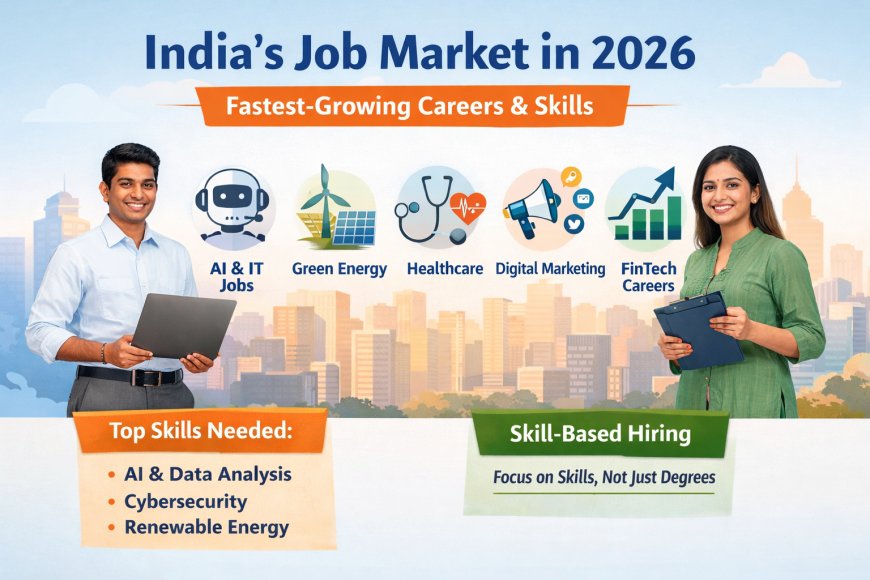
India’s job market is not quietly evolving — it is being reshaped in real time. By 2026, the roles organisations hire for, the skills they prioritise, and the way careers are built will look noticeably different from what most professionals were prepared for.
Digital transformation, artificial intelligence, sustainability targets, and new working models are no longer future possibilities. They are already influencing hiring decisions across Indian companies — from startups to global enterprises.
For students, fresh graduates, and experienced professionals alike, this shift presents a clear choice: adapt early or risk falling behind.
This article looks at where India’s job market is realistically headed by 2026, which careers are gaining genuine momentum, and which skills will actually influence hiring decisions — not just look good on paper.
How the Indian Job Market Is Changing at Its Core
India remains one of the world’s fastest-growing economies, driven by technology services, manufacturing expansion, and policy-led initiatives such as Digital India, Make in India, and the transition towards clean energy. However, economic growth alone does not explain the transformation underway.
What is changing most is how employers assess talent.
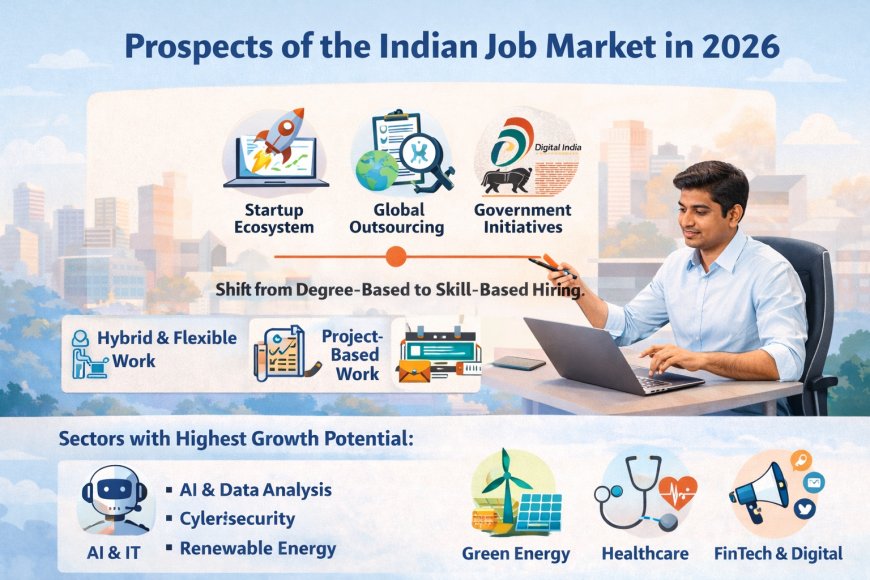
Organisations are steadily moving away from degree-first hiring towards skill-first evaluation. The emphasis is shifting to problem-solving ability, hands-on experience, and the capacity to learn quickly — not just academic qualifications.
Another structural change is the way work itself is organised. Hybrid roles, project-based contracts, and freelance assignments are becoming common across technology, marketing, consulting, and even finance functions. By 2026, flexibility will not be an added benefit — it will be part of the baseline expectation.
Sectors Expected to Drive Employment Growth by 2026
1. Technology, Artificial Intelligence, and Cybersecurity
Technology will remain central to India’s employment story, but the nature of demand is changing. Entry-level development roles are becoming more competitive, while advanced and specialised capabilities are seeing sustained demand.
Roles expected to grow include:
- AI and Machine Learning Engineers
- Data Scientists and Data Engineers
- Cloud Architects and DevOps Professionals
- Cybersecurity Analysts and Risk Specialists
Companies are no longer hiring purely for technical execution. Professionals who understand system design, scalability, automation, and business impact are becoming significantly more valuable than those with narrow technical skills.
2. Green Energy and Sustainability Careers
Sustainability is no longer limited to policy discussions or corporate reports. India’s push towards renewable energy, electric mobility, and environmental compliance is creating tangible career opportunities.
Roles gaining momentum include:
- Renewable Energy Engineers
- Sustainability and ESG Consultants
- Electric Vehicle Technology Specialists
- Environmental and Climate Data Analysts
These roles require a blend of technical understanding, regulatory awareness, and long-term thinking. Professionals with hands-on exposure to clean technologies and sustainability frameworks are particularly well-positioned.
3. Healthcare, Biotechnology, and Digital Health
Healthcare in India is expanding beyond traditional hospital-centric roles. Technology-enabled healthcare services, telemedicine platforms, and biotech research are reshaping the sector.
Emerging roles include:
- Health Data Analysts
- Biomedical Engineers
- Clinical Research Specialists
- Digital Health and Telemedicine Consultants
Healthcare professionals who combine domain expertise with analytical or technical skills will find themselves at a distinct advantage in this evolving landscape.
4. Digital Marketing and the Creator Economy
As competition for online attention intensifies, digital presence has become essential for businesses across sectors. This has sustained demand for professionals who understand performance-driven growth rather than surface-level promotion.
Key roles include:
- Performance Marketing Specialists
- SEO Strategists
- Content Marketing Managers
- Social Media Growth Analysts
Alongside traditional roles, the creator economy continues to mature, offering professionals alternative income paths through personal brands, digital products, and audience-led platforms.
5. Finance, FinTech, and Business Analytics
Finance roles are undergoing a quiet transformation. Data-driven decision-making, digital payments, and FinTech platforms are changing how financial services operate.
High-growth roles include:
- Financial Analysts with Technical Expertise
- Risk and Compliance Analysts
- Business Intelligence Professionals
- FinTech Product Managers
Professionals who can bridge finance knowledge with analytics and technology are increasingly difficult to replace.
Skills That Will Influence Hiring Decisions in 2026
Technical Skills with Cross-Industry Demand
Certain technical skills are becoming valuable across sectors, not just within technology companies:
- Artificial intelligence and machine learning fundamentals
- Data analysis and visualisation
- Cloud platforms such as AWS, Azure, and Google Cloud
- Cybersecurity and digital risk management
- Automation tools and low-code platforms
These skills are now relevant in healthcare, finance, marketing, logistics, and manufacturing — not just IT.
Human Skills That Determine Long-Term Success
While technical skills may secure interviews, long-term growth depends heavily on soft skills. Employers increasingly value:
- Critical thinking and structured problem-solving
- Clear communication and collaboration
- Adaptability and willingness to learn
- Emotional intelligence and leadership potential
Professionals who combine technical capability with strong interpersonal skills consistently outperform those who rely on expertise alone.
Degrees vs Skills: A Noticeable Shift in Hiring Philosophy
One of the most visible changes in India’s hiring landscape is the reduced dependence on degrees as the sole measure of competence. Employers are paying closer attention to:
- Practical experience
- Real-world projects and portfolios
- Relevant certifications
- Internships, freelancing, and applied learning.
This shift benefits self-learners, career switchers, and professionals who focus on building real capabilities rather than accumulating credentials.
What Students and Professionals Should Focus on Now
To remain relevant in 2026, career planning must be intentional. Practical steps include:
- Continuously upgrading skills through credible learning platforms.
- Building strong digital profiles and work portfolios
- Gaining experience through internships, freelance work, or side projects
- Staying aware of industry trends and changing work models
Waiting for opportunities to appear is no longer a viable strategy. Careers today must be actively shaped.
Conclusion
India’s job market in 2026 will reward adaptability, skill depth, and long-term thinking. Opportunities will exist across technology, sustainability, healthcare, finance, and digital marketing — but only for those prepared to meet evolving expectations.
The biggest threat is not automation or artificial intelligence. It is professional stagnation. Those who invest in learning, skill-building, and purposeful career planning today will not merely survive the changing job market — they will help define it.
What's Your Reaction?
 Like
0
Like
0
 Dislike
0
Dislike
0
 Love
1
Love
1
 Funny
0
Funny
0
 Angry
0
Angry
0
 Sad
0
Sad
0
 Wow
0
Wow
0

Suresh_Sawar
I am an Author and Content Writer passionate about creating clear, engaging, and meaningful content. I enjoy turning ideas into words that connect with readers and deliver real value. My focus is always on quality, creativity, and audience-focused writing that makes an impact.