Trump Imposes 10% Global Tariff After Supreme Court Ruling
Donald Trump announced a 10% global tariff after the Supreme Court struck down his emergency-based trade regime, reshaping US import policy.
Washington, February 20, 2026:
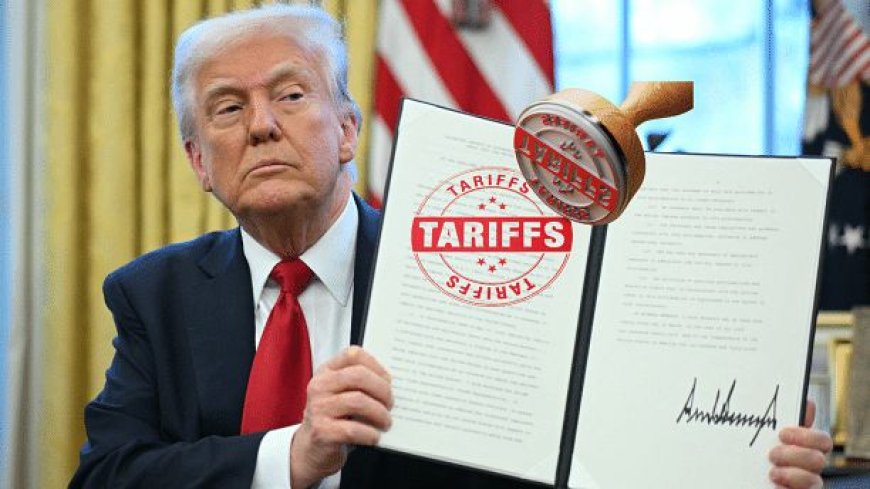
US President Donald Trump has announced a new 10% tariff on imports from nearly all countries, hours after the US Supreme Court struck down his earlier emergency-based tariff framework in a 6–3 ruling. The move marks a swift policy shift aimed at preserving his trade strategy despite a significant judicial setback.
Supreme Court Rejects Emergency Tariff Authority
The Supreme Court ruled that the President had exceeded his authority by using the International Emergency Economic Powers Act (IEEPA) to impose broad commercial tariffs. The 1977 law was originally designed to address national security emergencies, not to serve as a basis for wide-ranging import duties.
In its majority opinion, the Court stated that Congress must clearly authorise tariff powers when granting them to the executive branch. Chief Justice John Roberts wrote that such authority requires “clear and careful constraints,” which were not present in the administration’s use of IEEPA.
The ruling drew attention for its cross-ideological alignment. Two justices appointed by Trump joined the majority, while three conservative justices dissented. The decision effectively invalidated tariff measures that had generated approximately $129 billion in revenue by late 2025, according to administration estimates.
White House Responds With New 10% Tariff.
Within hours of the ruling, President Trump signed an executive order imposing a flat 10% import surcharge on goods from most US trading partners. The administration described the measure as temporary, set to run for 150 days.
In a statement issued after the signing, Trump characterised the move as necessary to protect American economic interests. The White House indicated that the surcharge is intended to serve as a bridge while the administration restructures its broader trade policy framework.
Officials confirmed that existing tariffs under Sections 232 and 301, including duties on steel, aluminium, and certain Chinese goods, will remain in effect. The administration has also initiated new Section 301 investigations related to alleged unfair trade practices.
Legal Basis and Historical Precedent
Unlike the previous tariff regime, the new 10% surcharge is not tied to emergency powers. Instead, it appears structured under alternative trade authorities that allow temporary import restrictions under specific economic conditions.
Trade analysts note that the measure resembles the import surcharge introduced by President Richard Nixon in 1971, which was framed as a short-term response to balance-of-payments pressures. However, questions remain about how the courts may view the new legal rationale if challenged.
Market and Business Impact
The immediate economic effect is a 10% cost on most imported goods entering the United States for at least 5 months. Importers, manufacturers and retailers now face renewed uncertainty over pricing, contracts and supply chain decisions.
Financial markets reacted cautiously as investors assessed the implications of another broad-based tariff layer. Businesses planning procurement cycles over the next six to twelve months will need to incorporate the surcharge into cost projections.
The Supreme Court’s ruling had also opened the possibility that companies might seek refunds on previously collected IEEPA-based tariffs. The administration’s rapid introduction of a replacement measure may limit perceptions that US trade policy is softening.
Implications for Trade Partners
Governments and exporters worldwide are reviewing the implications of the new tariff. While framed as temporary, the measure reinforces the administration’s reliance on import duties as a central trade policy instrument.
In the case of India, US officials have stated that there is no change to the bilateral trade understanding reached earlier this month. The 2 February US–India trade framework remains intact, according to statements from both sides.
Indian officials are expected to treat the 10% surcharge as part of Washington’s broader global trade adjustments rather than a targeted revision of the bilateral arrangement. However, Indian exporters may still feel the commercial impact if the surcharge applies to their shipments.
Broader Policy Signals
The episode highlights growing tension between executive trade actions and judicial oversight. The Court’s decision establishes limits on the use of emergency laws for economic policy, reinforcing congressional authority over tariff powers.
At the same time, the administration’s swift response underscores that tariffs remain a core feature of current US economic strategy. Even after a judicial rebuke, the White House has signalled it will continue to pursue alternative legal avenues to maintain import duties.
For global trade partners, the key issue is predictability. Businesses must now track not only tariff rates but also the statutory foundations on which they rest. The evolving legal landscape adds another layer of complexity to cross-border commerce.
What Comes Next
Several developments will determine the longer-term impact of the 10% surcharge:
-
Whether Congress challenges or supports the administration’s revised tariff framework
-
Potential legal challenges to the new measure
-
Reactions from major trading partners
-
Market adjustments during the 150 days
If the surcharge is extended or replaced with additional targeted measures, the global trade environment could face further volatility. If it remains temporary, it may be viewed as a transitional adjustment following the Court’s decision.
For now, the United States remains committed to a tariff-driven trade posture. The Supreme Court has drawn clear limits around emergency powers, but the administration has demonstrated its willingness to pivot quickly within the broader trade law framework.
The coming months will show whether this 10% global tariff becomes a short-lived response to a judicial ruling or the foundation of a more permanent restructuring of US trade policy.
What's Your Reaction?
 Like
0
Like
0
 Dislike
0
Dislike
0
 Love
0
Love
0
 Funny
0
Funny
0
 Angry
0
Angry
0
 Sad
0
Sad
0
 Wow
1
Wow
1