



























































































































































































































Rising Oil Prices Could Shake Global Business 2026
Rising oil prices in 2026 threaten global businesses by increasing costs, disrupting supply chains, and fueling inflation across major economies and industries.
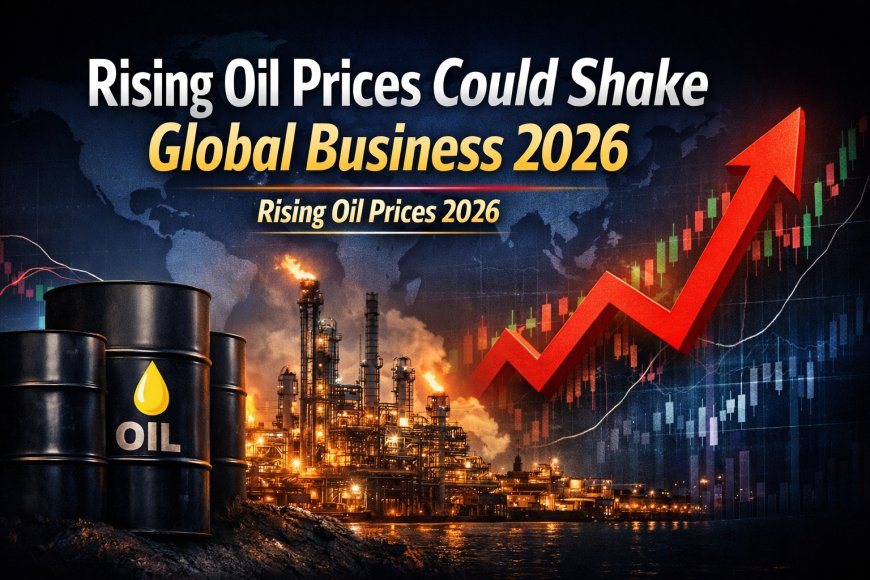
Rising oil prices have once again become a major topic in global economic discussions in 2026. Energy markets have seen sharp price movements due to geopolitical tensions and disruptions in supply. In late February and early March, crude oil prices increased significantly after a conflict involving Iran affected exports from the Middle East. This region supplies a large portion of the world’s oil, so any disruption can quickly impact global markets.
When oil prices increase, the effects spread across many industries. Transportation costs rise, manufacturing becomes more expensive, and global trade can slow down. Energy analysts and financial institutions are closely monitoring these changes because unstable oil markets can influence inflation, business investments, and economic growth in many countries.
Geopolitical Tensions Driving the Price Surge
One of the main reasons behind the recent increase in oil prices is the escalating geopolitical conflict involving Iran and several Western allies. These tensions have affected shipping routes and production facilities in the Middle East, which is one of the most important regions for global oil supply.
A key area affected by the situation is the Strait of Hormuz, a narrow but critical shipping route that connects the Persian Gulf with global markets. Around one-fifth of the world’s oil shipments pass through this route every day. When security concerns arise in this region, oil traders react quickly because any disruption can affect global supply.
In the first week of March 2026, oil markets responded strongly to these developments. Benchmark crude prices increased rapidly as fears of supply shortages grew.
Some key developments during this period include:
-
Brent crude prices briefly crossed $90 per barrel.
-
U.S. West Texas Intermediate crude climbed above $91 per barrel
-
Several Middle Eastern oil facilities experienced production disruptions
-
Exports from countries such as Iraq and Kuwait were temporarily affected.
-
Oil tankers carrying nearly 85 million barrels of crude were delayed in the Persian Gulf.
Because the Middle East remains a major supplier of global energy, even short-term disruptions can cause significant price fluctuations.
Oil Market Conditions Before the 2026 Price Increase
Before these geopolitical events, many analysts expected oil markets to remain relatively stable during 2026. Global oil production had been gradually increasing, and several financial institutions predicted moderate prices for the year.
Forecasts suggested that Brent crude might average between $55 and $76 per barrel, depending on supply levels and global demand. However, the situation changed quickly once political tensions intensified.
Energy markets are highly sensitive to geopolitical developments. Even small supply disruptions can trigger sharp price movements when traders expect shortages or when global inventories begin to decline.
Another important factor in the oil market is Iran’s production capacity. According to energy research groups, Iran produces approximately 3.3 million barrels of crude oil per day. This makes the country an important contributor to global supply. If exports from Iran are reduced for an extended period, the global market can quickly become tighter.
The sudden shift from expected stability to price volatility shows how closely energy markets are connected to political events.
Impact on Global Businesses and Supply Chains
Rising oil prices have direct consequences for businesses across many sectors. Energy is one of the most essential inputs for modern economies, and higher fuel costs affect almost every industry.
Transportation and logistics companies are among the first to feel the impact. Fuel represents a large portion of their operating expenses. When oil prices rise, shipping costs increase, and this affects the cost of moving goods across international markets.
Airlines also face strong pressure during periods of high oil prices because jet fuel is one of their biggest expenses. If fuel prices remain high for a long time, airlines may increase ticket prices or reduce routes in order to manage costs.
Manufacturing industries also experience indirect effects. Many industrial products depend on petroleum-based materials, including plastics, chemicals, and synthetic fibres. When oil becomes more expensive, the price of these raw materials also increases.
Businesses generally respond to higher energy costs in several ways:
-
Increasing product prices
-
Reducing operational expenses
-
Improving energy efficiency
-
Adjusting supply chains
Financial markets also react to these developments. Energy company stocks often rise during periods of higher oil prices, while industries that depend heavily on fuel may experience pressure on profits.
Inflation Risks and Government Responses
Economists often link rising oil prices with inflation because energy costs affect many parts of the economy. When fuel becomes more expensive, transportation costs increase. These higher costs are eventually passed on to consumers through higher prices for goods and services.
Central banks and policymakers closely watch oil market developments for this reason. If energy prices remain high for a long time, they can complicate efforts to control inflation.
Officials at the U.S. Federal Reserve have stated that energy shocks can temporarily influence consumer prices. However, they also believe the long-term impact may be limited if supply conditions improve.
In emerging economies such as India, the situation can create additional challenges. Many developing countries import large amounts of oil to meet domestic demand. When global prices increase, import costs rise, which can widen trade deficits and increase government spending on fuel subsidies.
Some of the major concerns for policymakers include:
-
Rising transportation costs
-
Higher electricity generation expenses
-
Increased subsidy spending in developing countries
-
Pressure on national trade balances
Because of these risks, governments and central banks continue to monitor energy markets closely.
Market Outlook and Industry Expectations
Energy analysts have different opinions about how long the current surge in oil prices might last. Some market experts believe the situation could stabilise if geopolitical tensions ease and normal shipping routes resume.
Others warn that prolonged conflict could push prices even higher. Analysts at financial institutions such as Barclays have suggested that Brent crude prices could reach $120 per barrel if supply disruptions continue for several weeks.
Despite these short-term uncertainties, long-term projections still suggest that increased production from other countries could eventually balance the market. Major producers such as the United States and Brazil have been expanding their oil output in recent years.
Businesses are already preparing for possible fluctuations in energy prices by adopting several strategies:
-
Expanding fuel hedging programs
-
Diversifying supply chains
-
Investing in energy-efficient technologies
-
Improving operational efficiency
These strategies help companies manage risk during periods of market volatility.
Energy Transition and Long-Term Changes
The recent surge in oil prices has also renewed discussions about the global transition toward cleaner energy sources. Governments and businesses around the world have already been investing heavily in renewable energy technologies, electric vehicles, and alternative fuels.
Periods of high oil prices often accelerate this transition. When fossil fuels become more expensive, renewable energy sources become more attractive from an economic perspective.
Solar power, wind energy, and electric transportation systems are gradually becoming more competitive compared to traditional energy sources.
However, energy experts point out that oil will remain an important part of the global energy system for many years. While renewable energy is expanding rapidly, industries such as aviation, shipping, and heavy manufacturing still rely heavily on petroleum products.
The long-term energy landscape is therefore likely to include both traditional and renewable sources, with gradual changes taking place over time.
Conclusion
The rise in oil prices during 2026 highlights how closely global energy markets are connected to geopolitical events. Conflicts, supply disruptions, and political tensions can quickly influence oil prices, which in turn affect businesses, governments, and consumers worldwide.
Higher oil prices increase operating costs for industries such as transportation, manufacturing, and logistics, while also creating inflation concerns for policymakers. At the same time, these developments encourage businesses and governments to explore alternative energy solutions and improve efficiency.
As global markets continue to respond to changing political and economic conditions, oil prices will remain a key factor shaping the future of international trade and economic stability
What's Your Reaction?
 Like
0
Like
0
 Dislike
0
Dislike
0
 Love
0
Love
0
 Funny
0
Funny
0
 Angry
0
Angry
0
 Sad
0
Sad
0
 Wow
0
Wow
0