AI Spots Silent Heart Attacks in Seconds, 95% Accurate
AI predicts silent heart attack and stroke risk in seconds with 95% accuracy. Discover how this smart ECG technology helps doctors diagnose faster and save lives.
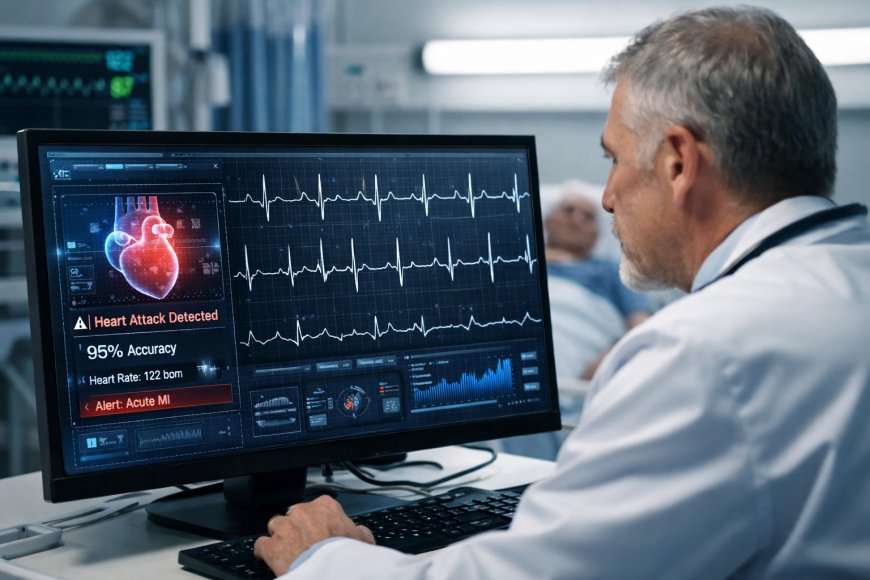
Healthcare is becoming smarter and faster with the help of new computer-based systems. One of the most exciting and hopeful advances is how AI can help doctors identify heart attack and stroke risks more quickly and accurately. A new study reveals that with the aid of AI, serious heart attacks can be detected in seconds with up to 95% accuracy. This could help doctors start treatment much earlier and save many lives.
What Is a Heart Attack and Why Early Detection Matters?
A heart attack happens when blood flow to a part of the heart is blocked. Without blood, the heart muscle begins to die. This can cause severe damage or even death if treatment does not start quickly. Doctors say that every minute counts during a heart attack. The sooner a patient gets proper care, the better the chances of survival.
However, not all heart attacks show strong symptoms. These are called silent heart attacks. People may not feel chest pain or very obvious signals, so they might delay seeking help. Silent heart attacks can also lead to future heart disease or stroke. This is why early and hidden warning detection is very important.
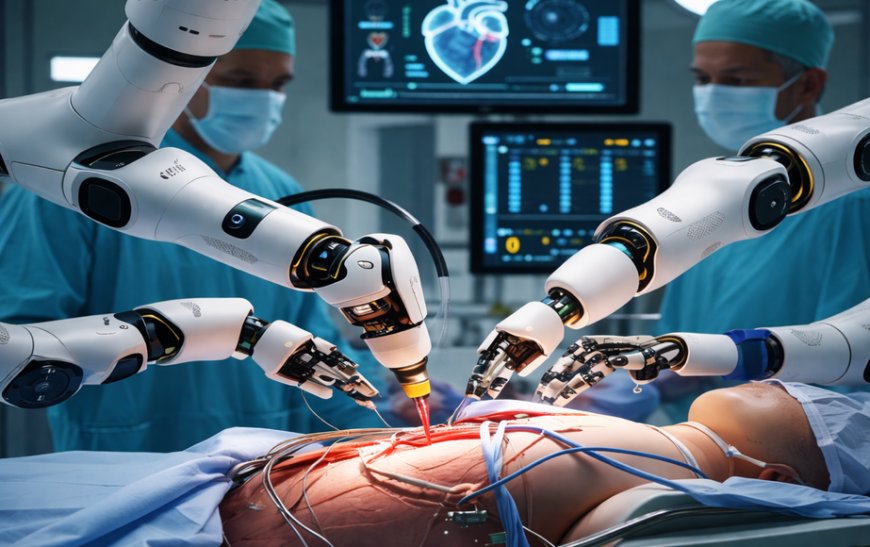
How AI Helps Predict Heart Attacks
What the Study Found
A recent international study led by doctors in the United States and Europe tested an AI tool called “Queen of Hearts”(often called PMcardio). It looked at electrocardiograms (ECG) - special tests that show the heart’s electrical activity. The AI analysed ECG results from more than 8,116 patients who came to hospitals with symptoms like chest pain.
According to the study:
- The AI system could read the ECG and detect severe heart attacks in just seconds.
- It gave correct results in about 92% of cases where patients really were having a heart attack.
- In traditional testing, doctors could only identify heart attacks correctly about 71% of the time in similar situations.
- The AI system greatly reduced false alarms - wrong alerts - from about 42% to only 8%.
Experts describe this performance as nearly 95% accurate in real clinical use, especially when combined with other medical checks and a doctor's interpretation.
Why This Is a Big Change for Patients and Doctors
1. Faster Decision Making
Doctors often have to make very fast decisions in emergency rooms. When someone comes in with chest pain or suspected heart trouble, time is critical. Traditional ECG interpretation sometimes takes longer and may miss subtle signs, especially in early or silent attacks.
AI can study ECGs and spot patterns in seconds that might otherwise be very hard to notice. This gives doctors quick and reliable information, helping them decide immediately whether to start treatment or send the patient to a cardiac care unit.
2. Helps in Rural and Emergency Settings
In many hospitals, especially in smaller towns and rural regions, specialist heart doctors (cardiologists) may not be available all the time. AI systems can support general physicians by providing fast, accurate heart attack detection - even before a specialist arrives. This could help avoid dangerous delays.
3. Reducing Mistakes
One important measure in medical testing is the false positive rate - when a test shows a problem that isn’t real. In the study, AI reduced false alarms from more than 40% to less than 8%. This means fewer people were mistakenly treated for heart attacks they did not have.
This is good because wrong alarms can lead to unnecessary treatments, stress, and extra medical costs.
How AI Detects Risks That Human Eyes Might Miss
AI works differently from the human brain. Instead of relying on memory or experience alone, AI tools use deep learning and neural networks - advanced computer systems that can learn from millions of past examples.
This allows AI to:
- Identify tiny changes in heart rhythm patterns.
- Compare these changes against many known cases of heart attack and stroke risk.
- Recognise signals that are too subtle for a human doctor to catch easily.
Deep learning models can also improve over time as they learn from more data. As more ECGs and patient results are added, the AI becomes more accurate.
Silent Heart Attacks and AI’s Role
Silent heart attacks are especially difficult because patients often feel no major pain. This can delay treatment and increase danger. AI tools help catch these hidden cases by spotting unusual patterns in the ECG that humans might overlook.
By alerting doctors early - sometimes before the wearer feels symptoms - AI may offer a new way to prevent further heart damage or sudden stroke.
The Future of AI in Heart Health
Doctors and scientists believe the future of heart care will involve more AI support. Some experts predict that:
- AI may be used in wearable devices like smart watches to continuously monitor heart data.
- Hospitals may add AI tools to emergency departments for instant triage (sorting of patients).
- AI could reduce deaths from heart disease and stroke worldwide by helping doctors intervene earlier and more accurately.
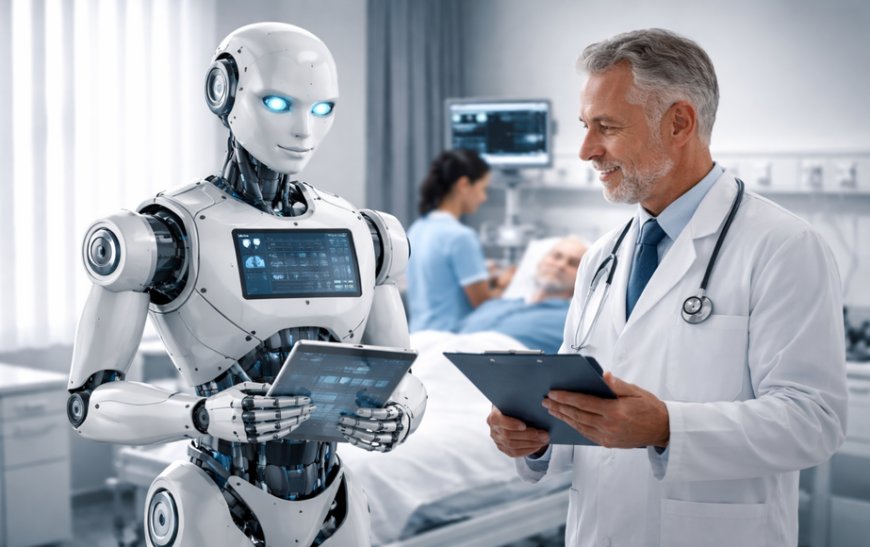
However, it’s important to remember that AI does not replace doctors. It assists them with powerful tools, but final decisions and treatment plans still depend on trained medical professionals.
Challenges and Responsibilities
Even though results are strong, doctors advise caution:
- AI models need validation in many more hospitals and populations before full adoption.
- The technology must be regulated to ensure safety and fairness for all patients.
- Doctors must understand how AI makes decisions and know when to trust or double-check its results.
Conclusion
AI heart attack prediction represents a promising new chapter in medicine. With the ability to detect severe heart attacks and hidden risks in seconds, with nearly 95% accuracy, this technology could save many lives. It makes diagnosis faster, reduces mistakes, helps doctors act sooner, and supports medical systems around the world. While challenges remain, AI adds an important tool in the fight against heart disease and stroke - two of the world’s leading causes of death.
What's Your Reaction?
 Like
0
Like
0
 Dislike
0
Dislike
0
 Love
0
Love
0
 Funny
0
Funny
0
 Angry
0
Angry
0
 Sad
0
Sad
0
 Wow
0
Wow
0