













































































































































































































Pyramids of Giza, Nusa Penida Tourism Growth Trends
Pyramids of Giza and Nusa Penida Island see rising tourism, driven by strong global travel demand, boosting local economies and visitor numbers.
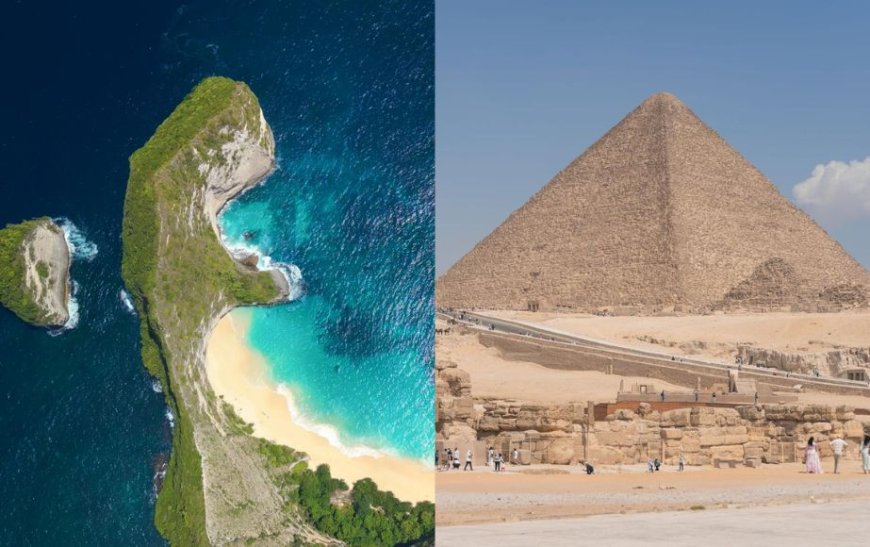
The pyramids of Giza and Nusa Penida Island are witnessing sustained visitor growth as international travel stabilises. Egypt recorded approximately 14.9 million tourist arrivals in 2023, with a further increase to around 15.7 million expected in 2024, according to official figures.
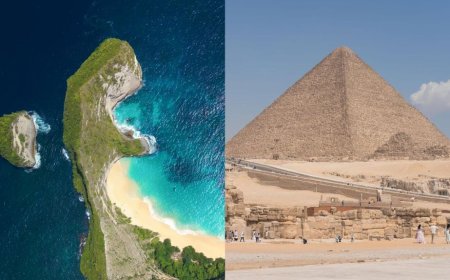
The pyramids of Giza remain Egypt’s most prominent historical attraction, drawing millions of visitors annually. In Southeast Asia, Nusa Penida Island has become a high-demand destination due to its proximity to Bali and increasing global visibility.
Historical Scale of the Pyramids of Giza
The pyramids of Giza date back more than 4,500 years, constructed during Egypt’s Fourth Dynasty. The Great Pyramid of Khufu, the largest of the three, originally stood at 146.6 metres and remained the tallest human-made structure for thousands of years.
Archaeological research shows that the monument was built using approximately 2.3 million limestone blocks. Excavations of nearby worker settlements indicate that construction relied on an organised labour force supported by state provisioning, rather than forced mass labour.
In parallel with historical research, the site continues to be studied using modern, non-invasive technologies to better understand internal structures and construction techniques.
Geographic and Tourism Profile of Nusa Penida Island
Nusa Penida Island is located southeast of Bali and is part of Indonesia’s Klungkung Regency. The island spans approximately 202.8 square kilometres and had an estimated population of 65,820 in 2024.
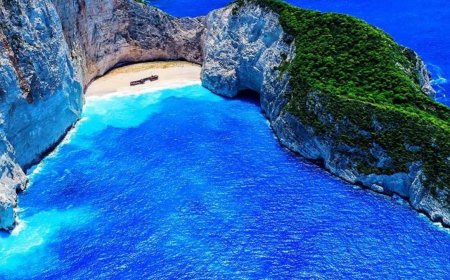
Tourism activity on Nusa Penida Island has expanded rapidly in recent years. Known for its coastal cliffs, beaches, and diving locations, the island is primarily accessed via fast boats from Bali, with travel times typically ranging between 15 and 40 minutes, depending on the route.
Tourism Pressure and Infrastructure Constraints
Increasing tourist numbers have created operational challenges at both destinations.
At the Pyramids of Giza, authorities are focused on managing visitor movement to reduce physical stress on the structures. Measures include regulated access and monitoring systems aimed at preservation.
On Nusa Penida Island, infrastructure limitations remain a concern. A large share of visitors arrive on short trips, leading to congestion at key viewpoints and uneven distribution of tourism activity across the island.
Economic Contribution of Tourism
Tourism remains a major contributor to economic activity in both regions. Egypt generated approximately $14–15 billion in tourism revenue in 2024, driven largely by demand for heritage destinations such as the pyramids of Giza.
In Indonesia, Bali’s tourism recovery has supported increased travel to surrounding areas, including Nusa Penida Island. Local businesses, including transport providers, guides, and small accommodations, have seen higher demand as visitor numbers rise.
Environmental and Sustainability Concerns
Both destinations face environmental pressures linked to tourism growth.
The pyramids of Giza are exposed to risks such as air pollution and long-term structural wear caused by foot traffic. Preservation efforts focus on limiting damage while maintaining controlled access.
On Nusa Penida Island, rising tourist activity has increased pressure on coastal areas and natural sites. Concerns include erosion, marine safety risks, and the impact of unregulated development in sensitive zones.
Outlook for High-Demand Destinations
The pyramids of Giza and Nusa Penida Island are expected to remain key tourism drivers, with a growing focus on controlled and sustainable growth. In Egypt, efforts are centered on managing visitor flow and preserving the structural integrity of the pyramids while improving the tourist experience.
In Indonesia, nusa penida island faces infrastructure and capacity challenges, requiring better transport, safety, and site management. Demand for heritage tourism and nature-based travel remains strong, supporting steady visitor inflows. Future performance will depend on how effectively both destinations balance tourism growth with environmental protection and infrastructure development.
What's Your Reaction?
 Like
0
Like
0
 Dislike
0
Dislike
0
 Love
0
Love
0
 Funny
0
Funny
0
 Angry
0
Angry
0
 Sad
0
Sad
0
 Wow
0
Wow
0