



























































































































































































































Privacy-First Tech: Secure Browsers and Tools Guide
Explore privacy-first tech with secure browsers and tools that protect data, block trackers, and enhance online security for safer browsing in a digital world.
Growing concerns about digital surveillance and data harvesting have pushed privacy-focused technology into the mainstream. Governments, regulators, and consumers are increasingly questioning how technology companies collect and use personal information. As a result, privacy-first tech solutions, especially secure web browsers and privacy tools, are gaining attention among individuals, businesses, and policymakers who seek stronger protection for their online activities.
Rise of Privacy-First Tech in the Global Digital Economy
Internet companies have built large advertising ecosystems around user data. Browsing habits, search queries, device identifiers, and location signals are routinely collected to personalise advertisements and content. Reports from The Indian Express explain that tracking technologies embedded in websites and apps allow companies to map detailed digital profiles of users across platforms.
This model has drawn criticism from privacy advocates and regulators worldwide. Europe’s General Data Protection Regulation (GDPR) and India’s Digital Personal Data Protection Act have accelerated debates around data rights and transparency. These developments have encouraged the growth of privacy-first tech, which emphasises minimal data collection, stronger encryption, and user-controlled security settings.
Demand has also increased as cybersecurity incidents and data breaches continue to affect organisations and consumers. The global shift toward remote work and cloud services has expanded the amount of sensitive data transmitted online, further highlighting the importance of secure browsing environments.
Privacy-First Tech Browsers Challenging Data Tracking
A central component of the privacy-first tech movement is the web browser. Several browsers now focus specifically on blocking trackers and reducing data exposure.
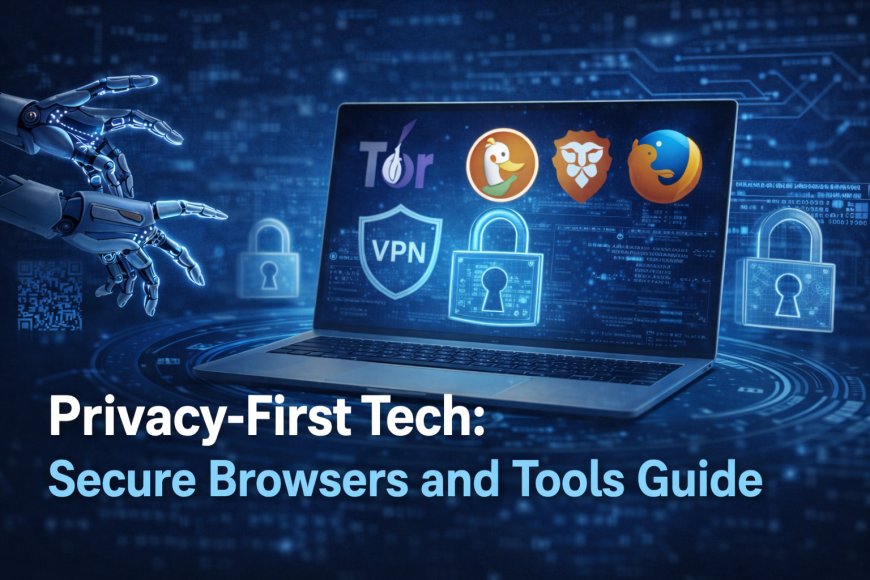
The Tor Browser remains one of the most recognised tools for anonymity. It encrypts traffic and routes it through multiple volunteer-run servers across the world, masking a user’s identity and location. This layered routing makes it difficult for websites or observers to trace browsing activity, although it can result in slower speeds.
Another widely discussed option is Brave, a Chromium-based browser designed with built-in tracker blocking and ad filtering. Brave prevents many third-party trackers from loading automatically. It offers optional features such as private search and encrypted connections. According to technology coverage by The Indian Express, the browser aims to combine strong privacy protection with a browsing experience similar to mainstream platforms like Chrome or Edge.
Mozilla Firefox also maintains a strong reputation among privacy advocates. Unlike many competing browsers, Firefox does not rely on Google’s Chromium engine. It includes Enhanced Tracking Protection to block cross-site cookies and other surveillance technologies. The browser also offers Total Cookie Protection, isolating cookies by website to prevent cross-site tracking.
The DuckDuckGo browser, built around the privacy-focused search engine of the same name, integrates automatic cookie management and tracker blocking tools designed to prevent companies from building advertising profiles based on browsing behaviour.
These browsers represent the most visible examples of privacy-first tech, providing everyday users with alternatives to data-driven browsing ecosystems.
Encryption Tools and Secure Services Expanding the Privacy Ecosystem
Beyond browsers, a broader ecosystem of encrypted applications and services has emerged. Privacy-focused companies are introducing secure alternatives to mainstream productivity and communication platforms.
One recent example is the encrypted productivity suite developed by Proton. The company expanded its services with the launch of Proton Sheets, an end-to-end encrypted spreadsheet application designed to ensure that user data remains inaccessible even to the service provider itself.
Secure communication platforms, encrypted cloud storage systems, and password managers have also gained traction as part of the privacy-first tech ecosystem. Many of these services rely on zero-knowledge encryption models in which only the user holds the decryption keys.
Browser developers are also integrating additional privacy tools directly into their platforms. For example, some browsers now include built-in virtual private network (VPN) features, reducing the need for separate installations and improving accessibility for users who want encrypted internet connections.
The expansion of these integrated tools reflects a broader shift toward privacy-centric product design across the technology sector.
Policy Debates and Regulatory Pressure
Government policies and regulatory discussions are also shaping the adoption of privacy-first tech. In India, debates around digital surveillance and data collection have intensified as the country’s internet user base surpasses hundreds of millions.
Industry data shows that India now has more than 650 million smartphone users, with each device typically hosting 80 to 120 applications, many of which request access to sensitive permissions such as location, camera, or microphone.
Technology companies have responded by introducing new privacy-management features. One example is the NxtPrivacy Dashboard, launched for specific smartphone models, which allows users to monitor how applications access personal data and revoke permissions in real-time.
Meanwhile, policy decisions related to digital surveillance have sparked public debate. In late 2025, the Indian government reversed a directive that would have required smartphone manufacturers to preload a cybersecurity application after concerns were raised by privacy advocates and technology companies about potential surveillance risks.
These policy discussions have reinforced public awareness of privacy issues and increased interest in privacy-first tech products.
Economic and Market Impact of Privacy-First Tech
The growth of privacy-focused tools has begun influencing technology markets and corporate strategies. Browser developers and software providers increasingly promote privacy as a competitive advantage.
Companies developing privacy-first tech platforms emphasise transparency, open-source development, and limited data collection as differentiating factors. This approach appeals particularly to businesses handling sensitive information, including financial services, healthcare, and journalism.
The shift is also affecting advertising technology. As browsers restrict tracking cookies and data collection methods, advertisers are exploring alternative targeting models that rely less on personal data.
Technology analysts say that consumer trust has become a significant market driver. Products that provide clear privacy protections and user-controlled security settings are attracting growing demand, particularly among enterprise customers and government institutions concerned about data sovereignty.
Future Outlook for Privacy-First Tech
Technology companies are expected to continue expanding privacy features in response to regulatory scrutiny and user expectations. Browser developers are experimenting with new architectures that limit cross-site tracking while preserving website functionality.
Artificial intelligence and cloud computing will likely introduce additional privacy challenges. As AI tools analyse user behaviour and data patterns, developers are exploring ways to deploy these technologies without compromising personal information.
Industry experts expect privacy-first tech to evolve into a foundational design principle rather than a niche feature. Encryption, minimal data collection, and transparent privacy policies are increasingly viewed as essential components of digital infrastructure.
As the internet economy continues to expand, the demand for secure browsing tools and encrypted digital services is likely to remain strong.
What's Your Reaction?
 Like
0
Like
0
 Dislike
0
Dislike
0
 Love
0
Love
0
 Funny
0
Funny
0
 Angry
0
Angry
0
 Sad
0
Sad
0
 Wow
0
Wow
0