Impact of GST Cuts Fading? FMCG Prices Rise Up 5%!
GST rate cuts seem to be losing impact as FMCG companies raise prices up to 5%. Rising input costs, demand shifts and margin pressure drive the latest hike now.
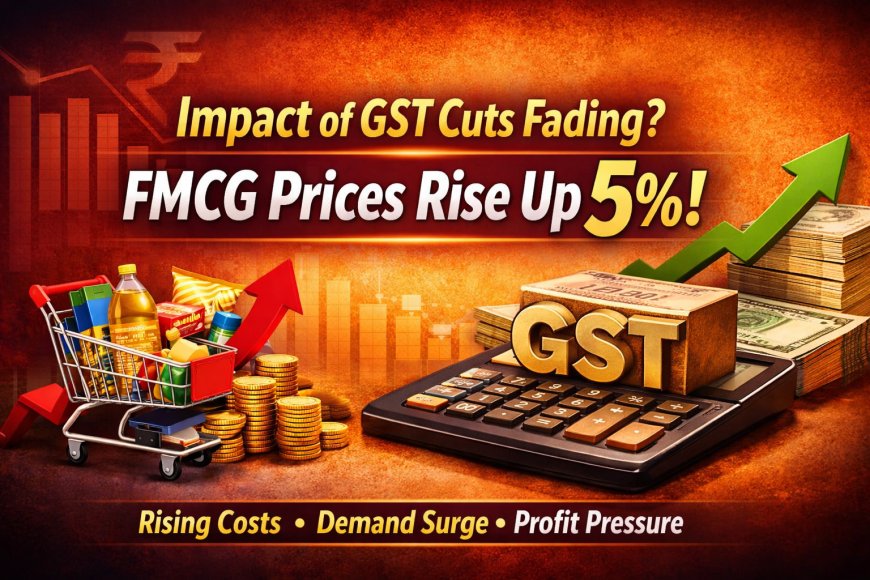
In early 2026, FMCG prices rose 5 per cent across multiple everyday product categories, reversing some of the relief gained from historic tax reforms introduced in late 2025. After the impact of GST cuts on FMCG initially helped bring down prices on essentials, recent data and industry reports indicate that companies are now increasing prices again, affecting consumers nationwide.
This article explores why the FMCG price hike 2026 has taken place, what economic forces are responsible, and how the interplay of taxation, input costs, currency fluctuation and global commodity trends is influencing retail prices.
What Triggered the FMCG Price Hike?
1. Original GST Cuts and Their Effect
In September 2025, the Indian government implemented a major overhaul of the Goods and Services Tax (GST) structure. Most fast-moving consumer goods were moved to a simplified 5% GST rate from higher slabs like 12% or 18%, with some essentials becoming cheaper or even zero-rated.
This reform initially reduced price levels of daily staples such as soaps, shampoos, edible products, and packaged foods, leading to widespread optimism across distributors, retailers, and consumers. It was seen as a major step to make FMCG goods more affordable and stimulate demand across urban and rural markets.
But this initial benefit was not long-lasting.
The Reversal: Why FMCG Prices Rise 5 Per cent
Despite GST cuts, recent reports confirm that FMCG prices rose 5 per cent in early 2026. Multiple factors explain this shift:
1. Pressure from Rising Commodity Costs
One of the primary reasons behind the price hikes is the rising cost of commodities used in consumer goods production. For example, crude oil prices have firmed up, increasing the cost of essential raw materials such as sulphur, n-paraffins, and coconut oil, with the latter doubling in the past year.
These raw materials are core inputs for many FMCG products — from soaps and detergents to edible oils — meaning manufacturers face higher production costs.
2. Weak Indian Rupee
Another force driving up prices is the depreciating Indian rupee. The currency recently touched historic lows against the US dollar, raising the cost of imported ingredients such as oats and almonds used in breakfast cereals.
Because many FMCG firms rely on global suppliers or imported inputs, a weak currency increases cost pressure on local producers, who often pass these costs on to consumers.
3. Margin Protection by FMCG Companies
During the initial GST shift period, companies largely refrained from aggressively increasing prices to avoid regulatory scrutiny under anti-profiteering rules, which monitor whether GST benefits are passed on to consumers.
Now, after that period has passed, firms like Dabur and Hindustan Unilever have begun exercising greater pricing power. This includes planned increases in product prices in the fourth quarter and early 2026.
4. Global Economic Pressures and Wholesale Inflation
Wholesale inflation data in India shows rising price levels across food, manufacturing, and commodity sectors. For example, wholesale prices rose 1.81 % year-on-year in January 2026, with vegetables and basic manufactured products leading the upward shift.
This broad inflationary environment feeds into higher FMCG costs as producers face more expensive inputs and supply chain expenses.
Examples of Price Hikes Across FMCG Categories
Distributors and industry sources report that prices of everyday items have started increasing across many key FMCG segments:
- Home care products: Detergents, floor cleaners, and surface cleaning liquids
- Personal care goods: Hair oils, shampoos, and skincare items
- Packaged foods: Chocolates, noodles, cereals and ready-to-eat products
These increases span both metropolitan and smaller markets, reaching shelves this quarter.
Economic Impact on Consumers
The FMCG price hike 2026 has a direct impact on household budgets, especially for middle- and lower-income families who spend a larger share of income on daily staples. Even a modest 5 % rise in prices for everyday items can increase financial strain, particularly in rural areas where disposable income is limited.
Rising FMCG inflation also appears in broader inflation data, contributing to overall higher retail price trends.
What This Means for the Future
1. Possible Consumer Behaviour Shift
If essential goods continue to get more expensive, consumer purchasing patterns may shift. Households could reduce brand-name purchases, switch to lower-priced options, or cut down on discretionary products altogether.
2. Sector Growth and Volume Trends
Despite price increases, volume growth in FMCG post-GST cuts showed positive signs before the latest hikes. Lower prices initially helped boost consumption by encouraging more frequent purchases and larger pack sales.
However, sustained price hikes could dampen demand and reduce the volume growth momentum seen earlier.
Conclusion: The Mixed Legacy of GST Reforms
The story of FMCG prices rising 5 per cent in 2026 highlights a complex reality: while the impact of GST cuts on FMCG offered short-term benefits and helped reduce prices initially, a combination of macroeconomic pressures, cost escalation, currency depreciation, and strategic pricing decisions has reversed some of those gains.
For consumers, the result is a noticeable uptick in essential goods prices that directly affects household budgets. For businesses, renewed price control reflects challenges in balancing profitability and competitive pricing.
As India’s economy moves forward, the FMCG sector will remain a critical area to watch — not just for policy impact, but also for how prices ultimately translate to consumer wallets in 2026 and beyond.
What's Your Reaction?
 Like
0
Like
0
 Dislike
0
Dislike
0
 Love
0
Love
0
 Funny
0
Funny
0
 Angry
0
Angry
0
 Sad
0
Sad
0
 Wow
0
Wow
0

Harshita Dhakad
Now working as a Social Media Marketing Executive at [Shakuniya Solutions Pvt Ltd]
Excited to create content that connects, campaigns that convert, and communities that grow. 💻💡 #SocialMediaLife #MarketingJourney”