







































































































































































































Startup Hiring Trends 2026: AI Talent Demand Rises
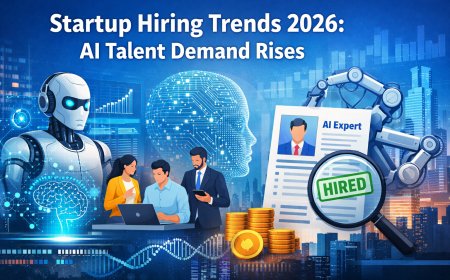
Startup hiring trends in 2026 show strong demand for AI talent as companies invest in automation, machine learning, and data teams to build smarter new products
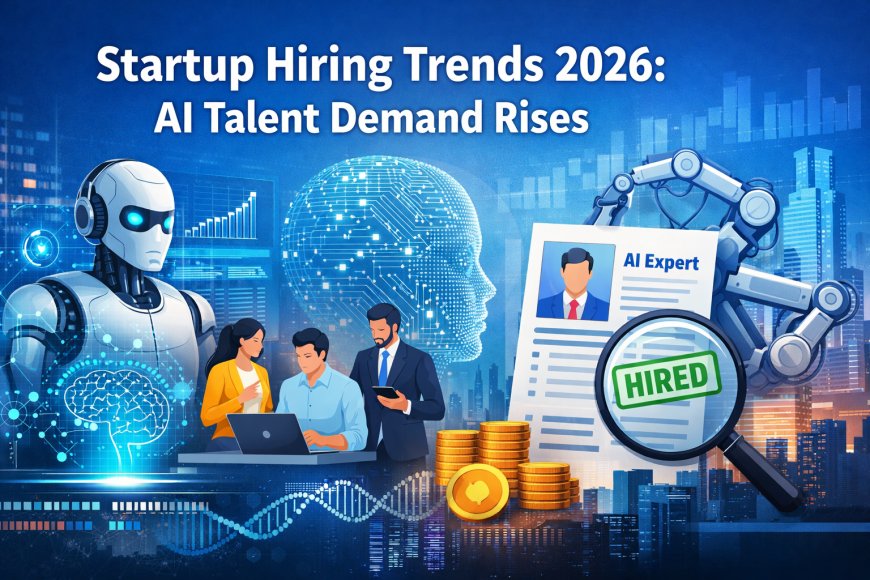
The global startup ecosystem is entering a new phase of hiring in 2026. After a cautious period marked by layoffs and funding slowdowns in 2023–2024, companies are once again expanding their teams. However, the focus of hiring has changed. Instead of large teams across multiple roles, startups are now prioritizing specialized professionals with expertise in artificial intelligence, data science, and automation.
Across India and several global technology hubs, recruitment platforms and industry reports show a clear pattern: AI talent has become one of the most sought-after skills in the startup economy. Companies building products around automation, generative AI, and machine learning are competing aggressively to secure experienced engineers and researchers.
According to hiring data cited by Economic Times and industry reports, startups in India are expected to increase hiring by 8% to 15% during FY2026, largely driven by the need for AI specialists and advanced technology roles.
The Changing Nature of Startup Hiring
The hiring strategy of startups has evolved significantly over the past few years. Earlier, companies focused on expanding teams quickly after raising venture capital funding. Growth was often measured by how fast a startup could scale operations and increase headcount.
That model has changed. Investors are pushing startups to maintain lean operations and hire more strategically. As a result, companies are focusing on professionals who can directly contribute to product innovation and automation.
Artificial intelligence sits at the centre of this shift.
Many startups are integrating AI into their platforms to improve user experiences, automate internal operations, and build smarter digital services. This transformation has created strong demand for engineers who can design, deploy, and maintain AI systems.
Key hiring priorities now include:
-
Machine learning engineers
-
Generative AI specialists
-
Data scientists
-
AI infrastructure and MLOps experts
-
Product engineers with AI integration skills
Recruiters say these roles are becoming essential for startups that want to remain competitive in global markets.
AI Talent Demand Surges Across Industries
The demand for artificial intelligence professionals is not limited to technology startups. Industries such as finance, healthcare, manufacturing, and logistics are also investing heavily in AI-driven systems.
A report from talent platform Foundit shows that India recorded nearly 2.9 lakh AI-related job postings in 2025, highlighting the rapid expansion of the sector. The report estimates that AI hiring could rise by around 32% in 2026, potentially reaching close to 3.8 lakh roles nationwide.
Several sectors are leading this growth:
-
IT and software services: about 37% of AI jobs
-
Banking and financial services: about 15.8%
-
Manufacturing: roughly 6%
-
Healthcare, retail, and logistics are also showing strong growth.
Financial institutions are increasingly using AI for fraud detection, risk analysis, and personalised customer services. Manufacturing companies are applying machine learning for predictive maintenance and automation. Meanwhile, e-commerce and logistics firms rely on AI to optimise delivery networks and demand forecasting.
This broad adoption across sectors has intensified competition for skilled professionals.
India Emerges as a Major AI Talent Hub
India is becoming one of the most important destinations for AI talent globally. Several factors are driving this trend, including a large engineering workforce, strong mathematics and computer science education, and growing investment from multinational companies.
Large enterprises and multinational corporations currently account for nearly half of all AI job openings in India, while mid-sized companies and startups together represent the remaining share.
Cities such as Bengaluru, Hyderabad, and Delhi-NCR continue to dominate the AI hiring landscape. At the same time, smaller technology hubs are gaining attention.
Emerging AI talent centres include:
-
Jaipur
-
Indore
-
Mysuru
These cities have recorded some of the fastest growth in AI job postings as companies explore talent beyond traditional metropolitan markets.
Industry experts note that companies are increasingly establishing Global Capability Centres (GCCs) in India to build AI research teams and product development units.
Shift Toward Skills-Based Recruitment
Another significant development in startup hiring trends is the shift toward skills-based recruitment.
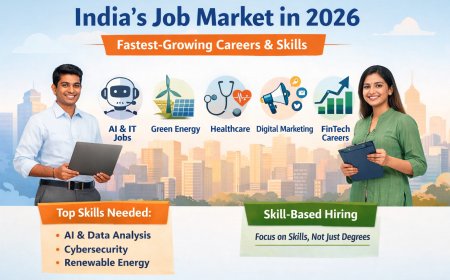
Earlier, companies focused heavily on university degrees and academic credentials. In the AI era, practical experience and specialised skills are becoming more valuable than formal qualifications alone.
Recruiters are now evaluating candidates based on:
-
Real-world AI project experience
-
Ability to build machine learning models
-
Knowledge of programming languages like Python
-
Experience with cloud platforms and data pipelines
-
Deployment of generative AI systems
Generative AI skills, particularly those related to large language models, have seen especially rapid growth. Industry reports suggest demand for these capabilities has increased by nearly 60% in recent hiring cycles, reflecting the rising popularity of AI assistants, chatbots, and automated analytics systems.
Talent Shortage Driving Competition
Despite the strong hiring demand, companies are facing a significant challenge: a shortage of experienced AI professionals.
Many engineers have basic training in AI tools, but far fewer have experience deploying models at scale. Startups developing advanced AI products often require specialists who can handle large datasets, optimise models, and integrate AI into real-world applications.
Industry research indicates that the technology sector faces a talent gap of more than 40% in advanced fields such as artificial intelligence, data engineering, and cybersecurity.
This shortage is leading to intense competition among startups, multinational companies, and technology giants.
In some cases:
-
Salaries for AI engineers have increased significantly.
-
Companies are offering remote roles to attract global talent.
-
Firms are investing in internal training programs.
Major technology companies are also acquiring AI startups primarily to gain access to skilled engineers and researchers.
Economic Impact on the Startup Ecosystem
The surge in demand for AI professionals is reshaping the broader startup economy.
Companies that successfully recruit strong AI teams are able to launch new products faster, automate operations, and improve customer engagement. This creates a competitive advantage in sectors where innovation speed is critical.
At the same time, the rising cost of AI talent is affecting hiring budgets. Early-stage startups with limited funding often struggle to compete with larger firms offering higher salaries.
As a result, many startups are exploring alternative strategies such as:
-
partnering with AI development firms
-
hiring contract specialists
-
building smaller but highly specialised technical teams
Recruitment experts say the next phase of startup hiring will likely focus on efficiency rather than large workforce expansion.
Outlook for Startup Hiring in 2026
The hiring outlook for startups in 2026 remains cautiously positive. While companies are avoiding aggressive headcount growth, demand for highly skilled professionals continues to rise.
Artificial intelligence is now a central component of business strategy across industries. As startups build AI-powered products and services, the demand for experienced engineers, data scientists, and AI architects is expected to remain strong.
Industry analysts believe that the companies able to combine strong AI talent with innovative business models will lead the next wave of startup growth. For professionals entering the technology workforce, developing AI-related skills may become one of the most valuable career investments of the decade.
What's Your Reaction?
 Like
0
Like
0
 Dislike
0
Dislike
0
 Love
0
Love
0
 Funny
0
Funny
0
 Angry
0
Angry
0
 Sad
0
Sad
0
 Wow
0
Wow
0