
















































































































































































Govt Scraps 3-Year Wait for Deep-Tech Startups: A Major Win for Early Innovation
India has officially removed the mandatory three-year existence rule for deep-tech startups under the DSIR. Learn how this policy shift by Union Minister Jitendra Singh aims to accelerate early-stage innovation and R&D funding.

If you’ve ever tried to get a deep-tech startup off the ground in India, you know the "Three-Year Wall." Up until now, the Department of Scientific and Industrial Research (DSIR) had a rigid rule:
"if your company hadn't been around for at least three years, you weren't eligible for their core recognition and financial support programs."
The news was officially released on Sunday, January 4, 2026, that wall finally came down.
Speaking at the DSIR’s 42nd Foundation Day, Union Minister Jitendra Singh confirmed that the government is officially scrapping the three-year existence requirement. It’s a move that recognizes a simple truth:
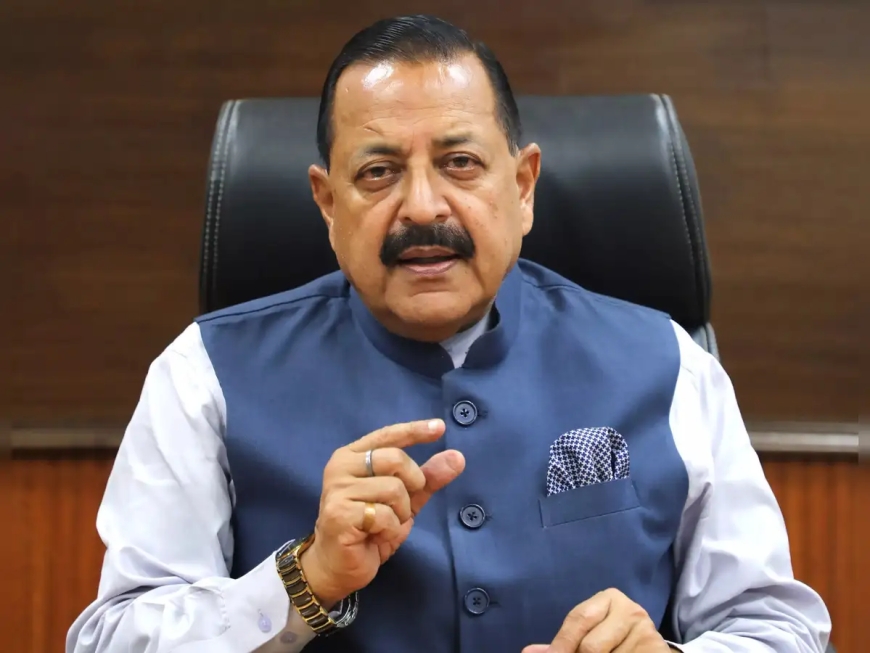
"deep-tech innovation—the kind involving breakthroughs in hardware, biotech, and advanced materials—doesn't happen on a convenient administrative timeline."
Why the "Three-Year Rule" was a Problem
In the startup world, three years is an eternity. For a "standard" SaaS company, three years might mean you're already scaling. But for a deep-tech firm working on something like quantum computing or indigenous medical devices, those first 36 months are often spent in a lab, burning through cash with zero revenue.
By demanding a three-year track record to prove "sustainability," the old rules were essentially punishing the most ambitious innovators for being in the early stages of a long-term project.
Catching Innovators at the Starting Line
According to Minister Singh, the logic behind the change is to help these companies scale before they are fully standing on their own. While the government already has a massive ₹1 lakh crore Research, Development, and Innovation (RDI) Fund, that money is often aimed at projects that are already technologically mature.
This new relaxation fills the gap for the "day one" founders. It ensures that a brilliant idea doesn't die in the crib just because the company lacks a three-year-old tax return.
The Bigger Picture: From "Self-Reliant" to "Global Hub"
The timing of this announcement isn't accidental. Singh noted that India has moved past the phase of just trying to be "self-reliant" The goal now is to make the rest of the world dependent on Indian tech.
We’ve already seen the shift in the medical sector, where India flipped from being a massive importer of vaccines and devices to a major exporter. By opening the DSIR doors to younger startups, the government is betting that the next global breakthrough will come from a company that might only be six months old today.
A Win for Inclusivity
The Minister also pointed to a growing trend in who is doing the innovating. Currently, over 10,000 women are tapping into DSIR schemes, including more than 55 women-led self-help groups. Lowering the barrier to entry is expected to bring even more diverse voices into the high-tech sector, specifically those who might have previously been sidelined by rigid "old guard" corporate requirements.
For founders, this means one less hoop to jump through and a much faster path to the funding and recognition needed to turn a lab experiment into a global business.
What's Your Reaction?
 Like
0
Like
0
 Dislike
0
Dislike
0
 Love
0
Love
0
 Funny
0
Funny
0
 Angry
0
Angry
0
 Sad
0
Sad
0
 Wow
0
Wow
0