




























































































































































The Geopolitical Hand: Why Policy, Not Price, Now Dictates Sourcing
In 2026, the "lowest unit cost" rule is dead. Explore how the "Geopolitical Hand" of state policy has replaced market neutrality, forcing a shift toward "Middle Power" pivots, Sovereign AI, and a new mandate for Chief Procurement Officers to prioritize policy over price.

For the better part of three decades, the "Global Sourcing Playbook" had one primary rule: Find the lowest unit cost. Businesses built intricate, "just-in-time" supply chains that spanned the globe, predicated on the assumption that trade lanes would stay open and the World Trade Organization (WTO) would act as a neutral referee.
As we move into 2026, that playbook has been shredded. We have entered the era of the "Geopolitical Hand," where the invisible hand of the market has been replaced by the visible hand of state policy. Today, a 20% swing in procurement costs is less likely to come from a supplier’s inefficiency and more likely to come from a midnight tweet or a sudden export ban on critical minerals.
The End of "Market-Neutral" Sourcing
In 2026, there is no such thing as a "neutral" sourcing decision. Every contract signed is now viewed through the lens of national security and industrial policy.
-
Policy Over Price: Procurement officers who once spent their days haggling over cents are now spending them in briefings with geopolitical analysts. If a supplier is located in a "non-aligned" region, the low price they offer is increasingly seen not as a saving, but as a "risk premium" that could be triggered by sudden sanctions.
-
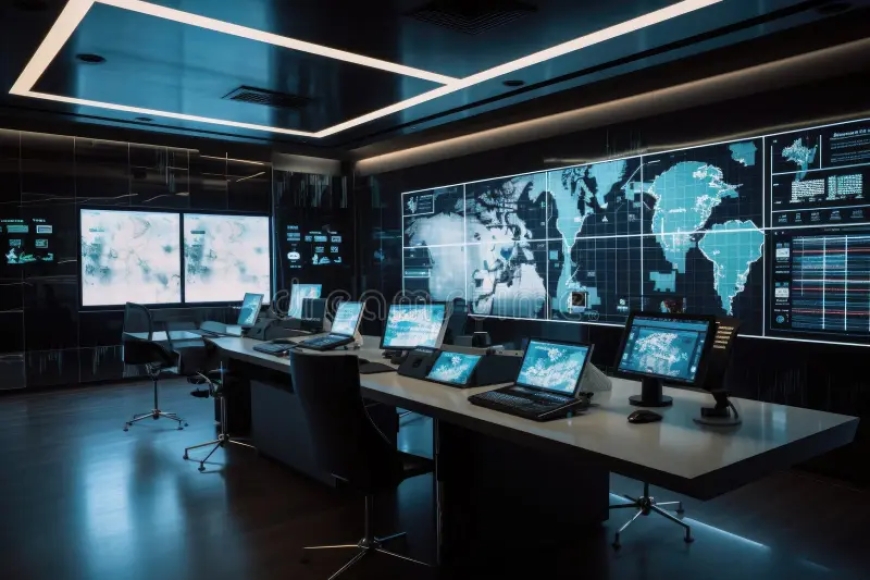
The Sovereign AI Factor: This isn't just about physical goods. The "Geopolitical Hand" now dictates where your data is stored and which AI models you can use. Governments are mandating "Sovereign AI" stacks, forcing companies to source expensive local compute power over cheaper, centralized global clouds.
The "Sourcing Paralysis" Crisis
The most dangerous byproduct of this shift is sourcing paralysis. Business leaders are finding it impossible to make five-year capital commitments when the "rules of the game" change every six months.
-
The Fog of Tariffs: With the return of aggressive reciprocal tariffs—some reaching 1930s-era highs of 18% effective rates—long-term contracts are becoming liabilities.

-
The "Just-in-Case" Tax: To combat this, firms are being forced to pay what economists call a "resilience tax." This involves maintaining dual supply chains—one for the West and one for the East—which eliminates the economies of scale that once made globalization so profitable.
The Rise of the "Middle Power" Pivot
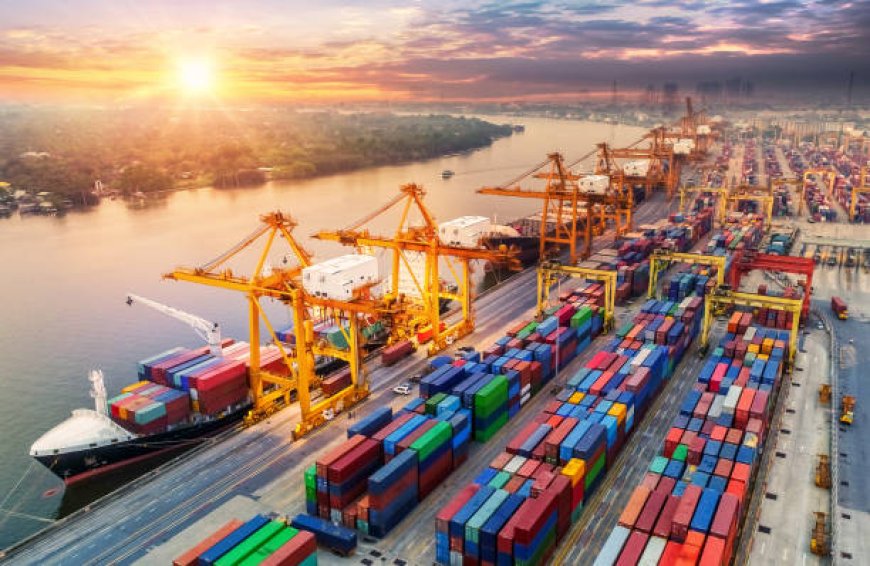
To survive the "Geopolitical Hand," the most successful firms in 2026 are pivoting toward Middle Powers. Countries like India, Vietnam, Mexico, and Poland have become the ultimate "geopolitical buffers."
-
Multi-Alignment as a Strategy: These nations are masterfully trading with all major blocs while avoiding hard alliances. By rooting operations here, businesses can "launder" their geopolitical risk, maintaining access to both US and Chinese markets through a neutral third party.
-
Friend-Sourcing: We are seeing the formalization of "Friend-Shoring." Sourcing decisions are now made based on shared values and treaty-level security commitments rather than just logistics. If a country isn't a "friend," they aren't a supplier—regardless of the price.
Strategic Mandate: The Geopolitical CPO
By mid-2026, the role of the Chief Procurement Officer (CPO) will have fundamentally changed. The new mandate isn't just to save money; it's to secure the future.
-
Stress-Test for "Sudden Decoupling": Can your business survive a 48-hour total shutdown of trade with a specific region? If the answer is no, your "low price" is a ticking time bomb.
-
Invest in "Regulatory Intelligence": Sourcing teams must be as familiar with export control lists as they are with shipping manifests.
-
Prioritize Modular Supply Chains: Build networks that can be reconfigured in weeks, not years. The "Geopolitical Hand" moves fast; your supply chain must move faster.
In 2026, the most expensive product isn't the one with the highest price tag—it’s the one that you can’t get because of a policy change you didn't see coming. Price is a preference; policy is a prerequisite.
What's Your Reaction?
 Like
0
Like
0
 Dislike
0
Dislike
0
 Love
0
Love
0
 Funny
0
Funny
0
 Angry
0
Angry
0
 Sad
0
Sad
0
 Wow
0
Wow
0