




































































































































































5 Ways Ethical AI Prompting Boosts Creativity & Voice
Learn what ethical AI prompting is and how to use generative AI tools to enhance creativity while protecting originality, authenticity, and your unique professional voice.

Ethical AI Prompting: Enhancing Creativity Without Compromising Authenticity
Artificial Intelligence is changing how professionals create content, design, solve problems, and communicate. For writers, marketers, educators, and entrepreneurs, generative AI tools are powerful daily assistants. Still, one question remains: how can we use AI ethically while keeping our unique professional voice?
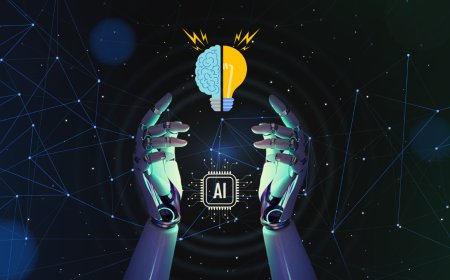
This is where ethical AI prompting plays a vital role. When used responsibly, AI does not replace creativity; it enhances it. This article explores how to leverage the power of AI tools to foster creativity without compromising originality, authenticity, or professional integrity.
What Is Ethical AI Prompting?
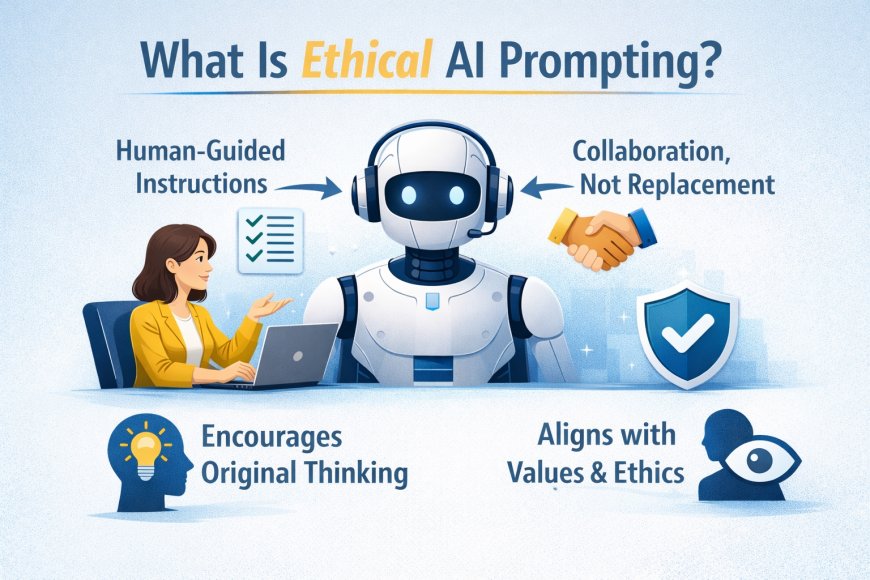
Ethical AI prompting means giving generative AI tools instructions that encourage, not override, human creativity. It emphasizes collaboration over dependency.
- Ethical prompting ensures that:
- AI-generated content is guided, reviewed, and refined by humans.
- Original thinking and personal insights remain at the core.
- AI outputs align with professional values and ethics.
Rather than asking AI to “do everything,” ethical users treat it as a creative assistant that works under human supervision.
Why Your Unique Professional Voice Is Important
Your unique professional voice is what separates you from thousands of others using the same AI tools. It reflects your experience, tone, cultural understanding, and personal perspective.
- Over-reliance on AI often leads to:
- Generic and repetitive content
- Loss of emotional depth
- Weak personal branding
By using AI tools for creativity in an ethical way, you ensure that your content still sounds like you, not like a machine-generated template.
Using Generative AI to Enhance Creativity (Not Replace It)
The smartest professionals use AI to enhance creativity, not outsource thinking. Generative tools work best when used for support tasks.
- You can ethically use AI for:
- Brainstorming content ideas
- Creating outlines and frameworks
- Improving grammar, clarity, and flow
- Exploring multiple perspectives
However, the core message, storytelling, opinions, and final decisions must always come from you. This balance is essential for human-centric creativity.
Writing Ethical Prompts That Protect Originality
The quality of AI output depends heavily on how you prompt it. Ethical AI prompting techniques focus on clarity, boundaries, and intent.
- Instead of vague prompts like:
- “Write an article on AI ethics.”
- Use purposeful prompts such as:
“Create a structured outline on ethical AI use in professional writing. Keep the tone informative. I will add personal insights and examples.”
This approach:
- Keeps control in your hands
- Reduces generic responses
- Maintains authenticity and originality
- Good prompts guide AI, but do not surrender authority.
- Avoiding Plagiarism and AI Dependency
One major ethical concern with AI-generated content is plagiarism—intentional or unintentional. AI models generate text based on patterns, which may resemble existing content.
- To maintain zero plagiarism, always:
- Rewrite and personalize AI outputs.
- Add real-life examples and personal experiences.
- Avoid publishing raw AI-generated text.
Ethical professionals take full responsibility for their content. AI should support effort, not replace it.
Transparency Builds Trust
Being honest about AI usage builds credibility. Ethical AI use does not mean hiding tools—it means using them responsibly.
- Transparency:
- Strengthens professional trust
- Aligns with modern content ethics
- Shows confidence in human expertise
In many industries, ethical disclosure is becoming a standard practice, not an option.
Human Judgment Is Irreplaceable
No matter how advanced AI becomes, it lacks emotional intelligence, moral reasoning, and cultural sensitivity. This makes human judgment in AI content creation absolutely essential.
- Before publishing AI-assisted work, ask yourself:
- Does this align with my values and goals?
- Is the message accurate and responsible?
- Have I added meaningful human insight?
- AI can suggest—but humans must decide.
The Future of Ethical AI and Creativity
The future belongs to professionals who understand ethical AI use in creative work. As AI tools evolve, originality and authenticity will become even more valuable.
- Those who master ethical prompting will:
- Stand out in crowded digital spaces.
- Build stronger personal brands.
- Maintain long-term credibility
AI will continue to grow, but human creativity and integrity will remain the true differentiators.
Conclusion
Ethical AI prompting is not about limiting technology—it is about using it wisely. Generative AI tools can significantly enhance creativity, productivity, and efficiency when guided by human intention and responsibility.
By maintaining your unique professional voice, practicing transparency, and applying thoughtful prompts, you can unlock the true potential of AI without losing authenticity. In an AI-driven world, ethical use is not just a skill—it is a professional advantage.
Use AI smartly. Prompt ethically. Create authentically.
What's Your Reaction?
 Like
0
Like
0
 Dislike
0
Dislike
0
 Love
0
Love
0
 Funny
0
Funny
0
 Angry
0
Angry
0
 Sad
0
Sad
0
 Wow
0
Wow
0