











































The AI Revolution in Art & Media
Explore how AI is transforming art and media, reshaping creativity, authorship, ethics, and human expression in the modern digital era.
Reframing Creativity for the Digital Age
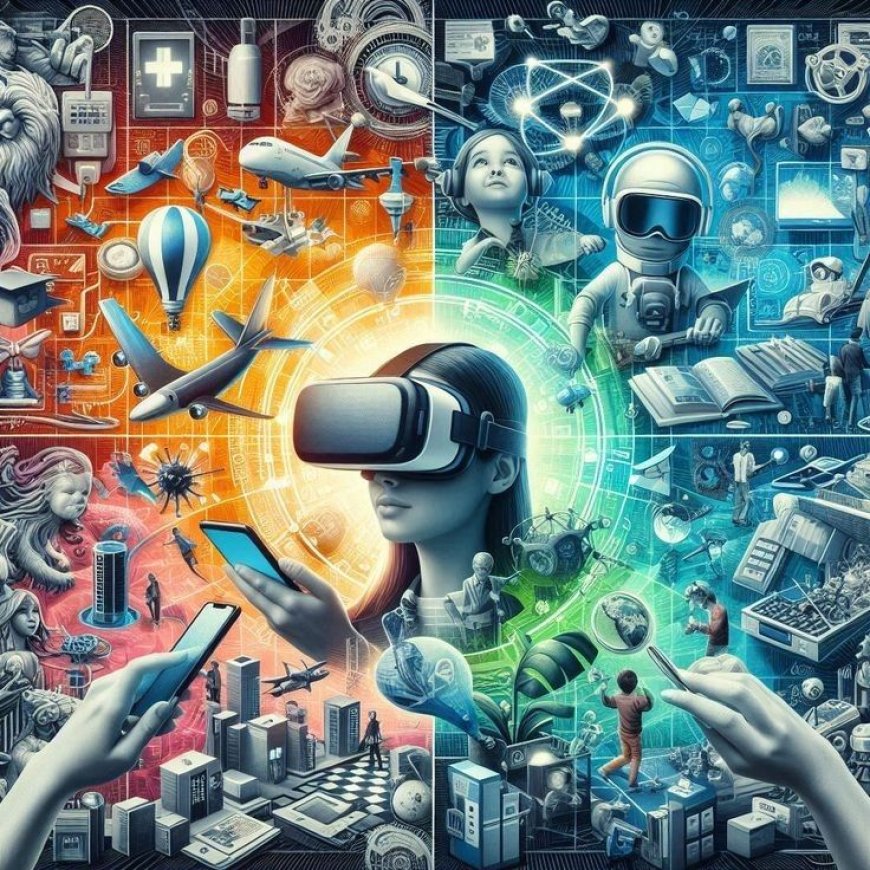
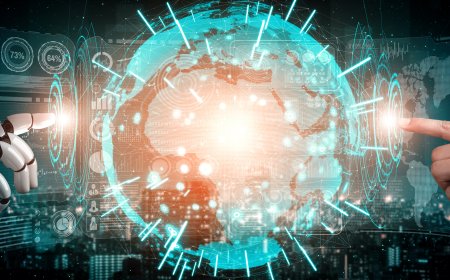
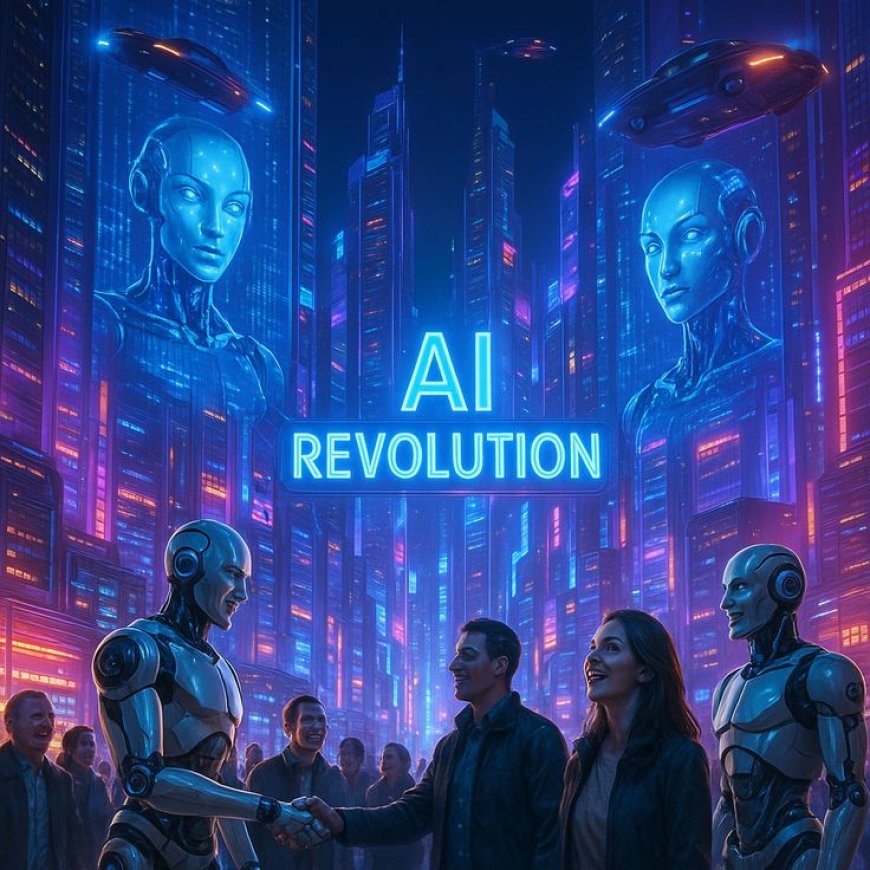
Artificial intelligence has become a reality that was long debated in technological circles but has crept surreptitiously into the realm of art, media, and entertainment, giving a new dimension to storytelling, picture production, and music composition. Whether artificial films, computer-generated paintings, or AI-augmented journalism or music production, the entertainment sector has just begun its radical transformation. Hidden amidst all this is a more profound debate on creativity, authorship, and the future of human innovation.
A New Creative Partner, and Not Just a Tool
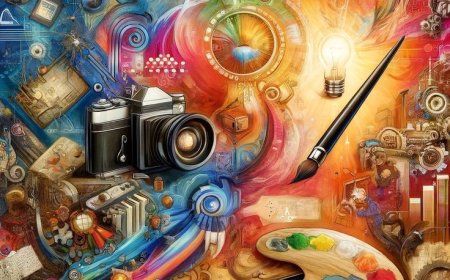
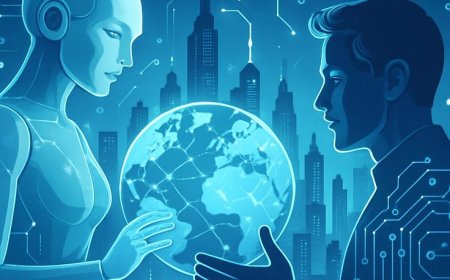
Traditionally, technology has aided creative professionals—or “artists”—in their work. For example, camera technology elevated photography, graphic design software improved design, and online communities and platforms opened publishing. However, AI surpasses traditional technology. Instead of assisting and enabling, it also collaborates with and directly contributes to the creative process. Consider that generative models of “AI art” are able to compose music and even imitate art styles accurately.
For many creatives, AI is more of a team member than a computer. Filmmakers use it to more easily imagine scenes, designers test thousands of ideas in minutes, and musicians compose melodies to inspire new developments. What it means is more time spent on telling stories, conveying emotions, and conveying meaning, and less time spent on doing the same thing over and over.
In its best form, AI is actually an imagination enhancer and not an imagination replacer. It is a springboard for creativity—an “idea generator” that speeds up innovation.
The Question Of Authenticity
Moreover, although AI offers many benefits, it has sparked passionate discussions in the art world. "What is human about art?" is one of the most pertinent questions. "Where is the artist when the machine can paint, compose, or write?" These are some of the questions that have sparked a heated discussion in the art world.
Art has always been highly personal. It is created based on personal experiences. Critics state that the lack of emotional consciousness in AI is a major concern. It does not experience emotions like happiness, sadness, and love. On the contrary, it uses patterns and predictions based on existing data. This makes the artwork created by AI unemotional.
Nevertheless, in support of it, there is a relevance of meaning in art which can sometimes be generated through public interpretations, failing which it would be solely an artist’s expression. If an artwork inspires people, makes them think, or evokes feelings in them, would it matter if it was created with the assistance of artificial intelligence?
Copyright, Ownership, and Ethical Issues
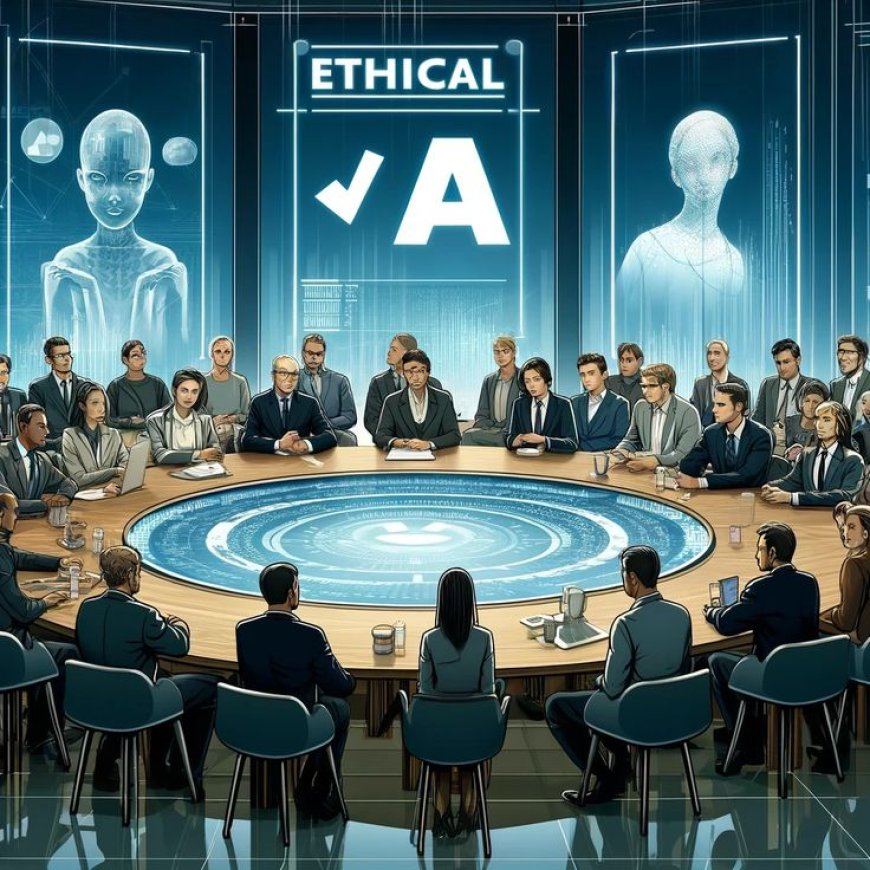
Apart from being creative, AI also carries with it several legal issues. The nature of AI is that it relies on an enormous amount of artwork, movies, and music that are previously made. Such activities are done with or without the knowledge of the owners.
Who actually owns an artwork produced by AI? The person who developed AI, or possibly the user of AI? Or is ownership owed to all artists whose works were used in training AI? The laws of different countries are finding it hard to adapt to all of this.
The ethical considerations also play an important part. If made without focus on transparency and accountability, AI could potentially perpetuate biases, misinterpret cultures, or water down diverse artistic expressions. The ethical and responsible use of AI in art would demand distinct criteria.
Adaptations of Media Industries
Researchers point out that the media industry has already started to undergo a transformation due to AI technology in the following ways:
Media Production: The use of AI technology has already started to change the way the media industry operates in the following ways:
News media organisations use AI technology to analyse data to personalise their stories.
Movie production companies utilise AI technology to help with editing, graphics, or
This is still an ancillary role for AI rather than its lead role. “The most effective projects to date still utilise human judgement, EQ, and knowledge of culture,” and authenticity is what the audience is hungry for—in stories that mirror real life and reflect humanity. This is what media companies are learning about using AI—don’t substitute for human creativity, but rather direct AI to buttress it.
A Democratisation of Creativity
Accessibility would certainly be one of the most significant influences of AI. Such artists who couldn’t afford much are able to generate quality visuals, soundtracks, and videos with ease and without spending much on AI technologies.
For artists, AI promotes a sense of liberty—liberty to innovate, to fail rapidly, and to iterate with fewer budgetary constraints. This could give rise to a vibrant global creative community.
The Future: Co-Creation Rather Than Competition
The Future of Art and Media Does Not Lie with a Battle Between Humans and Computers
Rather, the Future Lies with Co-Creation
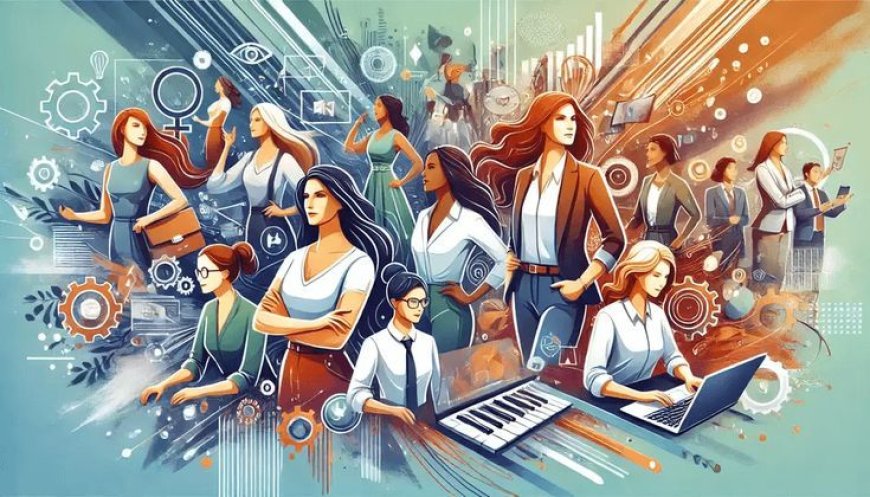
AI is likely to continue the evolution process and become an even more potent creative sidekick—fast and versatile—while humans set the tone with context and values.
The real work is in establishing where to draw the line: when to trust the AI and when to maintain that irreplaceable human touch. Art is more than quantity—that is, production. Art is connection, reflection, and expression. As we look to the future, the one question is not whether AI has or will have a role in art and media: it clearly does. The one question is what we decide to do with it. And with purpose, with design, with creativity, AI can have an enhancing, rather than diminutive, role. It is in this new age that the most interesting, most creative works of art will not be produced in spite of machines, nor in collaboration with machines, but because of machines.
What's Your Reaction?
 Like
1
Like
1
 Dislike
0
Dislike
0
 Love
1
Love
1
 Funny
0
Funny
0
 Angry
0
Angry
0
 Sad
0
Sad
0
 Wow
1
Wow
1