

















































































































































Beyond the Degree: Why "Skills-First" Hiring is Taking Over the 2026 Job Market
Forget what you heard about degrees being the only way in. In 2026, the corporate world is shifting toward "Skills-First" hiring. We look at why companies are prioritizing AI proficiency and adaptability over traditional credentials.
For decades, the path to a high-paying office job was simple: get a degree from a "good" school, polish your resume, and wait for the offers. It was a safe, predictable game. But in 2026, the rules haven't just changed—the game has been deleted.
We are entering a period where your university logo matters far less than your digital "toolbox." The biggest companies in the world are finally admitting something they’ve whispered for years: a four-year degree is a lagging indicator. It tells them what you knew in 2022, not what you can do in 2026.
The Pedigree Trap
The problem with the traditional resume is that it’s built on "proxies." A degree is a proxy for intelligence; a job title is a proxy for experience. But in a world where AI is evolving every six months, these proxies are broken.
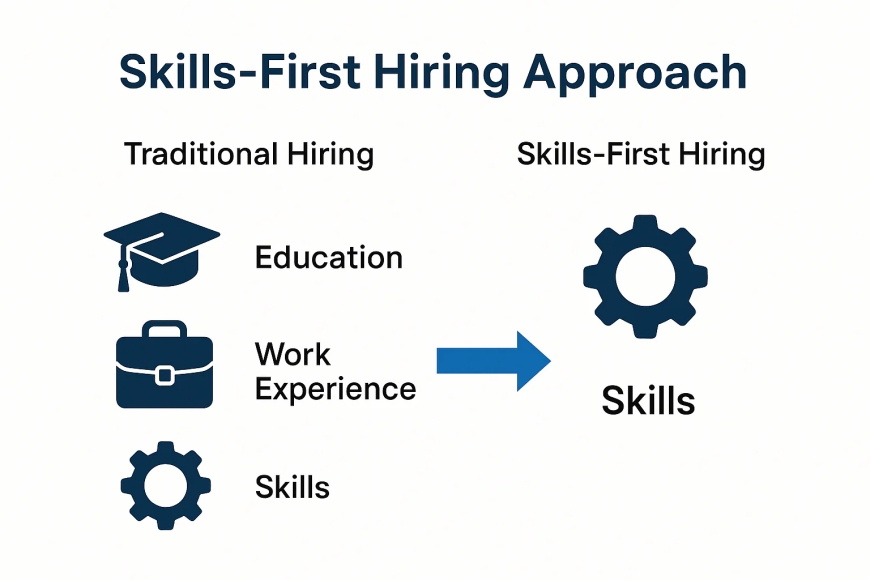
Hiring managers are no longer looking for "Marketing Managers" who understand 20th-century theory. They are hunting for "Skill Architects"—people who can weave together AI agents, data literacy, and human creativity to solve problems that didn't even exist last Christmas. If you can't show a portfolio of real-world AI applications, a PhD from an Ivy League school won't save you.
Why "Matter 2.0" Mentality is Moving into HR
Just like the technology in our homes is becoming more connected, the way we value talent is becoming more integrated. We call this "skills-first" hiring. Instead of checking boxes for education, recruiters are using "skill intelligence" platforms. They want to see your "micro-credentials"—the specific, narrow, and high-impact certifications you’ve earned in the last six months. They want to know if you can handle AI orchestration. Can you take an abstract business goal and turn it into a workflow that uses three different AI models? If you can, you’re worth more than ten traditional graduates combined.
The Human Premium
Here is the twist: as technical skills become cheaper because of AI, "human skills" are becoming insanely expensive.
In 2026, we are seeing a "soft skill premium." Companies are desperate for people with ethical judgment, high emotional intelligence, and the ability to navigate a room of angry stakeholders. Why? Because you can't "prompt" empathy. You can't "automate" a difficult conversation with a client. The professionals making the most money in 2026 aren't the ones who know how to code; they are the ones who know how to lead humans in an automated world.
The "Career Ladder" has been replaced by a "Skills Portfolio." If you’re still relying on your 2015 degree to carry you through 2026, you’re already behind. The future belongs to the "Forever Learner"—the person who treats their career like a software update, constantly downloading new capabilities and deleting outdated habits.
In 2026, the question isn't "Where did you go to school?" The question is: "What can you build today that a machine can't?"
What's Your Reaction?
 Like
0
Like
0
 Dislike
0
Dislike
0
 Love
0
Love
0
 Funny
0
Funny
0
 Angry
0
Angry
0
 Sad
0
Sad
0
 Wow
0
Wow
0