

































































































































































Will 2026 Make the 4-Day Work Week a Global Workplace Rule
Will 2026 make the 4-Day Work Week a global workplace rule as companies test productivity, employee wellbeing, reduced hours, and flexible work models worldwide
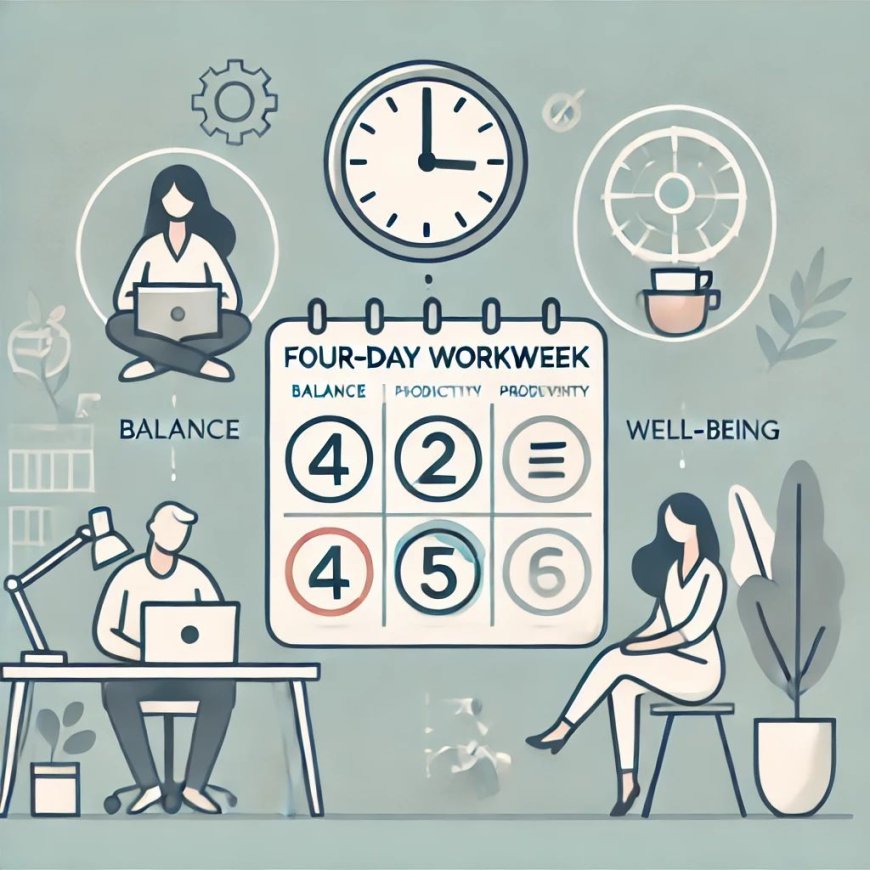
The 4-day work week will 2026 see it become a global standard. Explore its impact on productivity, work-life balance, and AI's role in shaping the future of work.
The concept of a 4-day work week is rapidly gaining traction worldwide. It's moving from a radical idea to a tangible reality for many organisations. As we navigate 2026, the question on everyone's mind is whether this flexible model will finally solidify its position as a global standard.
Recent trials and expert predictions suggest a significant shift in how we approach work. The traditional five-day, 9-to-5 structure is being challenged. Compelling evidence of increased productivity and improved employee well-being under a compressed work schedule is emerging. This article delves into the factors driving this change and its potential to redefine the future of work.
The Rise of the 4-Day Work Week: A Global Movement
The momentum behind the 4-day work week is undeniable. Pilot programs across various countries have consistently reported positive outcomes. This has led many companies to adopt the model permanently.
This global movement is fueled by a desire for better work-life balance. It also recognises that traditional work structures may no longer be optimal for modern demands. Business leaders and futurists are increasingly vocal about the inevitability of a shorter work week.
Jamie Dimon, CEO of JPMorgan Chase, has even predicted that advancements in AI could lead to a 3.5-day work week. Similarly, Bill Gates envisions a future where AI dramatically reduces the need for human labour. This makes shorter work weeks a natural progression.
Unpacking the Benefits: The 100-80-100 Model
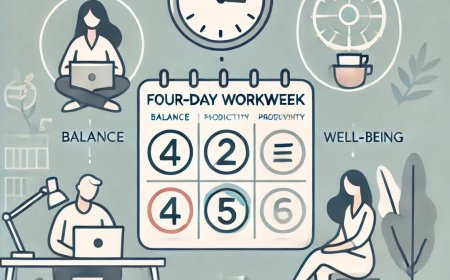
The success of the 4-day work week is often attributed to the “100-80-100” model. This means 100% of pay for 80% of the time, while maintaining 100% productivity. This model has proven highly effective in trials.
Key benefits observed in various pilot programs include:
Increased Productivity: Studies have shown a significant boost in output. Some companies report up to a 40% increase in productivity. Employees, motivated by the extra day off, tend to be more focused and efficient during their working hours.
Improved Employee Well-being: A shorter work week has a direct positive impact on employee mental and physical health. Participants in trials reported fewer sleep issues, decreased fatigue, and an overall improvement in self-reported work ability. The Dubai government's pilot program, for instance, saw employee satisfaction rates near 98%
Reduced Turnover and Burnout: Companies implementing the 4-day work week have experienced a notable decrease in employee resignations. They also see a reduction in burnout rates. This leads to a more stable and experienced workforce, saving companies significant recruitment and training costs.
Enhanced Work-Life Balance: The extra day off provides employees with more time for personal pursuits, family, and rest. This leads to a healthier work-life balance. This is a major draw for talent and contributes to higher job satisfaction.
Challenges and Considerations for a Shorter Work Week
Despite the numerous advantages, the transition to a 4-day work week is not without its challenges. Operational efficiency and cost reduction are significant considerations for businesses. Not all sectors can easily adapt to this model. For example, emergency services or certain manufacturing industries may face difficulties in implementation.
Another concern is the potential for increased work intensity during the four working days. While the goal is to maintain productivity within fewer hours, there's a risk of employees feeling pressured to cram five days of work into four. This could potentially lead to stress and diminish the benefits of the shorter week.
The Role of AI in Shaping the Future of Work
Artificial intelligence (AI) is playing a pivotal role in accelerating the feasibility of the 4-day work week. As AI and automation technologies advance, they are increasingly taking over repetitive and time-consuming tasks. This boosts overall productivity and frees up human workers. This technological leap is a primary catalyst for the discussion around a shorter work week.
Elon Musk has even gone as far as to suggest that in 10 to 20 years, working could become entirely optional. This is due to advancements in AI and robotics. While this might seem futuristic, the current impact of AI on efficiency is already making a compelling case for reduced working hours.
Will 2026 Be the Year of the Global Standard
The question of whether the 4-day work week will become a global standard in 2026 is complex. While the evidence from trials is overwhelmingly positive, widespread adoption requires significant cultural and structural shifts within organisations and economies.
However, the growing number of successful pilot programs and the increasing advocacy from influential business leaders indicate a strong trajectory towards this model. The Tokyo metropolitan government's adoption of a 4-day work week for its employees, along with various companies in the U.S. treating Fridays as flexible days, demonstrates a clear movement in this direction. The ongoing success of these initiatives will likely encourage more organisations to explore and implement similar models.
Conclusion
The 4-day work week is more than just a trend. It represents a fundamental rethinking of work in the 21st century. Driven by the desire for improved work-life balance, enhanced productivity, and the transformative power of AI, its widespread adoption seems increasingly probable. While 2026 may not see it become a universal global standard, it will undoubtedly be a crucial year in its journey towards becoming the new normal.
What's Your Reaction?
 Like
0
Like
0
 Dislike
0
Dislike
0
 Love
0
Love
0
 Funny
0
Funny
0
 Angry
0
Angry
0
 Sad
0
Sad
0
 Wow
0
Wow
0

divya.2525
Social Media Executive SEO & Digital Marketing Specialist at Shakuniya Solution Pvt Ltd..https://www.shakuniya.in