

















































































































































India’s Digital Health Transformation Is Redefining How We Access Care
India’s healthcare is shifting from hospital-centric to digital-first. Telehealth, e-pharma, home diagnostics, and AI-powered medical imaging are making healthcare more accessible, affordable, and preventive for 1.4B people. Here’s how the future of “healthcare everywhere” is taking shape.

For decades, healthcare in India has been built around physical interactions — visiting clinics, lining up in crowded hospital corridors, and relying on local pharmacies for medicines. Diagnosis and treatment were tightly tied to being physically present where the doctor or facility was located. This model created natural limitations: if a specialist wasn’t nearby, access to care was delayed, expensive, or simply unavailable.
The pandemic permanently shifted this dynamic.
Almost overnight, teleconsultations became the first point of medical contact for millions. Patients grew comfortable discussing symptoms over a video call. Doctors used digital prescriptions. Lab reports were shared via WhatsApp or mobile apps. Health records started to live in the cloud instead of paper files.
This wasn’t just a temporary workaround — it changed expectations.
India’s healthcare system is now moving toward “anywhere access.”
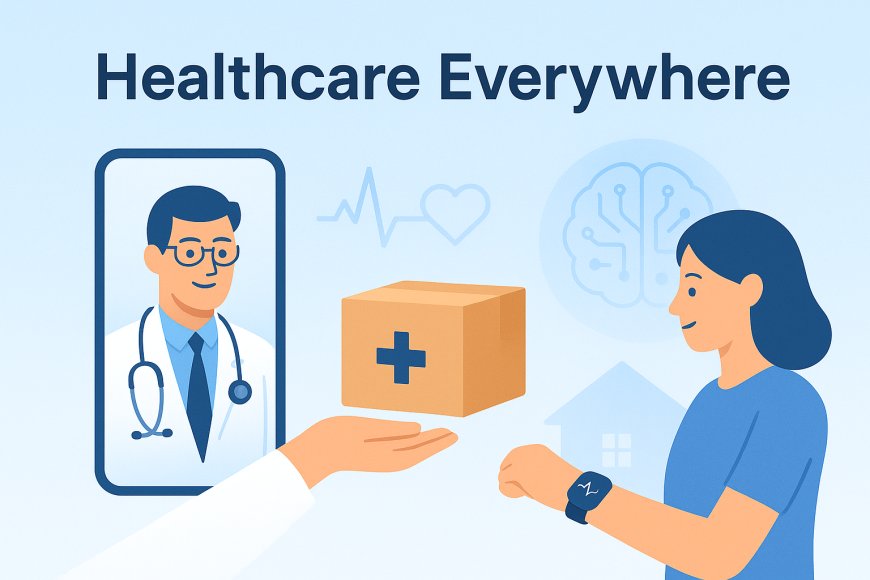
Care is no longer confined to hospital walls. Telehealth platforms, e-pharmacies, home diagnostic services, and AI-powered medical tools are making it possible to receive quality healthcare without needing to physically visit a facility every time.
We are entering a new era where:
- The clinic is your phone.
- The prescription is digital.
- The lab test happens at home.
- Your medical history follows you — not your file folder.
Digital health is not replacing doctors — it is bringing healthcare closer to people.
Why Digitization Matters Now
This transition isn’t just a trend — it addresses some of India’s deep structural challenges in healthcare.
India’s doctor-to-patient ratio is still lower than WHO recommendations, especially when we consider specialists. Many rural and semi-urban regions have limited access to experienced medical professionals, meaning millions either travel long distances or rely on under-equipped local setups.
At the same time, lifestyle diseases like diabetes, hypertension, thyroid disorders, and heart conditions are rising rapidly. These conditions require continuous monitoring and consistent follow-up, not occasional hospital visits when symptoms worsen.
Traditional hospital-centric care is not designed for frequent, long-term management of chronic diseases.
This is where digitization becomes transformative:
|
Challenge |
Digital Solution |
Impact |
|
Limited doctor access |
Teleconsultations |
Patients can consult specialists regardless of location |
|
Rising costs |
Transparent online pricing & generic alternatives |
More affordable treatment |
|
Need for regular monitoring |
Wearables + home labs + app-based follow-ups |
Preventive care instead of late interventions |
|
Fragmented records |
Digital health records |
Continuity of care and more accurate diagnosis |
In simple terms:
Digital health improves:
- Access → anyone, anywhere, anytime
- Affordability → lower cost of care + competitive pricing
- Convenience → fewer hospital visits, faster support
- Continuity → care pathways that don’t break between visits
Digital healthcare is not just a tech upgrade — it is a system-level improvement that helps India provide more equitable, consistent, and proactive care.
Telehealth Is Becoming the First Point of Care
Increasingly, the first medical step for many Indians is no longer a physical clinic visit — it’s a teleconsultation. Instead of traveling to the hospital and waiting in line, patients are opening health apps and speaking directly with certified doctors through video or chat.
Platforms like Practo, Tata 1MG Care, and Apollo 24/7 have normalized this shift, providing instant or scheduled consultations with general physicians as well as specialists like dermatologists, pediatricians, psychiatrists, diabetologists, and cardiologists.
How Telehealth Works in Practice:
· A patient opens the app and describes their symptoms.
· A doctor evaluates and triages — determining whether the issue needs medication, monitoring, lab tests, or an in-person examination.
· If needed, the doctor prescribes digitally, and the medicines can be ordered through integrated e-pharmacy services.
· Follow-ups happen online, especially for chronic care such as diabetes, thyroid, hypertension, PCOS, and mental health conditions.
Benefits Driving Adoption:
· Reduced travel & wait time → Patients save hours.
· Access to specialists → Geography no longer limits treatment.
· Continuous follow-ups → Better outcomes for long-term conditions.
· Privacy & convenience → Especially for mental health and sensitive conditions.
What started as a pandemic necessity has evolved into a mainstream healthcare model.
India is no longer asking “Is telemedicine reliable?” — the question now is “Why visit a clinic unless necessary?”
Telehealth has become the first point of care, the gateway to the broader health ecosystem.
E-Pharma & Digital Prescriptions
Alongside telehealth, e-pharmacies are reshaping how Indians purchase medicines. No more searching multiple stores, calling chemists, or depending on local availability.
Platforms like PharmEasy, Tata 1MG, and NetMeds have made medicines:
· Easier to find
· Simpler to order
· And more price-transparent
Key Features Driving Adoption:
· Doorstep Delivery: Medicines, supplements, and wellness products delivered within hours in urban areas and within days nationwide.
· Digital Prescriptions: Prescriptions are securely uploaded, stored, and reused during refills — reducing paperwork loss.
· Refill Reminders: Automatic alerts ensure patients don’t miss ongoing treatments.
· Price Comparison & Discounts: Consumers can see generic alternatives and competitive pricing.
Regulatory frameworks are also maturing — with guidelines around:
· Verified doctor prescriptions
· Identity authentication for controlled medicines
· Licensed pharmacist oversight
This clarity is helping the sector move from rapid growth to responsible, standardized delivery models.
Home Labs & At-Home Diagnostics
Healthcare is no longer confined to hospitals — it’s moving into homes.
The rise of home lab testing has made diagnostic checks more convenient, frequent, and proactive. Patients can now book tests through an app and get a trained technician at their doorstep — without traveling, waiting in queues, or navigating crowded collection centers.
Platforms leading this shift:
· Healthians
· Redcliffe Labs
· Suburban Diagnostics
What’s Being Done at Home Today:
· Standard blood tests (CBC, thyroid, vitamin levels, lipid profile)
· Home ECG for heart monitoring
· Vitals checks (blood pressure, blood sugar, oxygen saturation)
· Long-term monitoring for chronic diseases
The key change is behavioral:
People are no longer testing only when sick — testing is becoming preventive, helping detect risks early.
This shift supports a new health mindset:
· Test earlier
· Detect sooner
· Treat smarter
As healthcare becomes more predictive and less reactive, home diagnostics is becoming the new normal — especially for working professionals, the elderly, and chronic care patients.
AI Diagnostics & Medical Imaging
One of the most transformative advancements in healthcare is happening in diagnostics, where AI is improving the speed and accuracy of interpreting medical scans and test results.
Where AI is Making a Real Difference:
· Radiology → Faster interpretation of X-rays, MRIs, CT scans
· Ophthalmology → Early detection of diabetic retinopathy
· Oncology → Assistive analysis of pathology slides for cancer detection
India is not just adopting this technology — India is innovating it.
Leading Indian healthtech companies:
|
Startup |
Focus Area |
How It Helps |
|
Qure.ai |
AI-powered radiology interpretation |
Reduces reporting delays, improves diagnostic clarity |
|
Niramai |
Thermal imaging for early breast cancer screening |
Non-invasive, privacy-preserving, accessible screening |
|
Predible Health |
AI for oncology imaging and pre-surgery planning |
Helps doctors plan treatments with more precision |
These tools do not replace doctors. Instead:
AI acts as a co-pilot.
It highlights patterns, flags abnormalities, and speeds up reporting — while the doctor makes final decisions.
In a country where specialist radiologists and pathologists are unevenly distributed, AI helps ensure:
· Faster diagnosis
· Higher accuracy
· More equitable access to care
AI diagnostics is moving healthcare from:
“One doctor, one patient at a time” → to “One doctor supported by intelligent systems serving many.”
How Hospitals & Clinics Are Adapting
Hospitals and clinics are no longer just treating patients — they are becoming digitally connected care ecosystems.
The shift is happening from hospital-centric care (where everything revolves around the facility) to patient-centric care (where the patient controls data, access, and care continuity).
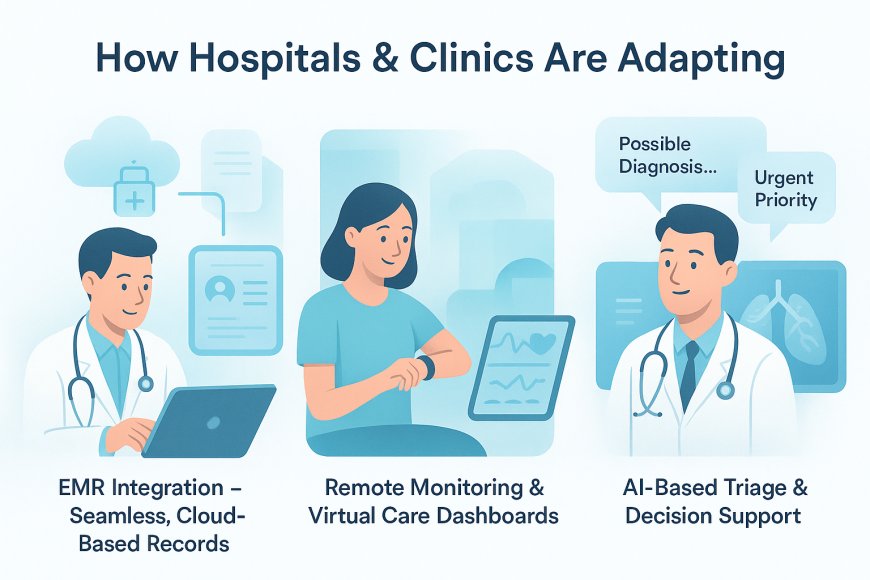
Key Adaptations Underway:
1. Electronic Medical Records (EMR) Integration
Hospitals are moving away from paper files to cloud-based patient records.
This improves:
· Data accuracy
· Continuity of treatment
· Multi-doctor collaboration
· Faster diagnosis and follow-up care
Patients no longer need to carry physical reports — medical history travels with them.
2. Remote Monitoring & Virtual Care Dashboards
For patients with chronic conditions (diabetes, cardiac issues, hypertension), hospitals now use:
· Smart devices
· Wearable vitals trackers
· Home nursing integrations
Doctors view real-time vitals and intervene early when needed.
This reduces hospital visits and prevents emergencies.
3. AI-Based Triage & Decision Support
AI systems are helping:
· Prioritize critical cases
· Suggest possible diagnoses
· Recommend additional tests or referrals
This doesn’t replace doctors — it supports faster, more confident decision-making.
The Big Shift:
Healthcare is becoming continuous, not episodic.
Patients have more control, doctors have better data, and hospitals extend care beyond their walls.
Challenges to Overcome
Despite strong momentum, digital healthcare adoption is not friction-free.
However, these challenges are implementation challenges — not roadblocks.
Key Barriers Today:
1. Digital Literacy Gaps — Especially Among Older Patients
Not everyone is comfortable using apps for consultations or test bookings.
Solution: Assisted digital services + simpler interfaces + multilingual support.
2. Evolving Regulations & Data Privacy Requirements
Healthcare data is sensitive.
Policies around:
· Digital prescriptions
· E-pharmacy operations
· Patient identity verification
are still being refined.
Regulators are cautious — which is good for long-term trust.
3. Ensuring Consistent Quality of Teleconsultations
Remote care must maintain the same clinical rigor as in-person visits.
Hospitals are developing:
· Telemedicine SOPs
· Secure consultation platforms
· Standardized patient follow-up protocols
4. Training Doctors & Staff to Work With AI Tools
AI changes workflow, not medical expertise.
Doctors need support to adopt:
· Diagnostic AI tools
· Digital EMR systems
· Remote monitoring dashboards
This requires change management, not just tech deployment.
The Key Takeaway
These challenges are solvable.
The direction is clear: Healthcare is becoming more accessible, continuous, and patient-led.
Digitization is not replacing the doctor.
It is reinforcing the doctor — with data, efficiency, and reach.
The Future: Healthcare Everywhere
We are entering a phase where healthcare won’t feel like a “visit” or an “appointment” — it will simply be part of everyday life.
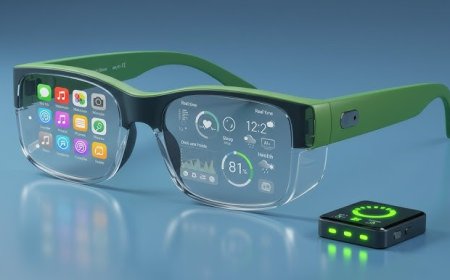
Smart wearables and health devices are already shaping this shift.
A smartwatch today can measure heart rate, sleep quality, oxygen levels, steps, and even signs of stress.
Tomorrow, they will:
- Monitor glucose continuously
- Detect arrhythmias early
- Flag respiratory issues
- Track lifestyle-related health patterns
This means your body will tell you when something is off — before it becomes a problem.
AI will play a key role in this future.
Instead of waiting for symptoms, AI models will analyze patterns and predict early disease risks, enabling:
- Preventive interventions
- Personalized lifestyle and diet plans
- Early screening before complications occur
Healthcare moves from reactive care → to proactive, continuous care.
All healthcare touchpoints are converging into single integrated platforms:
- Teleconsultation
- Prescription management
- Lab testing
- Medicine delivery
- Health record tracking
One app will manage the entire health journey.
No more searching for clinics, labs, or pharmacies separately.
And perhaps the most impactful shift:
Tier-2 and Tier-3 India will benefit the most.
Why?
Because digital healthcare:
- Removes geographical access barriers
- Brings specialists to everyone, not just metro cities
- Makes quality care affordable and convenient
India’s healthcare future is not metro-first.
It is nation-first.
Conclusion
Digitization in healthcare is not about replacing doctors, hospitals, or human judgment.
It’s about extending the reach of care — to more people, at the right time, with better precision.
The future of Indian healthcare will be:
- Preventive → Avoiding illness before it escalates
- Personalized → Care tailored to individual lifestyle and health data
- Remote-First → Accessing treatment without unnecessary travel
- AI-Assisted → Doctors supported, not replaced, by intelligent tools
We are moving away from the old model of “treat when sick” to a new model of “support to stay healthy.”
Healthcare is becoming continuous, connected, and patient-centered.
And this transformation is just beginning.
What's Your Reaction?
 Like
0
Like
0
 Dislike
0
Dislike
0
 Love
0
Love
0
 Funny
0
Funny
0
 Angry
0
Angry
0
 Sad
0
Sad
0
 Wow
0
Wow
0