












































































































































































Key Corporate Strategies for Achieving Business Goals
Discover effective corporate strategies that help businesses achieve growth, improve decision-making, and build long-term success in competitive markets.

Corporate strategy defines an organization’s overall direction, outlining how it allocates value and resources to reach long-term goals amid risks. An effective strategy aligns objectives with market opportunities, company strengths, and stakeholder expectations, fostering sustainable growth and resilience. Today's environment requires focus not just on growth, but also on stability, innovation, operational efficiency, and people management. Companies that are structured and forward-thinking adapt better to change and stay competitive.
Significance of Corporate Strategy
Corporate strategy guides top-level decisions and provides clarity so all departments pursue shared goals. Without a clear strategy, organizations risk misaligned priorities and poor resource use. A strong strategy shapes vision, mission, response to change, resource allocation, performance, and stakeholder trust, helping leaders make informed decisions within a clear framework. Organizations select strategies according to objectives, market position, and situation. The most popular types are:
1. Growth Strategy

A growth strategy is concerned with the expansion of the business in order to boost the revenue, market share, or geographical area. Firms can expand by developing new products, expanding to new markets, merging, acquiring, or forming strategic alliances. This is a very effective strategy in a market where the customer demand is rising, and the rate of growth is high. Nevertheless, it needs proper planning to address risks in terms of finances and operations. Goal: Attain long-run growth and greater profitability
2. Stability Strategy
The strategy of stability is taken when an organization intends to stabilize the position it is in. This strategy is appropriate in the case of established firms that are in a stable market, and making radical changes can bring on unwarranted risk. Rather than expansion, the company is focused on enhancing internal procedures, the quality of its product, and customer satisfaction. Goal: Have stable performance with manageable risk.
3. Cost Leadership Strategy
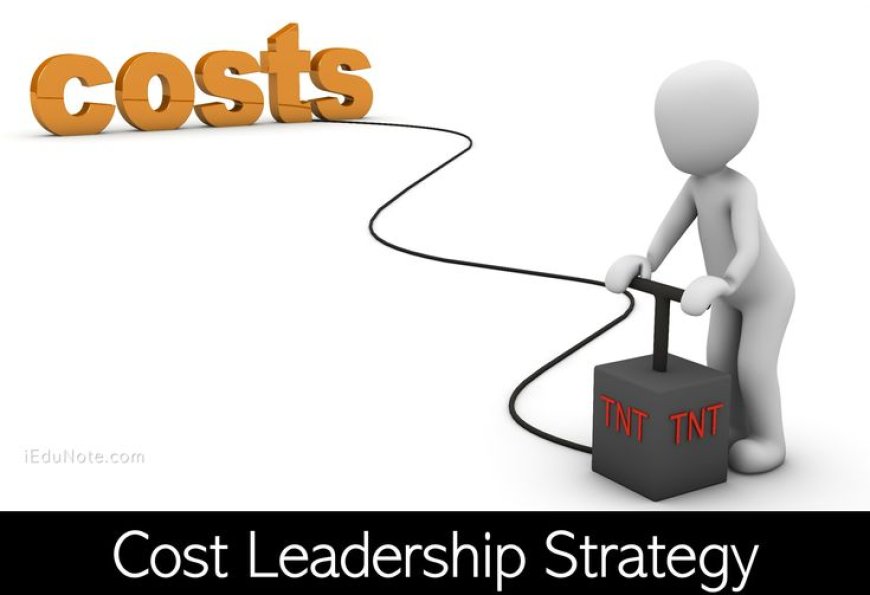
In a cost leadership strategy, businesses strive to be the lowest cost manufacturer in their business. This is done through better operation of the organization, lowering overheads, and exploiting economies of scale. Cost leadership enables organizations that use it to provide competitive prices and remain profitable. Goal: Achieve a market share through the provision of low-cost products or services.
4. Differentiation Strategy
Differentiation strategy is aimed at providing differentiated products or services that can be of added value to the customers. This can be better quality, new functionality, good branding, or great customer service. Differentiation will decrease price rivalry and establish customer loyalty. Goal: A clear market position and high-value brand.
5. Innovation Strategy

Innovation is a key factor in the success in the long run. An innovation strategy promotes the use of new technology, business models, and innovative methods of handling problems. Companies that focus on innovation are able to react quickly to the evolving customer demands and industry trends. Goal: Spur growth by continuous improvement and innovation.
6. Customer-Centric Strategy
A customer-centric approach has the customer needs and experiences at the centre of business decisions. Feedback, data analysis, and market research help companies to create better products and services. This strategy enhances customer relations and also retention. Strategy: Raise customer satisfaction and lifetime value.
7. People and Talent Strategy

Employees are key strategic resources. Corporate strategy focuses on talent acquisition, training, leadership, and engagement. Investing in people boosts productivity, cuts turnover, and strengthens culture. Goal: Maintain a capable, engaged workforce. Implementing a strategy is challenging due to rapid technology shifts, market uncertainty, internal resistance, and communication barriers. Effective organizations address these by staying flexible and focusing on results.
Conclusion
Strategy in the corporation is one of the key factors of organizational success. It offers an organized method of accomplishing long-term goals and balancing between growth, efficiency, innovation, and management of people. It is through the harmonization of the strategic objectives and the realities of the market, as well as the capability inherent in an organization, that resilience can be developed and a sustainable competitive advantage is attained. In a dynamic business world, all companies that invest in effective corporate strategies are in a better position to overcome uncertainty and achieve success in the long run.
What's Your Reaction?
 Like
0
Like
0
 Dislike
0
Dislike
0
 Love
0
Love
0
 Funny
0
Funny
0
 Angry
0
Angry
0
 Sad
0
Sad
0
 Wow
0
Wow
0