
India Semiconductor Mission 2.0 Launched
Budget 2026–27 launches India Semiconductor Mission 2.0 with ₹40,000 crore to strengthen chip design, domestic manufacturing, and the semiconductor value chain.
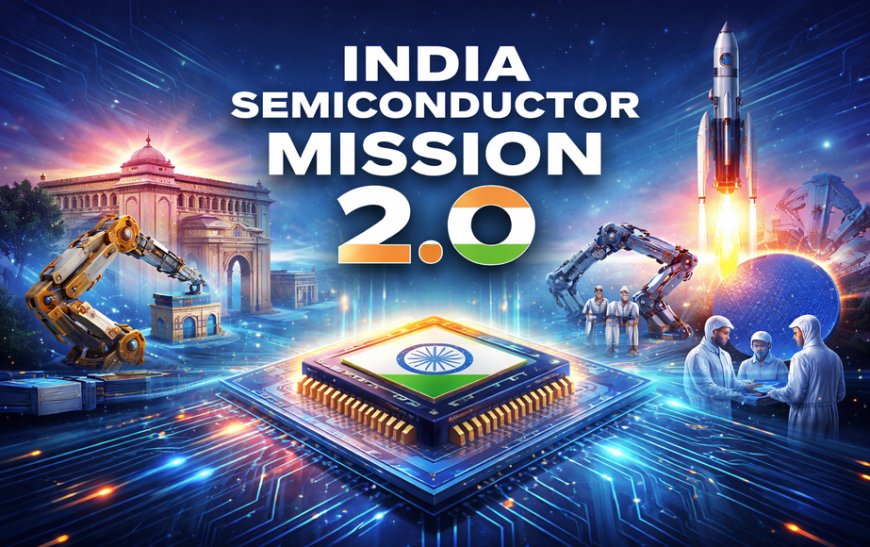
The Union Budget 2026–27, presented by Finance Minister Nirmala Sitharaman, has placed a strong emphasis on strengthening India’s technology and manufacturing sectors. Among its most notable announcements is the India Semiconductor Mission 2.0, a policy initiative aimed at boosting domestic chip manufacturing and reducing dependency on imports. The mission has been allocated ₹40,000 crore, a significant commitment that underscores the government’s intent to build a robust semiconductor value chain across design, fabrication, materials, and testing.
Industry analysts have welcomed the move, highlighting that India’s dependence on imported chips, currently more than 90% of advanced semiconductors, exposes the country to supply risks and price fluctuations. By developing domestic production capacity, the government aims to improve export competitiveness while ensuring strategic resilience in critical technology sectors.
Scope of the Mission
The India Semiconductor Mission 2.0 targets key areas of the semiconductor industry:
- Chip Design and Engineering: Support for domestic startups and established companies to develop integrated circuits for electronics, telecommunications, and industrial applications.
- Fabrication Equipment: Incentives for local production of machinery critical to semiconductor manufacturing.
- Material Supply Chains: Reduction in dependence on imported wafers, speciality chemicals, and other raw materials.
- Packaging and Testing: Development of domestic facilities to assemble, test, and package chips efficiently.
The mission is designed to create a vertically integrated semiconductor ecosystem, spanning from design to production, which is expected to lower import reliance and improve global competitiveness.
Financial and Investment Framework
The government’s ₹40,000-crore allocation will be used for capital subsidies, research and development grants, infrastructure support in electronics manufacturing clusters, and credit facilities for material suppliers. This approach is intended to de-risk investments for both domestic and foreign companies.
Fabrication plants are extremely capital-intensive, with individual units costing between ₹8,000–15,000 crore. By providing upfront financial support, the mission encourages long-term commitments from manufacturers.
Strategic Significance
India currently relies heavily on imports for semiconductors, which exposes key industries including automotive, telecommunications, medical devices, and consumer electronics to supply chain disruptions. Expanding domestic production will help :
- Meet the growing demand for electronics.
- Enhance export competitiveness.
- Generate skilled employment in chip design, fabrication, and testing.
By focusing on high value segments such as wafer fabrication and packaging, the mission ensures India is not only assembling chips but also participating in the full production cycle.
Industry Response
Semiconductor experts and industry leaders have praised the initiative. They note that the combination of policy clarity, financial incentives, and infrastructure support is likely to attract both domestic and foreign investment.
Startups and SMEs will benefit from targeted R&D grants, while larger firms can leverage the support to establish fabrication and packaging units. Experts emphasise that the coordination of the central and state governments will be crucial for timely execution.
Global Context
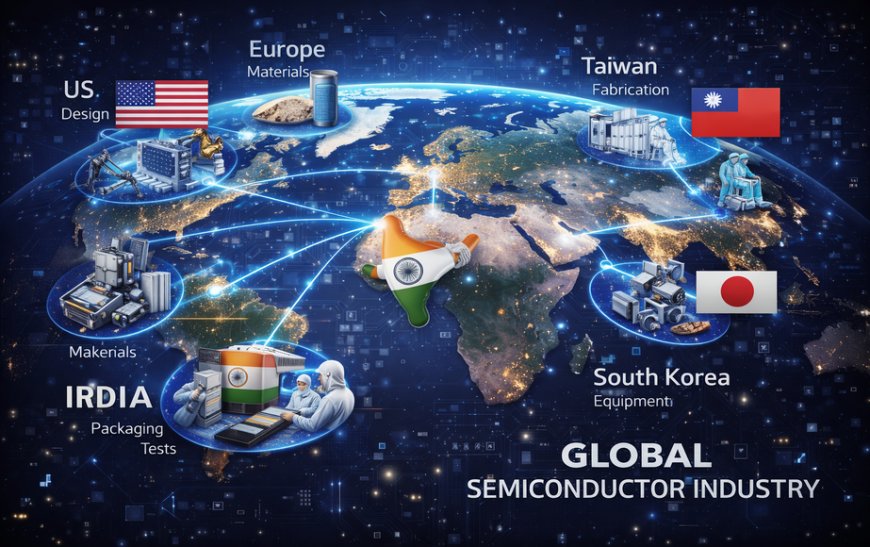
The semiconductor industry is dominated by East Asian countries, including Taiwan, South Korea, and Japan. Recent global shortages have underscored the risks of relying on a concentrated supply base.
By investing in domestic manufacturing capacity, India seeks to:
- Reduce dependence on imports from geopolitically sensitive regions.
- Position itself as a reliable alternative supplier for regional and global markets.
- Attract long-term foreign investment through fiscal and infrastructure incentives.
These measures enhance both India’s economic resilience and strategic autonomy.
Workforce Development
A skilled workforce is essential for sustaining chip manufacturing. The mission includes programs to:
- Offer semiconductor-focused courses at universities and technical institutes.
- Provide hands-on training through industry-academia partnerships.
- Develop engineers and technicians capable of supporting fabrication, packaging, and testing operations.
Without these measures, high-value manufacturing units may face operational delays, regardless of financial incentives.
Projected Economic Impact
If implemented effectively, the mission is expected to:
- Reduce import dependency by up to 40% within a decade.
- Create 50,000–70,000 skilled jobs in design, production, and testing.
- Attract ₹2–3 lakh crore in foreign direct investment.
- Generate annual chip exports worth ₹50,000–60,000 crore.
The initiative could catalyse broader industrial growth, foster innovation, and increase India’s technological self-reliance.
Implementation Challenges
The mission faces several challenges:
- High capital requirements for fabrication plants
- Securing raw materials such as silicon wafers and speciality chemicals
- Coordination among central and state authorities for land, power, and approvals
- Establishing partnerships for advanced manufacturing technology
Timely resolution of these challenges will be key to achieving the mission’s objectives.
Conclusion
The India Semiconductor Mission 2.0, announced under Budget 2026–27, is a major policy effort to strengthen domestic chip manufacturing. By building an integrated semiconductor value chain and providing financial and infrastructure support, the initiative aims to reduce import reliance, boost export competitiveness, and generate a skilled workforce. Effective execution, clear regulatory coordination, and infrastructure readiness will determine whether India can emerge as a significant player in global semiconductor production.
What's Your Reaction?
 Like
0
Like
0
 Dislike
0
Dislike
0
 Love
0
Love
0
 Funny
0
Funny
0
 Angry
0
Angry
0
 Sad
0
Sad
0
 Wow
0
Wow
0

Kulshreshth Chaturvedi
I’m Kulshreshth Chaturvedi, a writer and author specialising in creative writing, blogs, and professional content. I write on literature, ideas, and modern perspectives, focusing on clear, engaging, and well-structured storytelling. My goal is to create meaningful writing that inspires readers, builds connections, and delivers real value through words.