










































































































































































India Plans 280 kmph High-Speed Rail Corridors Now
India plans new high-speed rail corridors with trains reaching 280 kmph, aiming to reduce travel time, boost connectivity, and modernize rail infrastructure fast
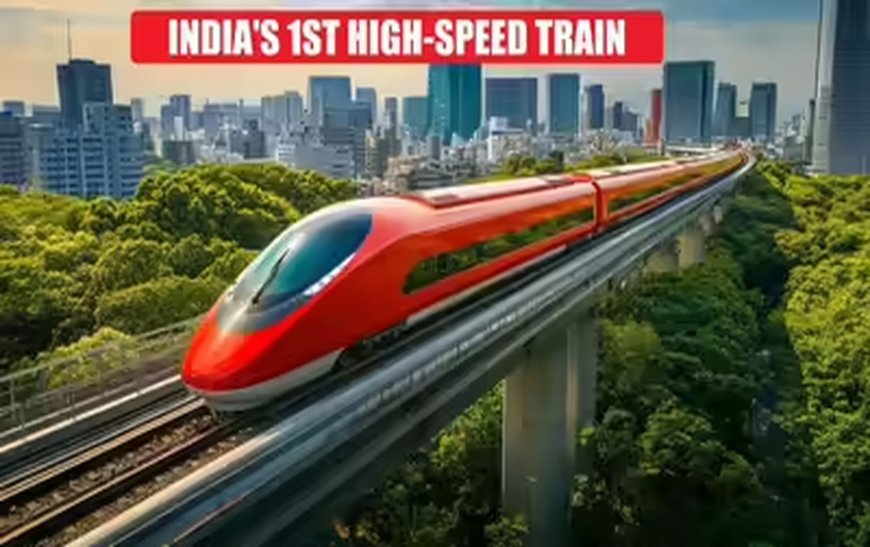
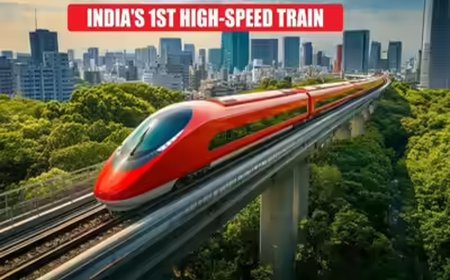
India’s railway modernisation strategy has entered a new phase as the government evaluates multiple corridors capable of supporting trains operating at speeds of up to 280 kmph. The Ministry of Railways, in coordination with the National High Speed Rail Corporation Limited (NHSRCL), is conducting feasibility studies for new high-speed rail routes beyond the ongoing Mumbai–Ahmedabad bullet train project. The proposed expansion reflects the government’s long-term infrastructure agenda aimed at improving intercity connectivity, reducing travel time, and strengthening economic integration across major regions.
Officials confirmed that these new corridors are being designed to support speeds close to 280 kmph, slightly below Japan’s Shinkansen standard of 320 kmph but significantly faster than India’s current fastest train, the Vande Bharat Express, which operates at a maximum speed of 180 kmph.
India’s Plan for 280 kmph High-Speed Trains Builds on Mumbai–Ahmedabad.
Bullet Train Project.
The Mumbai–Ahmedabad High-Speed Rail (MAHSR) corridor remains the foundation of India’s high-speed rail ambitions. Approved in December 2015, the 508-kilometre project connects Maharashtra and Gujarat and is being developed with technical and financial assistance from Japan. The project is estimated to cost ₹1.08 lakh crore, with Japan International Cooperation Agency (JICA) funding approximately 81 per cent through a low-interest loan.
Railway Minister Ashwini Vaishnaw confirmed in 2025 that major construction milestones had been achieved, including the completion of over 300 kilometres of pier work and significant progress on station infrastructure. Trial runs are expected to begin in phases, with full operations planned later in the decade.
The success of this flagship project has encouraged policymakers to consider additional high-speed rail corridors capable of supporting trains operating at 280 kmph.
New Corridors Under Evaluation in India’s Plan for 280 kmph High-Speed Trains
According to officials from the Ministry of Railways, feasibility studies are underway for several new high-speed rail corridors connecting major economic and population centres. These include:
- Delhi–Varanasi
- Delhi–Ahmedabad
- Mumbai–Nagpur
- Chennai–Mysuru
- Delhi–Amritsar
Each of these proposed routes has been selected based on passenger demand, economic potential, and regional connectivity requirements.
A senior official from the National High Speed Rail Corporation Limited stated that the government is focusing on routes with high traffic density and strong commercial viability. The feasibility studies include technical design, environmental impact assessment, land acquisition requirements, and financial planning.
The Delhi–Varanasi corridor, covering approximately 865 kilometres, is expected to reduce travel time between the two cities from over 12 hours to about 4 hours when trains operate at speeds approaching 280 kmph.
Technical Design and Infrastructure Requirements for 280 kmph High-Speed
Trains
High-speed rail systems capable of operating at 280 kmph require dedicated infrastructure separate from conventional railway tracks. These include elevated corridors, specialised track systems, advanced signalling technology, and high-performance rolling stock.
Railway officials confirmed that these corridors will use standard gauge tracks, similar to the Mumbai–Ahmedabad project, rather than India’s traditional broad gauge network. Standard gauge allows greater stability and supports higher speeds.
The infrastructure also requires advanced train control systems such as Automatic Train Protection (ATP) and European Train Control System (ETCS)-level signalling to ensure operational safety at high speeds.
Each kilometre of high-speed rail infrastructure is estimated to cost between ₹200 crore and ₹250 crore, depending on terrain, land acquisition costs, and engineering complexity.
Rolling stock designed for speeds up to 280 kmph will incorporate aerodynamic designs, lightweight materials, and advanced braking systems. These trains will also feature modern passenger amenities, including improved seating, onboard connectivity, and enhanced safety features.
Economic Impact and Investment Opportunities from India’s Plan for 280
kmph High-Speed Trains
India’s high-speed rail expansion represents one of the largest infrastructure investments in the country’s transport sector. Analysts estimate that the development of multiple high-speed rail corridors could require investments exceeding ₹5 lakh crore over the next two decades.
The project is expected to generate substantial economic benefits, including:
- Job creation in the construction, engineering, and manufacturing sectors
- Growth in domestic railway component manufacturing
- Increased business activity in connected cities
- Improved productivity through reduced travel time
The government’s “Make in India” initiative is expected to play a central role in manufacturing train components domestically. Railway officials have already confirmed plans to increase local production of rolling stock, signalling equipment, and infrastructure materials.
Private sector participation is also being explored through public-private partnerships, particularly in station development, operations, and maintenance.
According to infrastructure analysts cited by Business Standard and Economic Times, improved connectivity between economic hubs could significantly boost regional GDP growth by improving logistics efficiency and business mobility.
Policy Framework and Government Strategy Supporting 280 kmph High-
Speed Trains
India’s high-speed rail expansion aligns with the National Rail Plan 2030, which outlines long-term strategies to modernise railway infrastructure and improve capacity.
The National Infrastructure Pipeline (NIP), launched in 2020, identified railway modernisation as a priority sector. High-speed rail development forms a key component of this initiative, alongside freight corridor expansion and station modernisation programs.
The Ministry of Railways has also strengthened institutional capacity by empowering NHSRCL to oversee project implementation, technical coordination, and international collaboration.
Government officials confirmed that future high-speed rail projects will incorporate lessons learned from the Mumbai–Ahmedabad corridor, including improvements in land acquisition processes and cost management strategies.
Global Comparison and Strategic Importance of India’s High-Speed Rail
Expansion
India’s move toward trains operating at 280 kmph places it among countries investing heavily in high-speed rail infrastructure. Nations such as China, Japan, France, and Germany have already developed extensive high-speed rail networks.
China operates the world’s largest high-speed rail network, covering over 40,000 kilometres, while Japan’s Shinkansen system has maintained one of the safest operational records globally.
India’s expansion into high-speed rail is expected to enhance its global competitiveness and strengthen transportation infrastructure supporting long-term economic growth.
Railway officials emphasised that high-speed rail will complement existing transport modes, including aviation and conventional railways, rather than replace them.
With feasibility studies progressing and construction expertise expanding, India’s railway modernisation program is entering a critical implementation phase. The development of trains capable of operating at 280 kmph reflects a strategic shift toward faster, safer, and more efficient intercity transportatio
What's Your Reaction?
 Like
0
Like
0
 Dislike
0
Dislike
0
 Love
0
Love
0
 Funny
0
Funny
0
 Angry
0
Angry
0
 Sad
0
Sad
0
 Wow
0
Wow
0

divya.2525
Author | Business & Startup Writer
Passionate about telling real stories behind growth, innovation, and entrepreneurship. Focused on research-backed, human-centred content.