


















































































































































Artificial Intelligence in IT Services & Outsourcing
The role of IT services has expanded far beyond operational support. Today, enterprises expect their technology partners to anticipate risks, improve resilience, and contribute directly to business performance.
Introduction
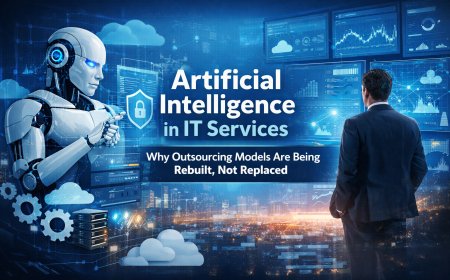
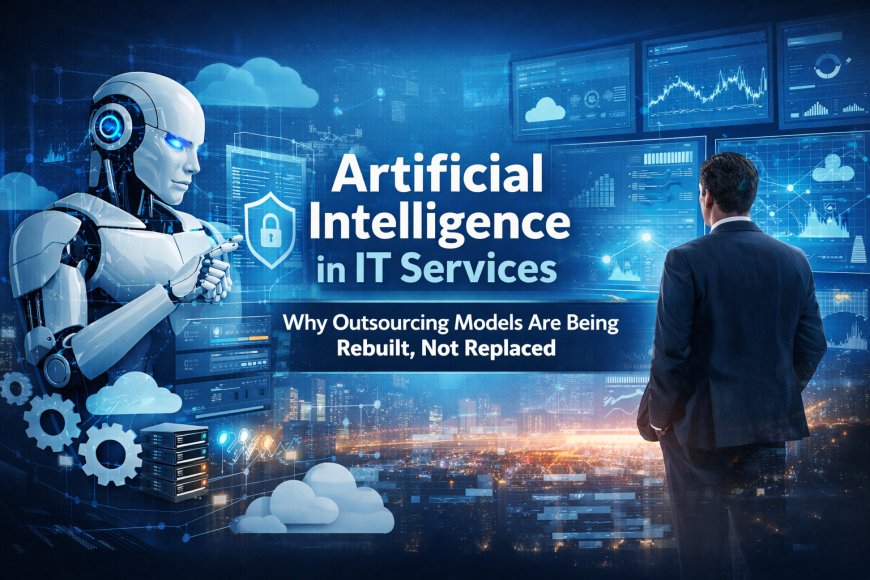
The role of IT services has expanded far beyond operational support. Today, enterprises expect their technology partners to anticipate risks, improve resilience, and contribute directly to business performance. Traditional outsourcing models, largely focused on cost control and manpower efficiency, are struggling to meet these expectations. Against this backdrop, Artificial Intelligence in IT Services has become a structural force reshaping how services are delivered, measured, and valued.
Rather than signalling the end of outsourcing, this shift represents its reinvention. IT service providers are moving towards AI-augmented managed services that combine automation with human expertise to deliver smarter, more adaptive outcomes.
Why are traditional outsourcing models losing relevance today?
Conventional outsourcing frameworks were designed for environments where change was incremental, and systems were relatively predictable. These models depend heavily on manual monitoring, ticket-driven workflows, and predefined service-level agreements. While effective in earlier decades, they are increasingly misaligned with modern IT landscapes.
Today’s enterprise environments include hybrid and multi-cloud platforms, distributed applications, and continuous deployment cycles. In such settings, reactive incident management often leads to delayed responses and limited insight into underlying system behaviour. As a result, organisations are questioning whether labour-intensive service models can deliver the responsiveness and foresight now required.
How operational complexity is changing service expectations
The scale and speed at which modern systems operate generate volumes of data that manual processes cannot analyse effectively. Enterprises now expect service providers to detect issues early, understand patterns across systems, and reduce disruption before it impacts users. These expectations have accelerated interest in intelligence-driven delivery models.
What defines AI-augmented managed services in practice?
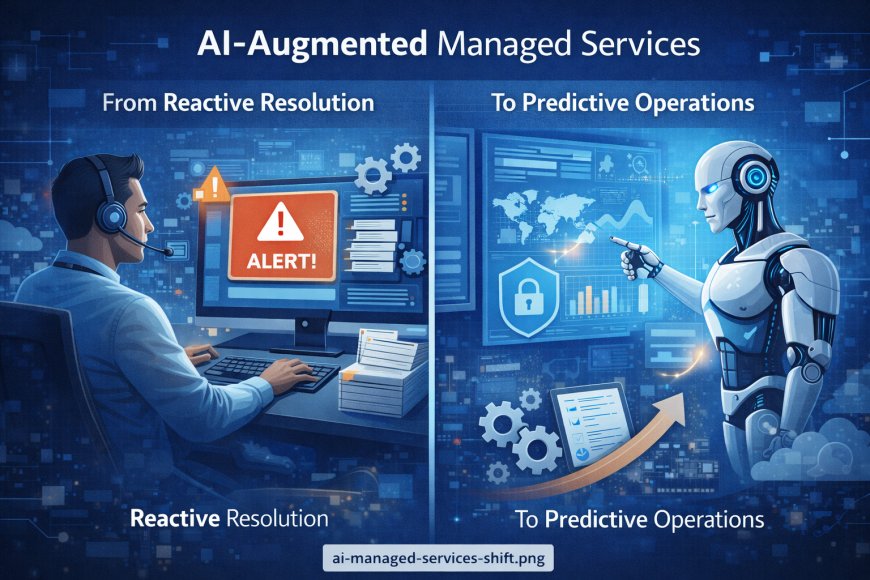
AI-augmented managed services embed analytics and automation into the core of IT operations. Instead of responding only after failures occur, intelligent systems continuously analyse logs, metrics, and behavioural signals to identify anomalies and forecast potential disruptions.
This enables earlier intervention and more consistent service performance. Routine incidents can be handled automatically through predefined workflows, while advanced analytics support faster diagnosis of complex problems. Over time, service delivery becomes less dependent on manual effort and more focused on outcomes. This evolution is closely linked to the adoption of Managed IT Services powered by intelligent automation.
From reactive resolution to predictive operations
Predictive monitoring and automated remediation allow service providers to move beyond ticket volume as a measure of performance. The emphasis shifts towards availability, reliability, and business continuity—areas where intelligence delivers measurable value.
How does automation work alongside human expertise?
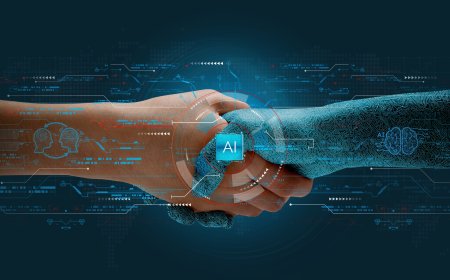
Automation is often misunderstood as a substitute for skilled professionals. In reality, effective service models depend on collaboration between intelligent systems and human judgment. Automation excels at handling repetitive tasks and processing large datasets, but it lacks contextual awareness and strategic reasoning.
Human experts interpret insights, manage exceptions, and make decisions that account for business priorities, risk, and governance. This balance ensures that IT Service Automation improves efficiency without undermining accountability or trust.
Why human judgment still matters
Architecture decisions, risk assessments, and stakeholder communication remain inherently human responsibilities. Intelligent tools support these activities by reducing noise and enabling better-informed decisions, not by replacing expertise.
What business value do intelligent service models deliver?
AI-enabled service delivery produces tangible operational and strategic benefits. Predictive capabilities reduce unplanned outages, while automation shortens resolution times and improves consistency. These improvements allow organisations to scale IT operations without linear increases in cost or workforce size.
More importantly, service performance becomes better aligned with business objectives. Metrics increasingly focus on outcomes such as system availability, resilience, and user experience. This alignment reinforces the strategic importance of Artificial Intelligence in IT Services within enterprise decision-making.
Resilience and scalability as core outcomes
Intelligent services help organisations absorb change more effectively, whether driven by growth, regulatory demands, or evolving customer expectations.
What challenges slow the adoption of AI-driven services?
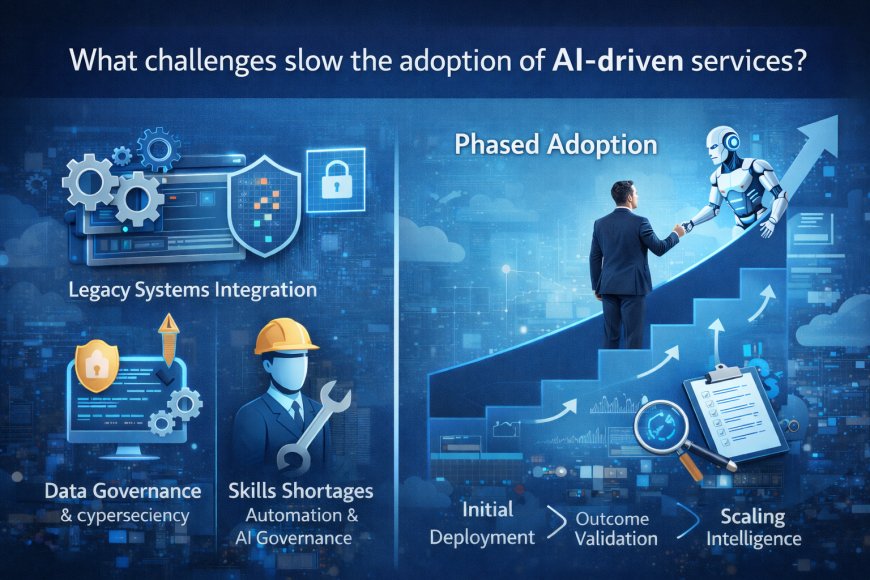
Despite its benefits, the transition to AI-augmented models presents real challenges. Integrating intelligent platforms with legacy systems can be technically demanding, while data quality and governance issues may limit effectiveness. Cybersecurity and compliance considerations also require careful oversight.
In addition, many providers face skills shortages in automation engineering and AI governance. Successful adoption typically involves phased implementation, prioritising high-impact use cases and investing in continuous workforce development.
Why phased adoption reduces risk
Incremental deployment allows organisations to build capability, validate outcomes, and adjust governance frameworks before scaling intelligence across operations.
What does the future look like for IT service providers?
As digital dependency increases, enterprises will favour partners capable of delivering foresight, adaptability, and strategic insight. Traditional outsourcing models risk commoditisation, while intelligent managed services position providers as long-term partners rather than transactional vendors.
Over time, Artificial Intelligence in IT Services is expected to become a baseline expectation rather than a differentiator. Competitive advantage will depend on how effectively intelligence is integrated with domain knowledge and business understanding.
Conclusion
The pressure on IT service providers to evolve beyond traditional outsourcing is structural rather than cyclical. AI-augmented managed services offer a sustainable response by combining automation with human judgment to deliver proactive, scalable, and business-aligned outcomes. Organisations that approach Artificial Intelligence in IT Services as a strategic capability rather than a tactical add-on will be better prepared to navigate complexity and uncertainty in the digital economy.
Insight-led platforms such as Prime Synapse contribute to this shift by helping professionals and decision-makers stay informed about emerging technology trends, digital strategy, and the evolving role of IT services.
What's Your Reaction?
 Like
0
Like
0
 Dislike
0
Dislike
0
 Love
0
Love
0
 Funny
0
Funny
0
 Angry
0
Angry
0
 Sad
0
Sad
0
 Wow
0
Wow
0

sureshsawar2026
Digital Marketing Executive at Shakuniya Solution Pvt Ltd
Helping brands grow through digital strategy & performance