




































































































































































Tejas Fighter Jet Crash: Third Loss in India IAF 3
Tejas fighter jet crash becomes third loss among 32 aircraft in India, prompting IAF safety checks, HAL review, and raising concerns over defence readiness plans now.
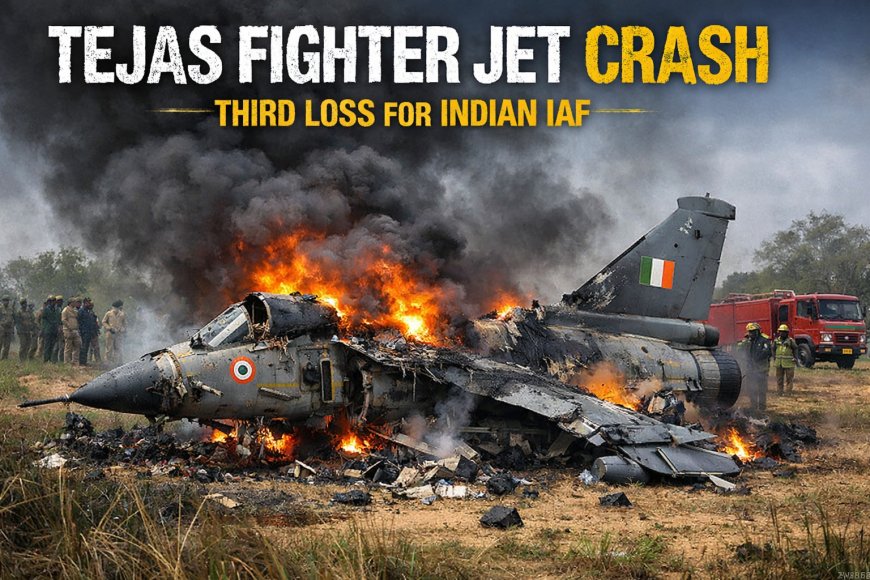
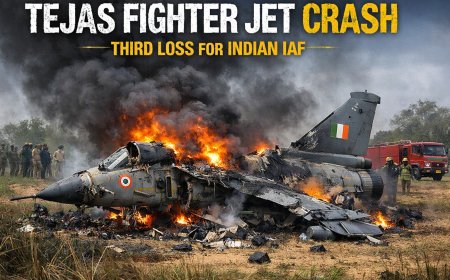
India’s indigenous fighter programme suffered another setback after an Indian Air Force Light Combat Aircraft (LCA) Tejas sustained severe damage during a runway incident earlier this month, marking the third loss involving the platform since its induction into service. The aircraft, one of the 32 single-seat Tejas fighters delivered so far, overshot the runway at a frontline airbase on February 7, triggering a safety review and raising fresh questions about fleet readiness and production timelines.
The pilot ejected safely and survived without major injuries. However, early assessments indicate the aircraft may be declared a write-off due to extensive structural damage. The accident prompted the grounding of the operational Tejas fleet for precautionary inspections while engineers and investigators examine whether the cause was isolated or linked to broader technical issues.
Tejas Fighter Jet Crash Adds to Growing Accident Timeline
This Tejas fighter jet crash represents the third major accident involving India’s homegrown fighter since its operational induction in 2015–16. The first incident occurred in March 2024 near Jaisalmer in Rajasthan, when a Tejas jet crashed after completing a firepower demonstration. The pilot ejected successfully and survived.
The second accident took place during an aerobatic display at the Dubai Airshow in November 2025, resulting in the death of Wing Commander Namansh Syal. That crash marked the first fatal accident involving the Tejas platform and remains under investigation.
The February 2026 accident differs from earlier cases in that it occurred during landing following a routine training sortie. Preliminary reports suggest a suspected brake failure may have caused the jet to overshoot the runway, leading to significant airframe damage.
The cumulative effect of these incidents has intensified scrutiny of the indigenous programme, especially given the relatively small fleet size currently in operational service.
Indian Air Force Grounds Fleet After Tejas Fighter Jet Crash
Following the latest Tejas fighter jet crash, the Indian Air Force grounded its entire fleet of approximately 30 operational Tejas aircraft for technical evaluation and safety inspections. This step is standard protocol in military aviation to ensure operational safety and determine whether systemic faults exist.
A Court of Inquiry has been ordered to identify the root cause, including examination of onboard systems, braking mechanisms, and maintenance procedures. Military officials are also assessing whether additional engineering modifications or operational restrictions may be required.
The grounding temporarily affects squadron availability and operational planning, particularly as the Tejas is intended to replace ageing MiG-21 aircraft that have already been phased out.
Meanwhile, manufacturer Hindustan Aeronautics Limited clarified that the incident involved a runway overshoot and not necessarily a catastrophic crash, describing it as a “minor technical incident on ground” in official statements to reassure stakeholders and investors.
Production Numbers and Programme Status Behind Tejas Fighter Jet Crash Concerns
The aircraft involved in the February 2026 accident was among the 32 single-seat Tejas fighters delivered by Hindustan Aeronautics Limited to the Indian Air Force. These deliveries represent part of a larger modernisation plan aimed at strengthening India’s indigenous defence capabilities.
India’s Ministry of Defence has committed significant financial resources to the programme. In February 2021, the government signed a ₹48,000 crore contract to procure 83 Tejas Mk-1A fighters. A subsequent deal worth ₹62,370 crore, approved in September 2025, added another 97 aircraft to the order book.
Together, these agreements aim to expand the fleet to over 180 aircraft, positioning the Tejas as a core component of India’s combat aviation structure.
Despite these commitments, production delays have slowed deployment. One key bottleneck involves delayed engine deliveries from global suppliers, affecting production schedules and squadron expansion.
The aircraft itself was designed by India’s Aeronautical Development Agency and manufactured domestically, representing a central pillar of India’s “Make in India” defence initiative.
Economic and Market Impact of Tejas Fighter Jet Crash Reports
News of the Tejas fighter jet crash had immediate financial consequences, particularly for Hindustan Aeronautics Limited, whose shares declined by about 5 per cent amid investor concerns regarding aircraft safety and programme stability.
Although HAL later clarified that there had been no catastrophic crash, the market reaction underscored the sensitivity of defence manufacturing firms to operational incidents.
Investor sentiment remains closely linked to the company’s ability to meet delivery schedules and maintain the safety reputation of its aircraft. The Tejas programme is among HAL’s most strategically important projects, accounting for billions of rupees in future production and export potential.
Beyond equity markets, operational disruptions could also affect India’s defence readiness and procurement planning, particularly as the Tejas fleet is expected to become the backbone of India’s air combat capability.
Strategic Role and Future Outlook After Tejas Fighter Jet Crash
Despite recent accidents, military and industry officials maintain confidence in the platform’s long-term viability. HAL has stated that the Tejas fighter jet maintains a strong safety record compared to contemporary fighter aircraft globally, emphasising ongoing technical evaluations and corrective measures.
India’s defence leadership continues to view the aircraft as critical to reducing reliance on foreign fighter imports while strengthening domestic aerospace manufacturing.
The programme’s future depends heavily on resolving technical concerns, accelerating deliveries, and ensuring operational reliability across all squadrons. Defence planners are particularly focused on the timely deployment of the improved Tejas Mk-1A variant, which incorporates upgraded radar, avionics, and combat capabilities.
The current investigation into the February 2026 Tejas fighter jet crash is expected to influence operational procedures, maintenance standards, and engineering modifications across the fleet.
India’s investment in indigenous fighter production reflects a broader strategic shift toward defence self-reliance. The resolution of safety concerns surrounding the Tejas programme will determine how quickly the aircraft can assume its intended role as the mainstay of India’s combat air fleet.
What's Your Reaction?
 Like
0
Like
0
 Dislike
0
Dislike
0
 Love
0
Love
0
 Funny
0
Funny
0
 Angry
0
Angry
0
 Sad
0
Sad
0
 Wow
0
Wow
0