
TCS’s Brazil Bet Signals Next Phase of Indian IT
TCS is investing USD 37 million in a new Brazil delivery campus, highlighting how Indian IT firms are shifting toward global-local growth models.
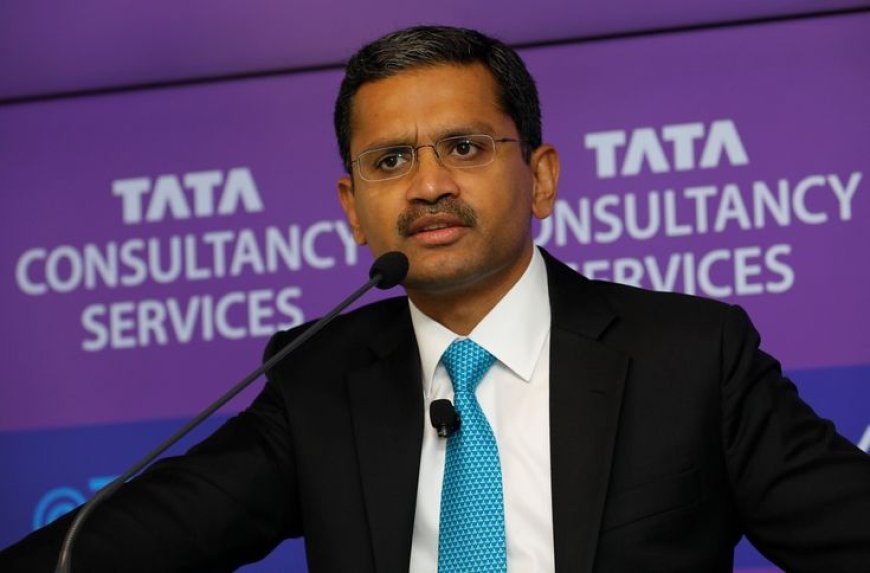
TCS’s Brazil Bet: A Signal of the Next Phase of India’s IT Growth Story
Tata Consultancy Services’ (TCS) latest investment in Latin America is far more than a real-estate expansion. It reflects a deeper shift in how Indian IT companies are positioning themselves for a world where clients expect not just global scale, but strong local presence as well. By committing USD 37 million (around BRL 200 million or ₹3.3 billion) to a new delivery campus in Brazil, TCS is outlining what the next phase of India’s IT growth could look like.
The new campus, coming up in Londrina, Brazil, highlights how Indian IT firms are evolving from offshore service providers into truly global technology partners, anchored in India, but deeply embedded in key international markets.
Inside TCS’s Brazil Campus Investment
The upcoming delivery campus will be located in Londrina, a city in the southern Brazilian state of Paraná, and will become TCS’s largest delivery centre in the country. Spread across approximately 9,000 square metres, the campus will consist of three buildings and is being designed to achieve LEED Gold certification, underlining the company’s emphasis on sustainability and energy-efficient infrastructure.

TCS plans to complete the campus by 2027. Once operational, it will consolidate the company’s existing operations in Londrina and serve as a platform for future expansion in Brazil and the wider Latin American region. Currently, TCS employs about 2,500 people in Brazil through delivery centres in Londrina, São Paulo and Rio de Janeiro, serving over 200 clients across industries.
The new facility alone is expected to generate more than 1,600 additional jobs over time, significantly strengthening TCS’s local talent base.
Importantly, this is not a low-value, back-office operation. TCS has stated that the campus will function as a strategic hub for digital transformation, cloud services, cybersecurity, artificial intelligence and enterprise technology services. This signals a clear intent to focus on high-end, technology-intensive work rather than purely cost-driven delivery.
Why Latin America Matters to an Indian IT Giant
While India remains the backbone of TCS’s global delivery engine, Latin America has emerged as an increasingly important growth region. TCS has operated in Brazil for more than two decades and has been recognised as a top employer in the country for ten consecutive years, indicating sustained investment in local workforce development.
In its most recent quarter, TCS reported 14.5% revenue growth from Latin America, with the region now contributing around 2% of the company’s total revenue. Though this share is still small compared to North America or Europe, the growth momentum is clearly visible.
Brazil plays a central role in this strategy. With its large economy, mature financial sector and growing demand for digital transformation, the country offers both a strong domestic market and an effective near-shore delivery base for global clients. By choosing Londrina—away from high-cost metros but close to universities and talent pools—TCS achieves a balance between cost efficiency and long-term talent availability.
This approach aligns with a broader shift across Indian IT. The traditional “everything from India” model is gradually giving way to a distributed global delivery network, enabling firms to meet data-residency requirements, language needs and time-zone alignment while still anchoring core architecture and governance in India.
How This Reshapes India’s IT Growth Narrative
A common question is whether building large delivery centres overseas dilutes India’s importance as the global IT backbone. For companies like TCS, the opposite appears to be true.
First, the investment strengthens the follow-the-sun delivery model. With major centres across India, Europe, North America and Latin America, TCS can offer 24×7 support—critical for areas such as cybersecurity operations, cloud management and always-on digital platforms.
Second, it enables a deeper local-global talent integration. Indian teams can continue to drive core architecture and intellectual property, while Brazilian professionals bring domain expertise, language skills and client proximity. Such blended delivery models are difficult for purely local firms to replicate at scale.
Third, the focus on a LEED Gold-certified, sustainability-oriented campus reflects evolving client priorities. ESG considerations increasingly influence vendor selection, especially for European and American enterprises with strict reporting requirements. By embedding sustainability and local job creation into its expansion strategy, TCS strengthens its positioning as a responsible, future-ready partner.
Finally, this move highlights the transition from traditional outsourcing to co-creation and long-term partnerships. Capital investment in local infrastructure and talent signals long-term commitment, helping TCS move beyond project-based work to more complex, multi-year transformation engagements.
Implications for Competitors and the Broader IT Sector
For other Indian IT majors, TCS’s Londrina campus raises the bar for what it means to be globally competitive. While several peers already operate centres in Mexico, Colombia and Chile, TCS’s decision to position this facility as a major hub for AI, cybersecurity and digital transformation is likely to trigger renewed capacity-building efforts across the sector.
The timing is also noteworthy. Global IT spending remains cautious, yet TCS’s willingness to commit USD 37 million and plan for 1,600 new jobs reflects confidence in Latin America’s long-term technology demand. For India’s IT growth story, this suggests that future expansion may rely less on incremental gains in mature markets and more on building region-specific growth engines like Brazil.
A Global Player Anchored in India
In essence, TCS’s Brazil campus demonstrates an Indian IT giant operating with a truly global mindset—deeply rooted in India, yet willing to invest wherever clients, talent and future demand converge. If this bet pays off, it will not only reshape TCS’s Latin American footprint but also reinforce the idea that India’s technology leaders can successfully export not just services, but entire global delivery models to the world.
What's Your Reaction?
 Like
0
Like
0
 Dislike
0
Dislike
0
 Love
0
Love
0
 Funny
0
Funny
0
 Angry
0
Angry
0
 Sad
0
Sad
0
 Wow
0
Wow
0