
$100,000 H-1B Fee Sparks Legal Fight, Hits Indian IT
Indian IT faces disruption after Trump’s $100,000 H-1B visa fee, with lawsuits expected and companies accelerating automation and local hiring.
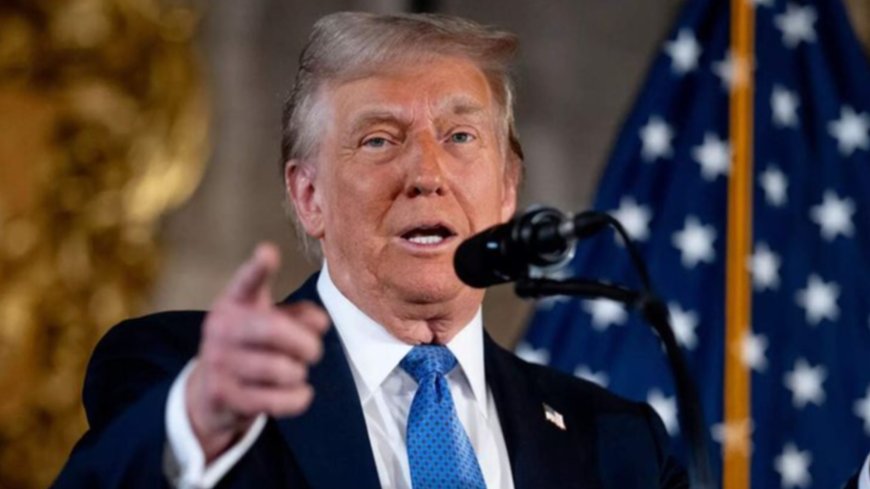
$100,000 H-1B Visa Fee Sparks Concern in Indian IT Sector
Immigration Lawyers Expected to Challenge Trump’s Executive Order
India’s $280-billion technology services sector was thrown into uncertainty after a sudden executive order by US President Donald Trump, imposing an annual $100,000 fee on new H-1B visa applications, effective with just one day’s notice.
The announcement has triggered widespread concern across Indian IT firms, immigration lawyers, and affected professionals, many of whom are now being advised to “wait and watch” as legal action is prepared against the move.
What Is the H-1B Visa and Why Does It Matter
H-1B visas allow US companies to employ foreign professionals in specialised fields such as technology, engineering, science, and mathematics (STEM).
Each year, around 70–75% of the annual 85,000 H-1B visas are granted to Indian professionals, largely due to the high volume of applications from India’s IT services sector.
Executive Order Leaves Key Questions Unanswered
While the executive order has been issued, it has created significant uncertainty.
According to Purvis Chothani, Florida-based immigration lawyer and Managing Partner at LawQuest, the US Citizenship and Immigration Services (USCIS) has been instructed not to adjudicate H-1B petitions for applicants outside the US unless proof of payment of the $100,000 fee is provided.
However, she noted that there is no clarity on who must pay the fee, how it should be paid, where it should be paid, or when it becomes due. Given the lack of guidance, Chothani advised affected professionals to “wait and watch”, as the next step would likely involve legal action challenging the order.
Lawsuits and Injunctions Expected
Legal opposition is already taking shape. An organisation called Impact Immigration, known for filing large-scale immigration lawsuits, is gathering plaintiffs and preparing to file a case seeking a temporary restraining order (TRO).
“This is being led by Greg Siskind and Charles Cook, two well-known immigration litigators in the US,” Chothani said. The lawsuit is expected to be filed either immediately or early next week, depending on final legal preparations.
Legal experts believe the executive order may be vulnerable to challenge.
“From a legal standpoint, this policy is on shaky ground,” said Phil Fersht, Founder and CEO of HFS Research, pointing out that fee-setting authority lies with USCIS through a cost-based rulemaking process, not unilateral executive orders.
He added that he fully expects lawsuits and injunctions to be filed before the policy’s September 21 effective date.
Impact on Indian IT Companies: Limited but Symbolic
Despite the shock, industry leaders believe the direct business impact on Indian IT companies may be limited.
CP Gurnani, former CEO of Tech Mahindra and founder of AIonOS, noted that Indian IT firms have already reduced their dependence on H-1B visas significantly, with filings dropping by more than 50% over recent years.
Between FY15 and FY23, approvals for initial H-1B employment among the top seven Indian IT firms fell from 15,100 to 6,700, according to data from the National Foundation for American Policy (NFAP).
“This shift is a result of our strategy to hire more locally, invest in automation, and strengthen our global delivery model,” Gurnani said, adding that visa fee changes are unlikely to materially disrupt business operations.
A Broader, Long-Term Industry Shift
However, analysts caution that the psychological and strategic impact is already visible.
Enterprises and service providers are scenario-planning, repricing deals, and accelerating local hiring.
Ashutosh Sharma, Research Director and VP at Forrester, emphasised that the broader, long-term implication is a structural shift within the industry. He noted that even if the policy is eventually reversed, it is already accelerating the move toward automation, platform-based services, and reduced dependence on H-1B workers.
Sharma added that this trend could increase offshoring, as US clients continue to seek cost efficiency. Indian IT firms may hire more talent in India or rely on nearshore locations such as Canada and Mexico, alongside local US hiring.
What About Big Tech Hiring Indian Talent?
Interestingly, while Indian IT services firms have reduced H-1B dependency, large US technology companies have continued to secure significant H-1B allocations to hire Indian professionals.
This highlights a growing divide between IT services companies adapting their delivery models and Big Tech firms continuing to rely on global talent mobility.
What's Your Reaction?
 Like
0
Like
0
 Dislike
0
Dislike
0
 Love
0
Love
0
 Funny
0
Funny
0
 Angry
0
Angry
0
 Sad
0
Sad
0
 Wow
0
Wow
0