Niya Meet: Empowering Learning Experiences in the Digital Era
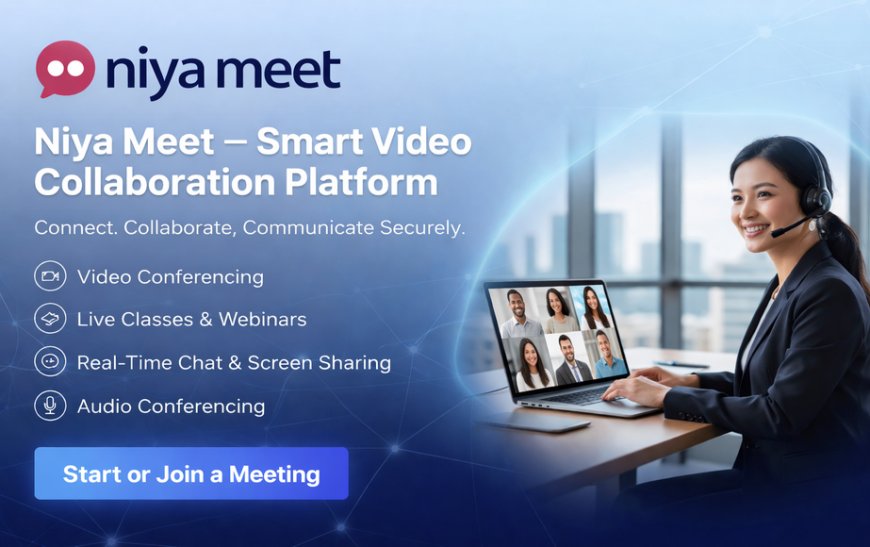
Niya Meet enables easy and secure video meetings for teams, educators, and businesses to connect, collaborate, and engage anytime, anywhere.

Online education is no longer defined by improvised video calls or slide-heavy lectures delivered over unstable connections. As institutions recalibrate their long-term digital strategies, the emphasis has shifted toward designing environments where instruction follows a deliberate sequencing, measurable progression, and sustained interaction. Within this shift, Niya Meet positions itself as a structured delivery system rather than a generic conferencing interface.
The distinction matters. A meeting platform facilitates conversation. A learning system must support continuity, evaluation, and instructional pacing.
Moving from Sessions to Structured Flow
In many virtual classrooms, sessions operate as isolated events. A lecture begins, content is delivered, and the call ends. Continuity relies largely on the instructor’s external planning rather than built-in structural logic.
Niya Meet incorporates modular session mapping directly into the digital environment. Instead of treating each class as a standalone unit, educators can design multi-stage instructional arcs that connect orientation, core teaching, collaborative tasks, and reflective closure. This sequencing is not cosmetic; it alters how participants experience time within a course.
When progression is visible, learners are less likely to treat sessions as passive broadcasts. They understand where a discussion fits within the broader instructional path.
Addressing the Pacing Challenge
One of the persistent weaknesses of digital teaching is the absence of physical cues. In traditional classrooms, instructors adjust pace based on facial expressions, posture shifts, or spontaneous questions. Virtual spaces compress these signals.
The platform addresses this gap through embedded interaction checkpoints. Polls function not merely as engagement tools but as diagnostic instruments. Instructors can gauge comprehension mid-session and adjust the depth of their explanations before advancing. Breakout configurations allow targeted discussion groups to explore problem sets or case-based analysis before returning to plenary dialogue.
This layered approach reduces the linearity that often characterises online lectures. Rather than a continuous monologue, sessions move between presentation, peer engagement, and instructor feedback.
Integration Rather Than Tool Fragmentation
Digital educators frequently navigate multiple applications simultaneously, one for video, another for document sharing, and another for collaborative editing. Such fragmentation divides attention and increases cognitive strain.
Niya Meet consolidates conferencing, content display, recording, and moderated chat within a unified interface. While the technical consolidation appears procedural, its instructional implication is significant. Educators spend less time coordinating platforms and more time focusing on delivery clarity.
Session recording also introduces a secondary layer of reinforcement. Participants can revisit explanations, review peer discussions, and identify areas requiring revision. This archival function transforms ephemeral sessions into retrievable resources.
Designing Sequential Learning Journeys
The phrase “virtual learning journey” implies progression. The platform enables educators to map instruction across defined phases:
- Orientation and objective alignment
- Core concept delivery
- Applied or collaborative activity
- Feedback and clarification
Assessment or reflective follow-up
By embedding this progression within the digital structure, the platform mirrors established curriculum design frameworks used in physical institutions. The difference lies in visibility. Learners can see their movement across stages rather than experiencing content as disconnected segments.
This sequencing also supports accountability. When milestones are predefined, both instructors and participants share responsibility for advancement.
Expanding Reach Without Diluting Structure
Geographic flexibility is one of digital education’s most cited advantages. However, expanded access can dilute structure if delivery systems prioritise scale over coherence.
A stable internet connection becomes the primary logistical requirement. Beyond that, institutions can coordinate cross-regional cohorts, invite guest instructors from different cities, and sustain continuity during disruptions caused by travel constraints or environmental interruptions.
Yet scale alone does not ensure quality. Structured progression ensures that expansion does not translate into fragmentation. In this sense, logistical flexibility operates alongside instructional discipline.
Collaborative Depth in Virtual Spaces
Sustained engagement depends on participation, not visibility. Merely appearing on screen does not guarantee cognitive involvement.
The platform supports collaborative tasks where participants present analyses, critique case responses or co-develop solutions within moderated breakout groups. When these discussions are recorded and archived, they extend beyond transient conversation. Learners can revisit exchanges to refine understanding.
This model shifts the digital classroom from instructor-centred broadcasting toward distributed contribution. The structure remains guided, but interaction becomes integral rather than supplementary.
Applicability Across Contexts
Because the system emphasises sequencing rather than subject specificity, it adapts across educational contexts:
- Schools are conducting daily instruction.
- Universities managing hybrid models.
- Corporate teams implementing structured training
- Independent educators delivering specialised workshops
The instructional architecture remains consistent even as subject matter changes. A coding module may prioritise screen demonstration and iterative troubleshooting. A leadership seminar may rely more heavily on scenario debate and reflective dialogue. In both cases, progression and interaction remain central.
Long-Term Positioning of Structured Digital Learning
Digital delivery is no longer viewed solely as contingency infrastructure. Many institutions now operate hybrid ecosystems where physical and virtual instruction coexist.
Platforms built around intentional sequencing rather than open-ended meetings align more closely with this long-term shift. The distinction lies in whether technology merely connects participants or actively supports curriculum logic.
By embedding progression, interaction checkpoints and consolidated tools within its framework, Niya Meet reflects an approach that treats digital instruction as structured education rather than remote conversation.
What's Your Reaction?
 Like
0
Like
0
 Dislike
0
Dislike
0
 Love
0
Love
0
 Funny
0
Funny
0
 Angry
0
Angry
0
 Sad
0
Sad
0
 Wow
0
Wow
0