




































































































































































AI Is Transforming Healthcare Operations in India
AI is transforming hospital operations in India — from bed scheduling to insurance approvals and pharmacy automation. Discover how ops AI reduces wait times and improves care.

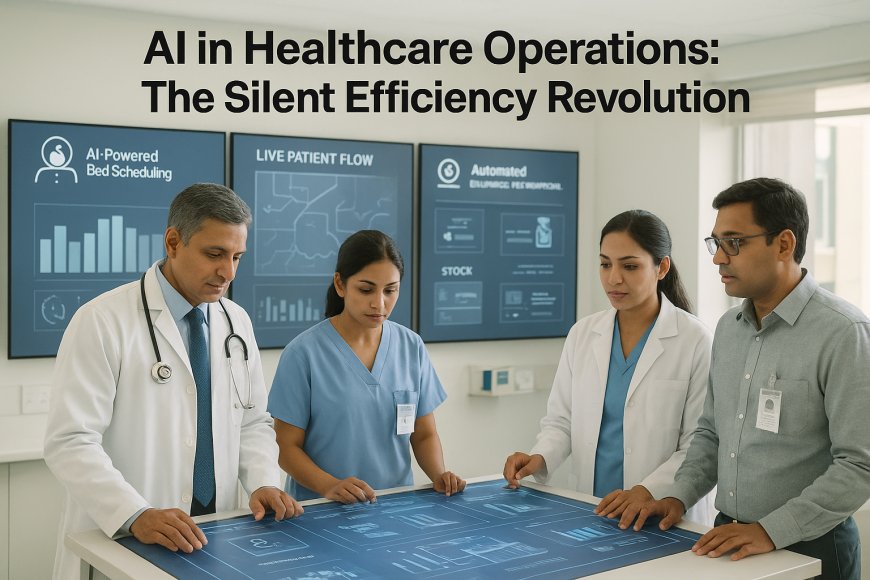
When people talk about AI in healthcare, the spotlight almost always falls on diagnostics — AI reading radiology scans, predicting diseases, or supporting doctors in clinical decision-making. But this narrative hides a far more urgent challenge in India’s hospitals: the operational bottlenecks that slow down care long before a doctor even sees the patient.
India’s healthcare system is under immense pressure. Long queues, endless administrative paperwork, manual coordination, insurance-related delays, and unpredictable resource availability create friction at every step of a patient’s journey. These problems are not just inconveniences — they shape clinical outcomes, increase cost burdens, and deepen the gap between patient demand and hospital capacity.
This is where a quieter but more transformative shift is happening.
Across India, hospitals are increasingly deploying AI not to replace doctors, but to optimize how hospitals actually run — bed scheduling, patient flow, discharge readiness, billing and insurance pre-approvals, pharmacy stocking, and even nurse allocation. These operational systems stay behind the scenes, but they directly influence wait times, treatment timelines, and the overall experience for millions.
The real story isn’t just “AI diagnosing diseases.”
It’s AI running hospitals better — efficiently, predictively, and at scale.
The Scale of the Problem: Operational Inefficiencies Hurt Patients
India’s hospitals — both public and private — are witnessing unprecedented patient volumes. Growing populations, rising lifestyle diseases, and more people seeking formal care have all contributed to daily footfalls that many facilities were never designed to handle.
This surge exposes long-standing systemic gaps:
• Bed shortages and misallocation
Patients often wait hours — sometimes days — because bed availability is tracked manually or updated infrequently. A mismatch between admissions, discharges, and cleaning cycles leads to unnecessary delays that could be avoided with real-time visibility.
• Insurance approvals that slow down treatment
Cashless insurance processes require verification, documentation, and approvals. When done manually, these steps create bottlenecks that delay admissions and discharge planning. In high-volume settings, even minor delays compound into major backlogs.
• Pharmacy stock-outs and supply uncertainty
Essential medicines and consumables frequently run out because procurement is based on historical patterns or manual forecasting. This directly affects patient care and pushes families toward costlier alternatives outside the hospital.
• Administrative burden on staff
Hospital administrators and frontline teams spend 40–60% of their time on coordination, paperwork, scheduling, and resolving process bottlenecks. This leaves fewer hours for quality oversight, patient engagement, and operational improvements.
• The real impact: longer queues, higher costs, and poorer patient experience
Every operational delay adds friction:
- longer waiting times at OPDs and emergency units
- delayed diagnostics and treatment cycles
- unnecessary extensions in hospital stay
- higher out-of-pocket expenses
- overworked nurses and staff
- frustrated patients and caregivers
Operational inefficiency isn’t just a management problem — it directly affects clinical outcomes and the quality of care.
Where AI Fits In: The New Hospital Operating System
While AI in healthcare is often associated with medical imaging or diagnostics, its most transformative role may be behind the scenes. Modern hospitals are increasingly functioning like large-scale logistics hubs — thousands of moving parts, unpredictable variations, and high stakes. AI is emerging as the “new operating system” that keeps this complexity running smoothly.
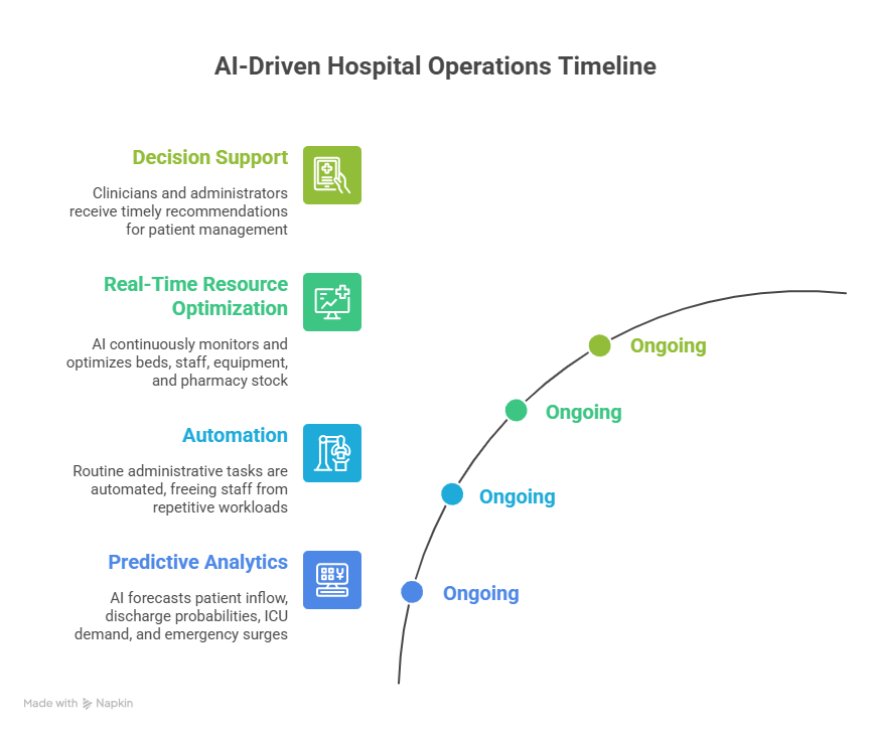
Here’s how AI augments day-to-day hospital operations:
- Predictive Analytics: AI models analyze historical patient data, seasonal trends, disease patterns, and real-time inputs to forecast patient inflow, discharge probabilities, ICU demand, and emergency surges.
- Automation: Routine administrative tasks — from form processing to follow-up reminders — can now be automated, freeing staff from repetitive workloads.
- Real-Time Resource Optimization: AI continuously monitors beds, staff availability, equipment usage, pharmacy stock, and insurance queues to recommend the most efficient allocation.
- Decision Support: Clinicians and administrators receive timely recommendations — such as when to expedite a discharge, reroute a patient, reorder medicines, or allocate staff.
Together, these systems form a quiet but powerful layer of digital intelligence that reduces friction, prevents delays, and helps hospitals function more like coordinated, high-efficiency networks.
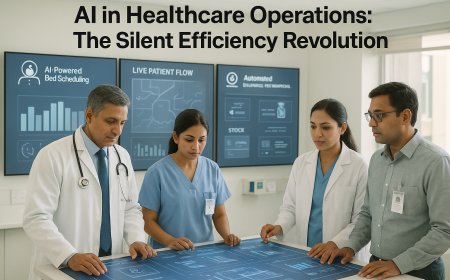
AI-Powered Bed Scheduling & Patient Flow
Bed management is one of the most critical and chaotic tasks in any hospital. A single delay in discharge or a sudden spike in ER admissions can create a domino effect across departments. AI is now stepping in to stabilize this complexity.
- Forecasts admissions, discharges, and emergency spikes: Machine learning models analyze real-time data to predict when beds will free up and when demand will surge.
- Reduces “bed bottlenecks”: Instead of waiting for manual coordination, AI gives administrators an hourly snapshot of bed availability across wards and ICUs.
- Smart allocation based on severity: Systems can prioritize beds for critical cases while optimizing transfers for stable patients.
- Proven impact: Early deployments in leading hospitals report a 20–30% faster patient movement, thanks to better discharge planning and proactive bed turnover.
Impact:
- Dramatically shorter ER wait times
- Higher ICU efficiency
- Faster triaging during peak hours
- A smoother, more predictable flow of patients across departments
AI essentially turns bed management from a reactive, manual process into a proactive and data-driven one.
Automated Insurance Pre-Approvals
Insurance authorization is often one of the biggest bottlenecks in patient care. Hours can be lost waiting for documents to be processed or clarifications to be sent. AI is now eliminating this friction at scale.
- Auto-extracts data from reports: AI scans admission notes, lab results, imaging summaries, and consultant remarks to fill insurer-required fields instantly.
- Predicts approval likelihood: Based on historical approval patterns, AI highlights potential red flags early, allowing staff to correct or provide additional documentation.
- Cuts back-and-forth communication: With structured, pre-validated submissions, insurers receive complete information in the first attempt.
- From hours to minutes: Many AI-enabled hospitals see insurance pre-approval times drop from 2–6 hours to under 10 minutes.
Impact:
- Patients start treatment sooner
- Staff spend far less time on paperwork
- Fewer errors and queries from insurers
- Smoother discharge processes for cashless patients
Insurance workflows, once a major pain point, become a streamlined function powered by automation.
AI-Driven Pharmacy & Inventory Optimization
Behind every smooth hospital experience is a reliable pharmacy and supply chain — but many Indian hospitals still struggle with unpredictable medicine demand, manual stock checks, and sudden shortages. AI is transforming this traditionally reactive function into a proactive, data-driven operation.
AI systems can forecast medicine demand weeks in advance by analyzing seasonal disease patterns, historical prescription trends, and even local outbreak indicators. This helps hospitals prepare for dengue season, flu waves, or sudden spikes in emergency cases.
By predicting what will be needed — and when — hospitals can:
- Avoid stock-outs of critical drugs, ensuring uninterrupted treatment
- Automate reordering thresholds, reducing the burden on pharmacy staff
- Optimize inventory levels, cutting down unnecessary overstocking
- Lower holding costs by 10–25%, a major savings for cash-strapped institutions
Impact: Patients get timely access to the medicines they need, while hospitals run smoother and waste less.
The Tech Behind It: Quiet Infrastructure AI
Unlike eye-catching diagnostic AI tools, operational AI works behind the scenes — more like an invisible operating system for hospitals.
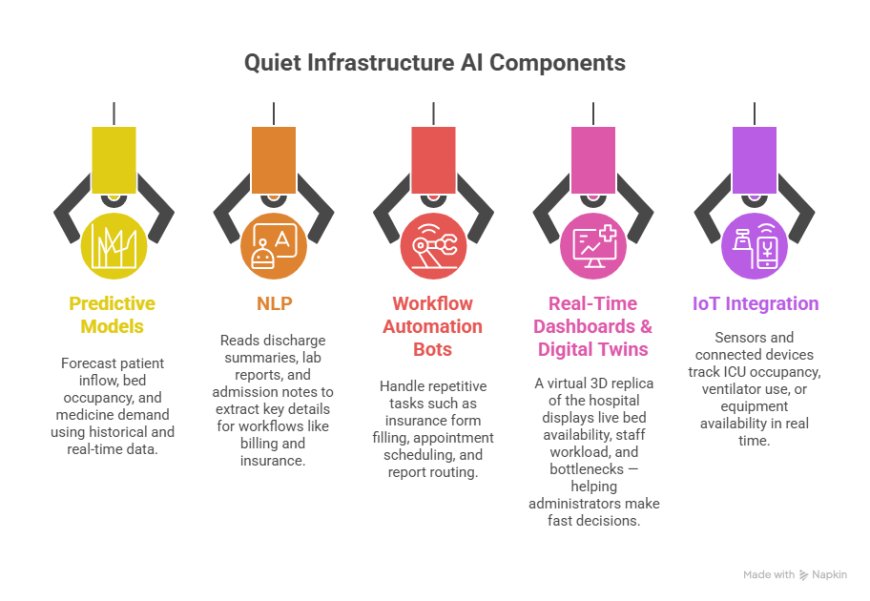
Here’s the tech powering this shift, explained simply:
- Predictive Models:
Forecast patient inflow, bed occupancy, and medicine demand using historical and real-time data. - NLP (Natural Language Processing):
Reads discharge summaries, lab reports, and admission notes to extract key details for workflows like billing and insurance. - Workflow Automation Bots:
Handle repetitive tasks such as insurance form filling, appointment scheduling, and report routing. - Real-Time Dashboards & Digital Twins:
A virtual 3D replica of the hospital displays live bed availability, staff workload, and bottlenecks — helping administrators make fast decisions. - IoT Integration with Medical Devices:
Sensors and connected devices track ICU occupancy, ventilator use, or equipment availability in real time.
These layers combine to create a quiet but powerful AI backbone, improving efficiency without disrupting daily hospital operations.
Benefits for Hospitals, Staff, and Patients
When operational AI becomes part of a hospital’s workflow, the entire ecosystem benefits — from administrators to nurses to patients.
For Patients
- Shorter queues and waiting times during admission, tests, and discharge
- Higher availability of medicines, beds, and services
- More predictable and transparent care journeys
For Staff
- Less administrative burden and fewer repetitive tasks
- Better coordination between departments like triage, pharmacy, radiology, and billing
- More time for direct patient interaction, improving care quality
For Hospitals
- Lower operational and inventory costs
- Reduced manual errors from documentation or scheduling
- Optimized use of critical resources like ICU beds and emergency services
- Improved patient satisfaction scores and faster turnaround time
Challenges & Risks
While AI-driven healthcare operations are promising, adoption is not without friction. Several structural, technical, and organisational hurdles need to be addressed for meaningful impact.
Data Quality Issues in Hospital Systems
Most hospital information systems in India still suffer from incomplete records, inconsistent data entry formats, and fragmented workflows. AI models depend heavily on clean, structured data — without it, predictions become unreliable. Many hospitals still use paper-based or partially digitised logs, making integration difficult.
Integration with Legacy Hospital Information Systems (HIS)
Existing HIS platforms were not designed for AI-era requirements. Connecting new AI layers to old systems often leads to interoperability challenges, file format conflicts, and workflow disruptions. Upgrading or rebuilding these systems requires investment and technical support that many hospitals lack.
Need for Staff Training
Doctors, nurses, and administrators must learn how to interpret AI recommendations and adapt their workflows. Without proper training, staff may mistrust or underutilise AI insights, limiting the value of the system. Change management becomes as important as the technology itself.
Privacy & Regulatory Compliance
Health data is highly sensitive. Hospitals must comply with emerging data protection standards, ensure secure data storage, and avoid over-collection of patient information. As digital health regulations evolve, institutions must upgrade their processes to remain compliant.
Cost Barrier for Smaller Institutions
Large private hospitals can adopt AI more easily, but smaller clinics and rural hospitals may find upfront costs prohibitive. This may widen the technology gap unless affordable, scalable AI platforms become available.
AI as the Backbone of India’s Healthcare Scale-Up
India’s healthcare system is undergoing a digital transformation — and operational AI is set to become the invisible engine powering its growth.
ABDM, e-Health Records & the Rise of Digital Infrastructure
With the Ayushman Bharat Digital Mission (ABDM), national health IDs, and interoperable electronic health records, India is creating the foundation needed for AI-driven operations. As data becomes more structured and universally accessible, hospitals will be able to run far more efficient, predictive, and automated workflows.
AI-Enabled “Command Centers” Will Become Standard
Hospitals worldwide are deploying centralised operational command centers — and India is heading in the same direction. These AI-powered hubs monitor bed occupancy, patient flow, diagnostics load, pharmacy status, and emergency spikes in real time, enabling faster decisions across the entire facility.
The Shift: From Human-Heavy Processes → Intelligent Workflows
The future hospital is not defined by more staff or more paperwork — but by smarter, interconnected systems. AI will handle scheduling, alerts, document extraction, triage support, inventory planning, and administrative tasks, allowing staff to focus on patient care instead of coordination.
AI in Operations Is No Longer Optional
As patient volumes surge and workforce shortages grow, hospitals cannot scale with traditional administrative processes. AI-driven operations are the only viable path to delivering scalable, affordable, and equitable healthcare at national scale.
In short: AI in healthcare operations won't just support India’s healthcare expansion — it will define it.
Conclusion
India’s healthcare challenges are no longer limited to clinical shortages — they stem equally from operational chaos that slows down treatment, overwhelms staff, and strains patient experience. While AI in diagnostics gets the spotlight, it is the quiet revolution in hospital operations that holds the key to unlocking true efficiency at scale.
From automating insurance pre-approvals to predicting bed availability, streamlining pharmacy inventory, and giving hospitals real-time operational visibility, AI is becoming the invisible engine that keeps India’s healthcare system moving. As digital health infrastructure like ABDM matures, operational AI will evolve from a “nice-to-have” to the backbone of modern care delivery.
The future is clear: hospitals that embrace AI-driven workflows will deliver faster, smoother, and more equitable care. For a nation treating millions every day, AI in operations isn’t just innovation — it’s necessity.
What's Your Reaction?
 Like
0
Like
0
 Dislike
0
Dislike
0
 Love
0
Love
0
 Funny
0
Funny
0
 Angry
0
Angry
0
 Sad
0
Sad
0
 Wow
0
Wow
0