








































































































































































Digital Manufacturing and “Factory-as-a-Service
India is accelerating toward a new industrial era powered by Digital Manufacturing and Factory-as-a-Service. Learn how cloud factories, automation, and AI are reshaping production.

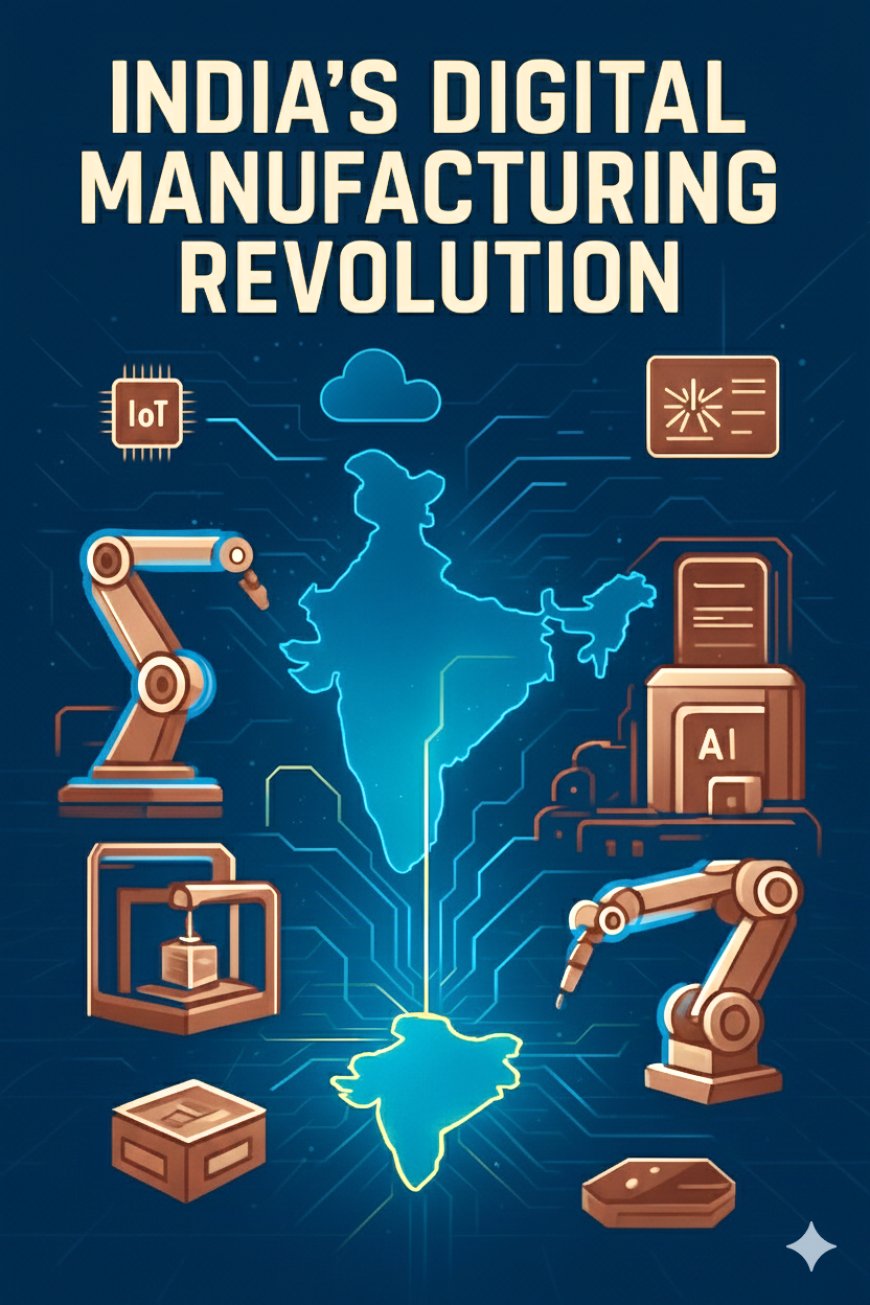
India’s manufacturing landscape is undergoing a dramatic shift. For decades, production was dominated by large, capital-heavy factories where owning infrastructure was seen as the only path to scale. But in 2025, a new model is rising fast—the unbundling of manufacturing into flexible, digital, cloud-like networks.
This new model is powered by Factory-as-a-Service (FaaS), where businesses can access sophisticated manufacturing capabilities—CNC machining, 3D printing, SMT assembly, robotics cells, quality testing—without investing in land, machines, or labour teams. Instead of spending crores on capex, companies are now scaling production by simply “plugging in” to shared manufacturing capacity.
D2C brands, hardware startups, EV component makers, drone companies, medical device innovators, and SMEs are leading this shift, because for them, speed-to-market, prototyping agility, and small-batch production matter more than ownership.
And 2025 marks an inflection point: as cloud manufacturing platforms, robotics-enabled contract factories, and digital production networks mature, India is entering an era where production becomes on-demand, asset-light, and software-coordinated—the same way cloud servers transformed IT.
What Is Factory-as-a-Service?
Factory-as-a-Service (FaaS) applies the logic of the cloud to the world of physical products. Instead of building your own factory, you can rent the exact manufacturing capacity you need, for the duration you need it, with full visibility into cost, quality, and timelines.
In this model, businesses get on-demand access to:
- CNC machining for metal/plastic components
- 3D printing farms for rapid prototyping and low-volume runs
- SMT (Surface Mount Technology) lines for electronics assembly
- Robotics and automation cells for precision tasks
- Testing + quality labs for certification and durability checks
- Micro-factories optimized for small-batch, high-variation production
The backend is powered by digital technologies such as:
- IoT-enabled dashboards showing machine status, uptime, and production data
- Digital twins that simulate designs before manufacturing
- Cloud-based scheduling systems that allocate capacity across partner factories
- Traceability systems that track every component from raw material to final assembly
This blend of software + shared hardware infrastructure is democratizing manufacturing, allowing early-stage companies, product designers, and SMEs to build world-class products without waiting for funding or building plants.
FaaS makes manufacturing accessible, affordable, and infinitely scalable—exactly the way cloud computing democratized access to servers and computing power.
The Digital Manufacturing Stack
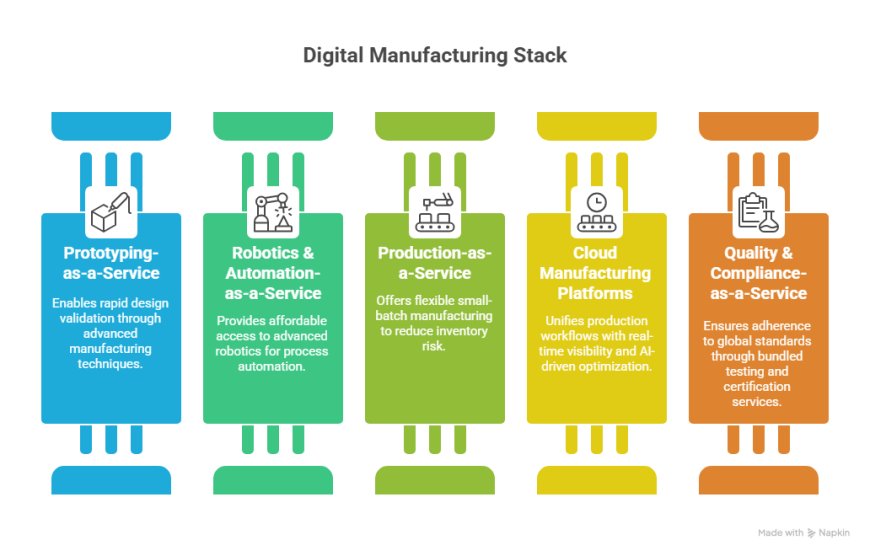
a) Prototyping-as-a-Service
Prototyping-as-a-Service enables startups and SMEs to turn ideas into physical products without owning equipment. Using 3D printing, CNC machining, sheet-metal fabrication, laser cutting, and molding services, companies can rapidly validate designs at a fraction of historical costs. Instant quoting tools allow teams to upload a CAD file and get pricing, feasibility checks, and manufacturability feedback within minutes. This dramatically reduces development cycles—from months to days—creating faster innovation loops.
b) Robotics & Automation-as-a-Service
Robotics-as-a-Service (RaaS) is making advanced robotics accessible to small companies that previously couldn’t afford them. Pick-and-place robots, conveyor systems, AI-powered vision inspection, and automated quality control can now be rented monthly—just like software. This eliminates upfront Capex and allows SMEs to automate repetitive processes, improve precision, and manage labor shortages. Robotics rental models also include maintenance, upgrades, and monitoring, removing the complexity typically associated with automation.
c) Production-as-a-Service
Production-as-a-Service enables small-batch manufacturing for D2C brands, hardware startups, and niche product makers. Instead of committing to large minimum order quantities, companies can start with batches of 100 units and scale up to 5,000 or 10,000 as demand grows. This flexibility reduces inventory risk and accelerates market entry. It’s particularly powerful for consumer electronics, accessories, household products, and automotive add-ons where product iterations are frequent. With FaaS, businesses pay only for consumed capacity—not unused factory hours.
d) Cloud Manufacturing Platforms
Cloud manufacturing platforms unify the entire production workflow into a digital dashboard. These platforms offer real-time visibility into machine availability, inventory levels, quality reports, downtime analytics, and delivery timelines. Digital twins simulate production runs to optimize efficiency, while AI-based schedulers assign tasks to the right machines, preventing bottlenecks. Integrated QC workflows allow brands to approve batches remotely, cutting delays and travel time.
e) Quality & Compliance-as-a-Service (New Point Added)
A fast-growing layer of the manufacturing stack is Quality & Compliance-as-a-Service. With increasingly strict global export standards, startups need ISO certifications, safety tests, and compliance documentation. FaaS providers now bundle testing labs, certifications, durability checks, and regulatory paperwork into the service. This helps young brands meet BIS, CE, FCC, and RoHS standards without setting up expensive in-house labs—making global expansion smoother and more affordable.
Why Digital Manufacturing Is Taking Off in India
Digital manufacturing is scaling at record speed in India, driven by a mix of economic, technological, and market forces:
• D2C Explosion Across Categories
The rise of direct-to-consumer brands in electronics, smart wearables, home appliances, fitness devices, toys, mobility accessories, and beauty tech has created enormous demand for small-batch, fast-turnaround manufacturing. These brands need rapid prototyping, frequent model updates, and flexible production—exactly what digital manufacturing offers.
• SMEs Avoiding Capex-Heavy Factory Models
Traditional manufacturing requires crores in Capex for machinery, land, tooling, and labor. Digital manufacturing removes the barrier by offering pay-per-use access. This frees SMEs from debt, long-term commitments, and operational overheads, allowing them to focus on design, branding, and sales while outsourcing the heavy lifting.
• India’s Electronics Manufacturing Push + PLI Incentives
Government policies such as Production Linked Incentive (PLI) schemes for electronics, semiconductors, telecom equipment, and batteries are supercharging domestic manufacturing. Factory-as-a-Service providers are aligning themselves with these incentives, creating shared infrastructure that companies can tap into without building it themselves.
• Global Supply Chain Diversification (“China+1”)
Global brands are increasingly shifting production to India as part of their China+1 strategy. Digital, flexible, and cloud-connected contract manufacturers enable foreign companies to prototype, test, and scale products quickly in India. This is boosting local ecosystem quality, enabling SME participation, and creating a global market for Indian manufacturing capabilities.
Key Sectors Adopting FaaS
a) Consumer Electronics & Wearables
Consumer electronics brands and wearable startups are some of the biggest adopters of FaaS. They use digital factories for rapid prototyping, PCB assembly, micro-assembly, and enclosure manufacturing. With access to SMT lines, testing stations, and precise calibration tools, they can iterate designs in days instead of months — a huge advantage in a fast-moving market.
b) Automotive & EV Startups
EV and automotive innovators rely on FaaS for on-demand production of battery enclosures, wiring harnesses, brackets, thermal components, and prototype assemblies. Instead of investing crores in tooling, they scale part production as needed, enabling faster design cycles and market entry for new EV models.
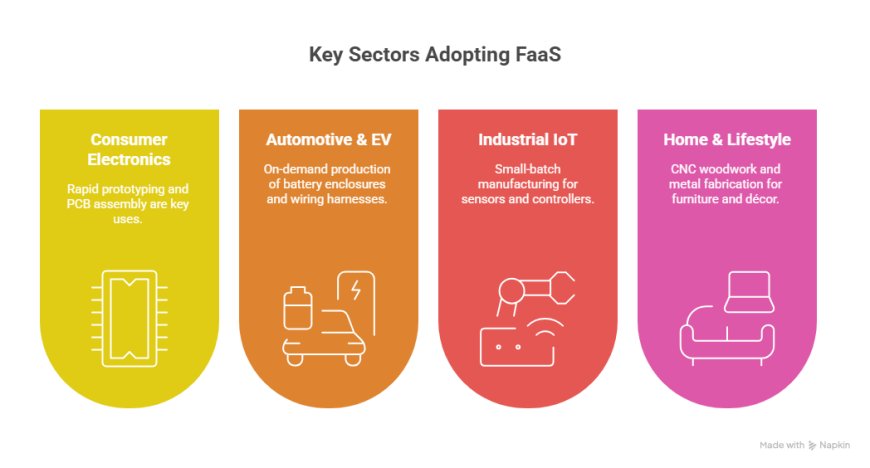
c) Industrial IoT & Hardware Startups
IoT hardware companies benefit from small-batch manufacturing for sensors, controllers, and rugged enclosures. Digital factories offer flexible PCB production, assembly, and real-time quality validation — ideal for startups that need to refine their product through multiple field tests before going full scale.
d) Home & Lifestyle D2C Brands
D2C brands in furniture, décor, kitchenware, and home accessories are moving production to digital factories where CNC woodwork, metal fabrication, and finishing lines are available on demand. This reduces inventory risk and supports a “produce as orders come in” model.
How Factory-as-a-Service Helps Startups & D2C Brands
Low Capex → Lower Risk
Startups avoid the heavy upfront investment associated with owning machines, molds, and manufacturing units. FaaS converts fixed Capex into flexible Opex, allowing founders to allocate capital to marketing, R&D, or growth instead of equipment.
Faster Time-to-Market
Digital workflows, instant quoting, and rapid tooling reduce development cycles dramatically. New product ideas move from design → prototype → production in weeks, not quarters.
Ability to Test Demand Before Scaling
Instead of producing 5,000 units upfront, brands can start with batches of 50–200 units. If the product succeeds, they can quickly scale production; if not, they pivot without losses.
Access to Advanced Robotics & Quality Systems
Through FaaS partners, even small brands get access to high-end robotics, automated inspection systems, and industry-grade quality assurance — capabilities that were once reserved for large manufacturers.
Supply Chain Resilience via Distributed Manufacturing
By breaking away from single-factory dependency, brands can produce across multiple digital factories. This ensures faster delivery, lower logistics costs, and continuity during disruptions.
The Role of Robotics, Automation & AI
Robotics, automation, and AI sit at the core of India’s Factory-as-a-Service revolution. They enable precision manufacturing, faster production cycles, and lower defects—without requiring businesses to invest in expensive machines.
Robot-as-a-Service (RaaS) enables precision at scale
Manufacturers can now rent industrial robots—pick-and-place arms, automated screwdrivers, welding bots, and vision-guided robots—on a subscription basis. This gives SMEs and hardware startups access to world-class production capabilities with minimal upfront cost.
AI-powered quality inspection replaces manual QC
Computer vision systems scan products for defects at the micro-level—missing components, soldering issues, surface flaws, alignment errors—ensuring consistent output. AI reduces human error and improves reliability for small-batch manufacturing.
Predictive maintenance improves uptime
Connected machines use IoT sensors to detect vibration, temperature spikes, or wear-and-tear in real time. Instead of breakdowns halting production, predictive alerts ensure maintenance happens just in time—critical for rented factory lines.
Computer vision enables zero-defect manufacturing
High-speed imaging combined with AI logic flags defects instantly on assembly lines. This boosts yield, cuts rework, and ensures D2C brands maintain top-tier quality regardless of batch size.
Platforms & Startups Powering India’s FaaS Revolution
A new wave of digital manufacturing platforms and contract factories is making scalable, flexible production accessible to D2C brands, hardware startups, and SMEs across India.
Digital manufacturing platforms providing instant quoting
These platforms let businesses upload CAD files, get automated cost estimates, and book production slots instantly. Real-time dashboards show production status, material requirements, and delivery timelines—just like cloud computing for factories.
Contract factories specializing in electronics, metal, plastics
Specialized factories offer capacity on demand—SMT lines for electronics, metal fabrication shops, injection moulding units, sheet-metal workshops, and precision machining centers. Startups can scale production without owning any of these facilities.
Robotics-as-a-service providers enabling automated assembly
RaaS companies help contract factories set up robotic assembly lines, inspection systems, and packaging automation. This brings enterprise-grade automation to even small-town factories.
Cloud-native supply chain platforms linking SMEs and manufacturers
Platforms act as intermediaries that connect hardware brands with certified contract manufacturers, logistics services, and component suppliers. This creates a “plug-and-produce” ecosystem where brands can launch products with unprecedented speed.
Challenges Slowing Down Adoption
Despite its immense potential, Factory-as-a-Service still faces several adoption roadblocks in India:
Need for Standardization Across Factories
Most contract factories operate with different tooling formats, material grades, machine interfaces, and QC processes.
Without common standards, switching between providers becomes difficult, slowing down the scalability of FaaS platforms.
India needs interoperable manufacturing protocols similar to how cloud computing follows uniform APIs.
Skill Gaps in Robotics & Automation
While demand for automated manufacturing is rising, many factories—especially in Tier 2/3 cities—lack workers trained in robotics, PLCs, vision systems, and industrial IoT.
This creates bottlenecks in setting up automated lines and maintaining advanced machines offered under FaaS.
Trust & Quality Concerns Among First-Time Users
SMEs and early-stage hardware startups often hesitate to outsource manufacturing due to fear of inconsistent quality, IP leakage, or delays.
Building trust requires transparent dashboards, digital QC reports, and contractual SLAs—something still evolving in India’s fragmented manufacturing ecosystem.
Limited Industrial Cloud Adoption
A large portion of Indian factories still operate offline or semi-digitally.
Lack of cloud-based MES (Manufacturing Execution Systems), inventory tools, and IoT sensors restricts the real-time visibility required for smooth FaaS workflows.
Until digital maturity improves, FaaS platforms will struggle to offer seamless “plug-and-play” experiences.
The Future: India as a Distributed Manufacturing Hub
The next decade will redefine India’s manufacturing landscape through a distributed, cloud-powered model.
FaaS Turning India Into the “Cloud Kitchen” Equivalent for Manufacturing
Just as cloud kitchens allow entrepreneurs to launch brands without owning restaurants, FaaS enables product companies to scale without building factories.
Multiple brands can share the same robotic assembly lines, machines, and tooling—driving massive efficiency gains.
Micro-Factories in Tier 2/3 Cities Using Low-Cost Robotics
Affordable cobots, modular 3D printers, and compact CNC units are making it possible to set up micro-factories anywhere.
This democratizes manufacturing and brings production closer to demand clusters—reducing logistics costs and boosting local employment.
Digital Twins Enabling Remote Production Management
Founders and product managers will soon monitor, control, and optimize production from laptops:
· virtual factory simulations
· predictive quality checks
· AI-generated workflow adjustments
Digital twins will make remote manufacturing as simple as managing cloud servers.
India Becoming a Global Hub for Small-Batch, High-Mix Manufacturing
As global brands diversify away from China, India’s flexibility, large talent pool, and FaaS infrastructure position it perfectly to lead small-batch, customized production.
From wearables to IoT devices to D2C hardware, India is on track to become the world’s distributed manufacturing powerhouse—powered by asset-light, digital-first factories.
Conclusion
Digital Manufacturing and Factory-as-a-Service (FaaS) signal one of the biggest shifts India’s industrial ecosystem has seen in decades. The old model—where only large companies with deep pockets could innovate—has been disrupted by cloud-led, robotics-enabled, and on-demand production networks.
FaaS is unlocking manufacturing for millions of SMEs, D2C brands, and hardware innovators who can now build, prototype, and scale without owning expensive factories. This shift dramatically reduces Capex barriers, accelerates product launches, and strengthens India's ability to compete globally.
As digital factories become mainstream—powered by automation, AI, and distributed micro-manufacturing—India is set to become a global hub for small-batch, high-mix, innovation-led production. The businesses that win this new era will be the ones that adopt digital-first, asset-light manufacturing models and leverage FaaS to move faster, test more ideas, and scale with confidence.
What's Your Reaction?
 Like
0
Like
0
 Dislike
0
Dislike
0
 Love
0
Love
0
 Funny
0
Funny
0
 Angry
0
Angry
0
 Sad
0
Sad
0
 Wow
0
Wow
0