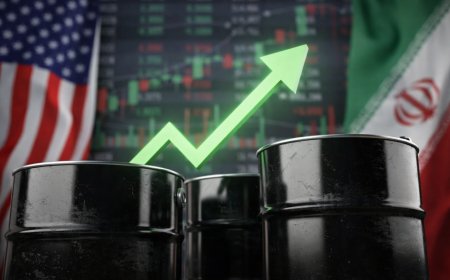
Markets rarely move in isolation. Every surge in demand, every pricing correction, and every contraction reflects deeper economic forces shaping incentives and constraints. Businesses operate within these forces, whether expanding during confidence-driven cycles or retrenching when uncertainty spreads. The economy does not merely influence markets; it forms the structure within which strategies succeed or fail.
Economic Conditions as the Foundation of Market Behaviour
Economic expansion does more than increase output. It reshapes confidence, alters spending patterns, and shifts corporate risk appetite. When households feel secure about their income and employment, discretionary spending tends to broaden. Companies respond by expanding production, increasing hiring, and allocating capital to growth initiatives. Expansion periods often reward innovation and calculated risk-taking.
Economic slowdowns, however, compress decision-making timelines. Liquidity becomes central. Firms prioritise efficiency over scale and reassess debt exposure. Market contraction is rarely uniform; some industries adjust gradually while others experience an abrupt decline. Businesses that recognise early signs of deceleration often preserve stability more effectively than those reacting after performance indicators deteriorate.
Interest Rates and Capital Flow Signals
Interest rate movements provide a clear transmission mechanism between macroeconomic policy and market behaviour. Rising borrowing costs restrict expansion financed through debt and narrow acceptable investment margins. Lower rates, conversely, ease access to capital and can stimulate expansion plans.
Monitoring Prime and Discount Benchmarks
Businesses often monitor benchmark lending rates, including prime and discount rates, to gauge financing conditions. These benchmarks influence borrowing costs for operations, acquisitions, and infrastructure projects. Close observation of capital conditions helps organisations anticipate funding constraints before they fully materialise.
Supply and Demand Across Business Cycles
Supply and demand dynamics shift noticeably across economic phases. During growth periods, rising incomes increase consumption. If supply struggles to adjust at the same pace, price pressures emerge. Inflation under these circumstances may reflect capacity strain rather than structural weakness.
During contraction phases, the imbalance reverses. Reduced demand creates inventory surpluses, placing pressure on margins. Companies may lower prices, reduce output, or streamline production. Understanding where the economy sits within the broader cycle expansion, peak, contraction, or recovery provides context for interpreting market signals accurately.
Strategic Adjustments by Cycle Phase
Growth cycles encourage investment in innovation and capacity expansion. Contraction cycles shift attention to cost control and cash flow management. Businesses that align operational decisions with cycle positioning often maintain greater resilience.
Inflation and Cost Management Pressures
Inflation directly influences procurement, labour expenses, and logistics costs. Rising input prices compress margins unless offset by operational efficiency or pricing adjustments. The strategic dilemma involves balancing margin preservation with demand sensitivity.
Pricing Discipline During Inflation
Passing higher costs entirely to consumers may weaken demand. Absorbing costs reduces profitability. Many organisations implement phased or flexible pricing structures to manage inflationary effects while preserving customer relationships.
Operational Responses Beyond Pricing
Cost management extends beyond pricing adjustments. Diversifying suppliers, renegotiating contracts, and improving process efficiency can reduce exposure to input volatility. Anticipatory planning often mitigates the shock of sudden cost escalation.
Labour Market Dynamics and Consumer Demand
Employment conditions strongly influence purchasing behaviour. Low unemployment tends to strengthen wages, increasing household spending capacity. This can reinforce demand across retail and service sectors while simultaneously raising payroll costs for employers.
Higher unemployment shifts the equation. Consumer demand may soften, but wage pressure often moderates. Businesses must evaluate workforce expansion, automation, and productivity initiatives within this shifting environment.
Balancing Workforce Investment
Hiring decisions require alignment between projected demand and economic stability. Overexpansion during fragile periods can strain resources, while underinvestment during recovery may limit competitiveness. Labour data, therefore, becomes integral to operational planning.
Global Integration and External Pressures
Domestic markets are increasingly shaped by global forces. Exchange rate fluctuations influence export competitiveness and import costs. Trade policies and geopolitical developments reshape supply chains that businesses have built over extended periods.
Currency Volatility and Profitability
Currency depreciation can improve export pricing but raise the cost of imported inputs. Appreciation produces the opposite effect. Firms operating across borders must assess these fluctuations continuously.
Diversification as Risk Management
Diversifying suppliers, markets, and revenue streams has evolved from a growth strategy into a resilience strategy. Systemic disruptions have demonstrated how interconnected financial systems, trade networks, and logistics channels can amplify shocks.
Economic Insight in Strategic Planning
Modern strategic planning integrates economic indicators alongside operational metrics. Growth trends, inflation trajectories, borrowing conditions, and consumer sentiment collectively inform capital allocation and inventory positioning.
Anticipating Rather Than Reacting
Companies relying solely on historical performance often misread turning points. Economic context provides perspective beyond quarterly fluctuations, allowing firms to anticipate shifts rather than react belatedly.
Interpreting Signals in Transitional Phases
Transitional periods within the business cycle require nuanced interpretation. Late expansion may conceal emerging constraints, while early recovery can mask improving fundamentals. Strategic calibration depends on distinguishing cyclical movement from structural change.
Markets ultimately reflect broader economic realities. Pricing decisions, production levels, hiring strategies, and geographic expansion plans all rest on assumptions about economic direction. Organisations that incorporate macroeconomic insight into decision-making frameworks narrow uncertainty and improve resilience. While uncertainty remains inherent, clarity improves when market movements are understood as expressions of deeper economic currents rather than isolated events.

 Like
0
Like
0
 Dislike
0
Dislike
0
 Love
0
Love
0
 Funny
0
Funny
0
 Angry
0
Angry
0
 Sad
0
Sad
0
 Wow
0
Wow
0