How Email WhatsApp and SMS Marketing Drive Business Growth
Learn how combining email, WhatsApp, and SMS marketing creates powerful customer communication strategies that boost sales and retention.
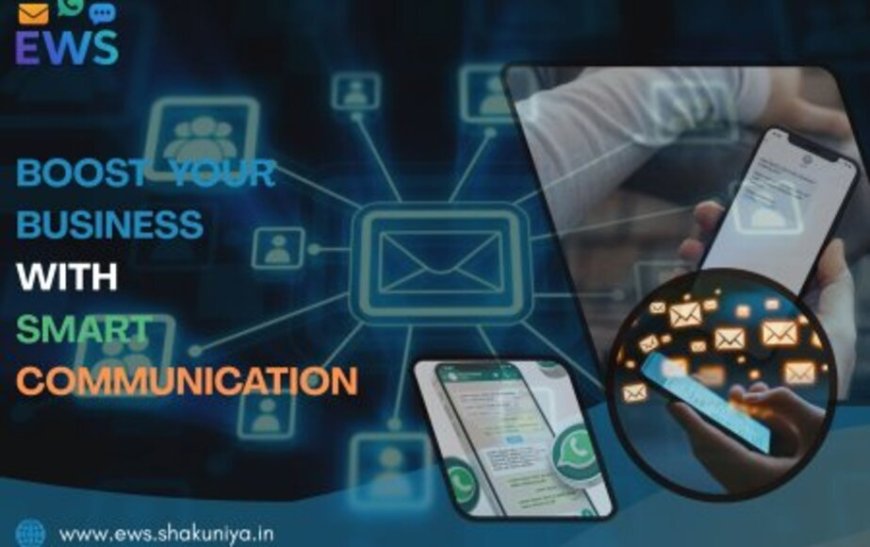
Email, WhatsApp, and SMS remain the three most direct owned channels available to businesses. Each operates under different psychological, technical, and regulatory conditions. Treating them as interchangeable tools often leads to diminished engagement rather than growth.
Email: Depth, Data, and Deliberation
Email continues to function as the infrastructure layer of digital communication. Unlike instant messaging platforms, it accommodates length, structured design, embedded media, and layered calls to action. That capacity makes it particularly suited for lifecycle marketing onboarding sequences, product education, renewal reminders, and post-purchase engagement.
Its real strength lies in segmentation. Behavioural triggers such as browsing history, cart abandonment, prior purchases, or subscription tier allow marketers to tailor messages beyond broad demographic targeting. Modern CRM integrations enable dynamic content blocks, meaning two subscribers may receive the same campaign but see entirely different product recommendations.
However, inbox competition is severe. Promotional tabs, spam filtering algorithms, and user fatigue have reshaped open-rate benchmarks across industries. Deliverability now depends as much on sender reputation and list hygiene as on creative execution. Purchased lists, once a common practice, now damage domain credibility and reduce long-term effectiveness.
Email is therefore less about immediacy and more about structured engagement over time. It supports narrative, something neither SMS nor WhatsApp comfortably allows at scale.
WhatsApp: Proximity and Conversational Friction
WhatsApp operates under a different behavioural contract. Messages arrive in the same interface as personal conversations with friends and family. That proximity creates both opportunity and risk.
Unlike email, WhatsApp interactions feel conversational. Customers can respond instantly, ask questions, or escalate concerns. Businesses increasingly deploy automated chat flows to manage high volumes of queries, appointment confirmations, shipping updates, payment reminders, and lead qualification are common use cases.
Yet the intimacy of the channel changes tolerance thresholds. Promotional overreach triggers faster opt-outs than in email. Regulatory frameworks in multiple jurisdictions now require explicit opt-in consent and restrict unsolicited messaging.
Where WhatsApp excels is in mid-funnel engagement. A user who has already expressed interest by clicking an ad, filling out a form, or initiating contact is more likely to respond within this conversational environment. The platform shortens response cycles, which can materially influence conversion timelines in sectors such as education, real estate, healthcare bookings, and financial services.
However, it is less suited for long-form persuasion. Detailed product comparisons, whitepapers, or policy explanations do not translate naturally into chat-based exchanges.
SMS: Immediacy Without Infrastructure
SMS predates modern app ecosystems yet retains relevance because of one structural advantage: it does not depend on internet connectivity or app installation. Delivery rates remain high, and messages typically appear directly on a device’s lock screen.
For time-sensitive communication, flash sales, one-time passwords, emergency alerts, and last-minute schedule changes, SMS offers unmatched immediacy. Character limitations force brevity, which often increases clarity.
The constraint, however, is precisely that brevity. Complex offers, brand storytelling, or multi-product campaigns struggle within a 160-character limit. Rich media requires SMS or embedded links, both of which introduce friction.
Compliance considerations are also stricter in many markets. Opt-in consent, timing restrictions, and data protection standards must be observed. Violations do not merely reduce engagement; they carry financial penalties in some jurisdictions.
SMS works best when urgency is the defining variable. It is less effective for layered persuasion or educational messaging.
Channel Misalignment: Where Strategy Fails
Many organisations underperform not because they lack tools but because they misalign the channel with intent.
Sending detailed brochures through SMS fragments the message. Broadcasting discount codes repeatedly on WhatsApp erodes trust. Delivering urgent service alerts exclusively through email delays response time.
Channel choice should reflect the user's state:
Exploration stage → Email nurtures curiosity and provides context.
Consideration stage → WhatsApp enables clarification and dialogue.
Decision urgency → SMS prompts immediate action.
When used sequentially rather than simultaneously, the channels complement rather than compete with one another.
Integration Without Noise
The strongest marketing ecosystems do not rely on a single platform. They coordinate them.
A customer might receive a welcome email after signing up. If unopened, a shorter reminder may follow. If the user engages but does not complete a transaction, a WhatsApp message can address potential objections. If a limited-time incentive expires within hours, SMS can deliver the final prompt.
The difference between integration and overcommunication lies in data discipline. Frequency caps, behavioural triggers, and suppression rules prevent overlap. Without those controls, multi-channel outreach becomes duplication.
Importantly, metrics should not be evaluated in isolation. A lower email open rate does not imply failure if subsequent WhatsApp engagement improves conversion efficiency. Cross-channel attribution provides a more accurate performance assessment than single-channel dashboards.
Choosing Based on Customer Behaviour, Not Preference
There is no universally “best” channel. The appropriate medium depends on sector, audience demographics, regulatory environment, and purchase cycle length.
Subscription-based services often rely heavily on email lifecycle flows.
Appointment-driven industries benefit from WhatsApp confirmations and reminders.
Retail flash promotions still perform strongly through SMS alerts.
The strategic decision should begin with observed behaviour: where customers respond, how quickly they act, and what level of detail they require before committing.
In an environment defined by shrinking attention spans and rising acquisition costs, channel precision matters more than message volume. Businesses that treat email, WhatsApp, and SMS as distinct behavioural environments rather than interchangeable broadcast tools tend to see stronger retention and more predictable engagement patterns.
What's Your Reaction?
 Like
0
Like
0
 Dislike
0
Dislike
0
 Love
0
Love
0
 Funny
0
Funny
0
 Angry
0
Angry
0
 Sad
0
Sad
0
 Wow
0
Wow
0

Kulshreshth Chaturvedi
I’m Kulshreshth Chaturvedi, a writer and author specialising in creative writing, blogs, and professional content. I write on literature, ideas, and modern perspectives, focusing on clear, engaging, and well-structured storytelling. My goal is to create meaningful writing that inspires readers, builds connections, and delivers real value through words.