The Essential Guide to Skills Development : Why Continuous Learning is Your Career's Future
Unlock your career potential with our essential guide to skills development. Learn the difference between Hard, Soft, and Digital Skills, and discover the best methods for continuous learning to thrive in a changing job market
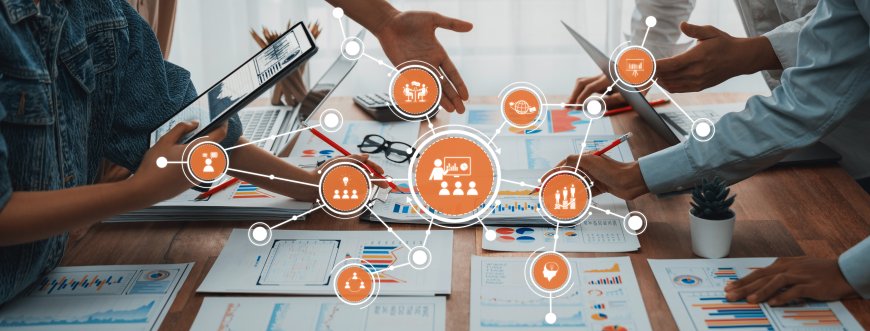
Skills development is no longer a strategic option—it is the critical, ongoing process of acquiring new abilities, enhancing existing talents, and developing competencies to navigate an increasingly dynamic and unpredictable world. We are in an era defined by the accelerating pace of technological advancements (particularly the rise of AI and automation), globalisation, and fundamental shifts in labour demands, which collectively create a growing 'skills gap'.
Investing strategically in skills development is therefore essential for personal success, ensuring organisational resilience, and fueling sustainable economic growth. At its core, this intentional process is about future-proofing both the individual and the enterprise by bridging the divide between current capabilities and the complex requirements of tomorrow’s tasks and roles.
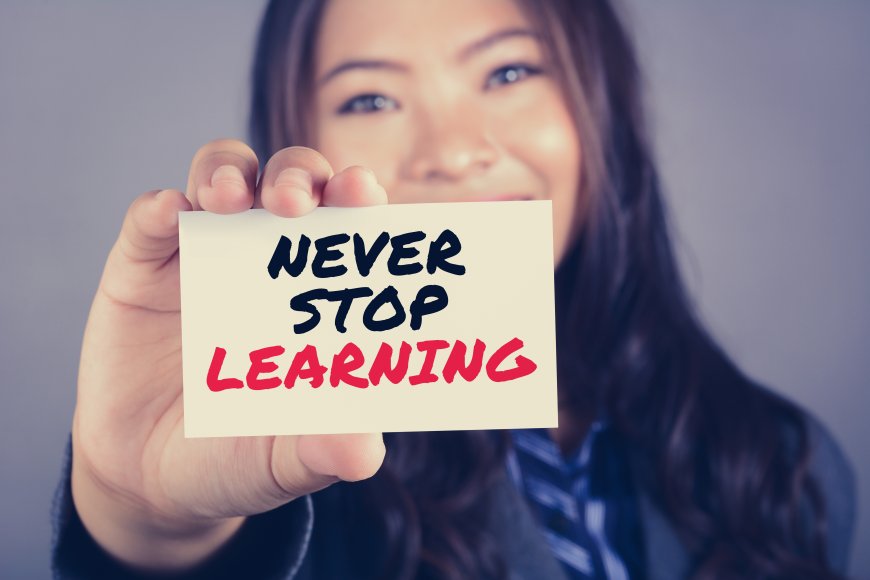
Defining Skills Development
At its core, skills development is about bridging the gap between an individual's current capabilities and the requirements of future tasks or roles. This process intentionally targets a diverse spectrum of abilities:
-
Hard Skills: These are the technical, teachable competencies needed to perform a specific job—think coding, foreign language proficiency, data analysis, or financial accounting.
-
Soft Skills: Often referred to as socio-emotional or interpersonal skills, these are personal attributes that facilitate effective interaction and collaboration. Communication, leadership, adaptability, critical thinking, and emotional intelligence fall into this category.
-
Cognitive Skills: These encompass the mental horsepower required for understanding complex information, reasoning, and strategic decision-making.
-
Digital Skills: The foundational ability to safely and effectively use technology to access, manage, and create information in the modern world.
A balanced approach to development involves nurturing all these areas to create a well-rounded professional capable of thriving in various environments.
The Toolkit for Acquisition: Methods of Skills Development
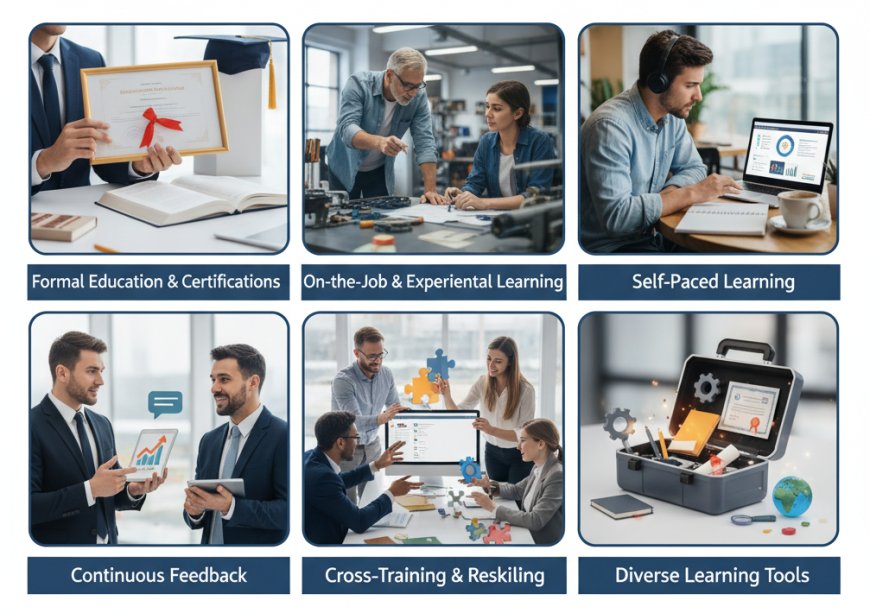
There is no single path to skills acquisition. Effective development leverages a variety of methods tailored to individual needs and learning styles:
-
Formal Education & Certifications: Structured learning environments, including academic degrees, vocational training, and professional certifications, provide foundational knowledge and recognised credentials.
-
On-the-Job & Experiential Learning: Learning by doing remains one of the most powerful methods. Job shadowing, apprenticeships, mentorship programs, and real-world projects translate theory into practical expertise.
-
Self-Paced Learning: The digital age offers unprecedented access to information. Online courses (MOOCs), e-books, podcasts, and digital tutorials enable highly flexible, self-directed learning.
-
Continuous Feedback: Regular self-assessment and constructive feedback from managers or peers are vital for identifying blind spots and tracking progress.
-
Cross-Training & Reskilling: Organisations use these methods to build versatile teams, training employees for new roles (reskilling) or to perform tasks outside their primary function (cross-skilling).
The Transformative Benefits of a Skilled Workforce. Investing time and resources into skills development yields substantial returns for both individuals and organisations.
For Individuals:

-
Enhanced Employability: Possessing in-demand skills makes individuals more competitive in the job market, securing better opportunities and career advancement.
-
Increased Earning Potential: Specialised and sought-after skills often correlate directly with higher salaries and greater financial stability.
-
Personal Fulfilment: Mastering a new skill boosts self-confidence, improves job satisfaction, and provides a sense of achievement and ongoing personal growth.
-
Adaptability: A commitment to lifelong learning ensures individuals remain relevant and resilient in the face of industry disruptions and economic shifts.
For Organisations and the Economy:
-
Improved Performance and Productivity: A highly skilled workforce is more efficient, innovative, and better equipped to solve complex problems, directly enhancing the organisation's bottom line.
-
Talent Retention: Companies that invest in employee development programs signal a commitment to their workforce, leading to higher morale and lower attrition rates.
-
Economic Competitiveness: At a national level, a skilled labour force drives innovation, attracts investment, and fosters sustainable economic growth and social progress.
Skills development is not a one-time event but a continuous journey—a lifelong endeavour that empowers individuals to reach their full potential and enables organisations to thrive in an ever-evolving landscape. By embracing a culture of learning and strategically acquiring new competencies, individuals and economies can build a future that is resilient, prosperous, and adaptable.
In this continuous journey, the ultimate skill is the capacity to learn new skills. It is this meta-competency—the agility and curiosity for lifelong learning—that turns uncertainty into opportunity. Therefore, let the commitment to development be the cornerstone of personal ambition and the foundation of organisational strategy for sustained success in the decades to come.
What's Your Reaction?
 Like
0
Like
0
 Dislike
0
Dislike
0
 Love
0
Love
0
 Funny
0
Funny
0
 Angry
0
Angry
0
 Sad
0
Sad
0
 Wow
0
Wow
0