The Rise of Quick Commerce and Changing Consumer Behaviour
India’s retail landscape is undergoing a major transformation. What was once dominated by neighbourhood kirana stores is now being reshaped by the rapid growth of e-commerce and, more importantly, quick commerce. Platforms like Flipkart and Paytm have played a key role in accelerating digital adoption, but the real disruption comes from 10–30 minute delivery models.
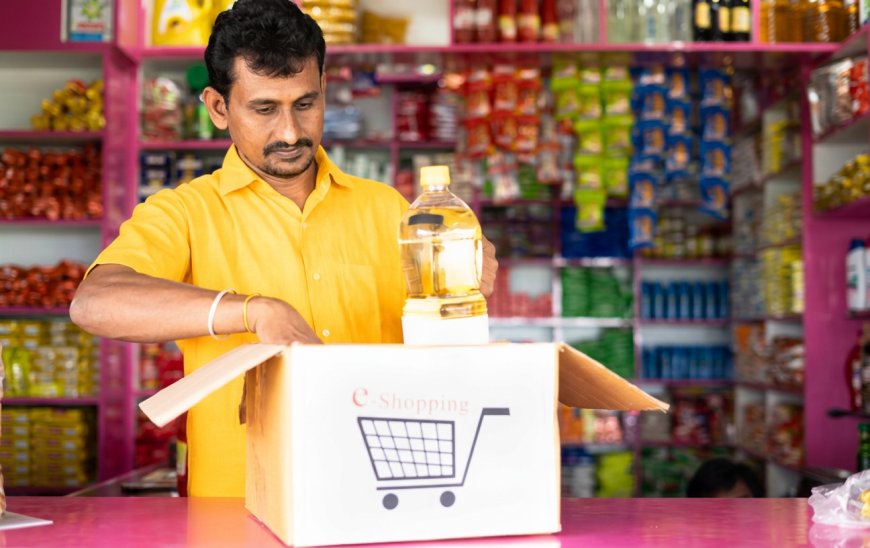
Consumers today prefer speed, convenience, and digital payments, which have significantly shifted buying behaviour. Everyday essentials, from groceries to household items, are now ordered online instead of purchased from nearby stores. This shift is not just urban; it is gradually reaching smaller towns as well.
Pressure on Kirana Stores
The impact on traditional kirana stores has been severe. According to retail associations, around two lakh kirana shops have shut down in the past year, largely due to declining footfall and rising competition from online platforms.
Kirana stores traditionally relied on:
- Daily repeat customers
- Small-ticket purchases
- Personal relationships and credit systems
However, quick commerce platforms are targeting exactly these strengths with deep discounts, faster delivery, and wider product availability. As a result, small retailers are finding it increasingly difficult to compete on price and convenience.
The consequences extend beyond business losses. Kirana stores are a crucial part of India’s informal economy, providing employment and supporting local supply chains. Their decline has direct implications for rural livelihoods and small-town economies.
Margin War and Market Imbalance
At the heart of this conflict lies a margin war. E-commerce companies, backed by strong funding, can afford to operate on thin margins or even losses to acquire customers. In contrast, kirana stores operate on limited capital and narrow profit margins, making it difficult to sustain price competition.
Retail bodies have raised concerns about predatory pricing and unfair competition, urging regulators to step in. The debate is no longer just about business—it is about market fairness and long-term sustainability.
Digital Solutions: The Role of ONDC
Amid these challenges, technology is also emerging as a solution. The government-backed Open Network for Digital Commerce (ONDC) aims to level the playing field by enabling small retailers to go digital without depending on large platforms.
ONDC allows kirana stores to:
- List products online
- Reach nearby digital customers
- Compete without heavy commissions
The platform has already expanded across hundreds of cities, bringing thousands of small sellers into the digital ecosystem. This initiative represents a critical step toward inclusive e-commerce, where small businesses are not left behind.
The Idea of ‘Bharat Kirana’
Retail associations have also proposed a “Bharat Kirana” platform, a system that would connect local stores directly with customers through a unified digital network. The idea is to combine local trust with digital convenience, ensuring that kirana stores remain relevant in a rapidly evolving market.
If implemented effectively, such a model could:
- Strengthen local supply chains
- Boost small retailer income
- Reduce dependency on large platforms
A Hybrid Future for Indian Retail
India’s retail future is unlikely to be a battle where one side wins completely. Instead, it is evolving into a hybrid ecosystem where both kirana stores and e-commerce platforms coexist.
Kirana stores still have unique advantages:
- Customer trust and relationships
- Proximity and instant availability
- Flexible credit options
E-commerce platforms, on the other hand, offer:
- Speed and convenience
- Wide product selection
- Data-driven personalisation
The real opportunity lies in combining these strengths.
Sources: Bain & Company, ONDC official website, PIB, Reuters, Mint, NDTV Profit, The New Indian Express.

 Like
0
Like
0
 Dislike
0
Dislike
0
 Love
0
Love
0
 Funny
0
Funny
0
 Angry
0
Angry
0
 Sad
0
Sad
0
 Wow
0
Wow
0