
Key Corporate Strategies for Achieving Business Goals
Discover key corporate strategies that help businesses achieve goals through digital transformation, capital allocation, leadership, and operational efficiency.
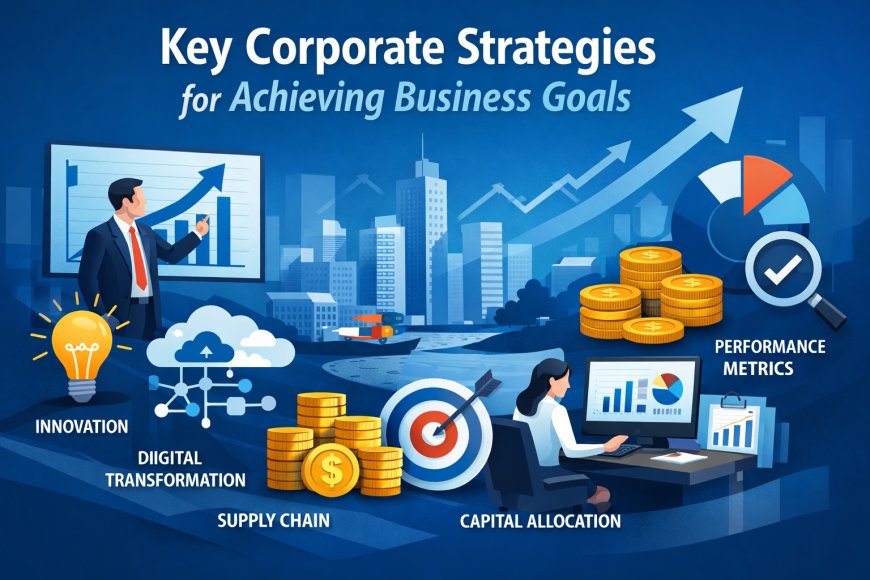
Corporate leaders across major economies are increasingly relying on structured Corporate Strategies to meet financial targets, protect margins, and respond to shifting market conditions. Reporting from The Hindu, Reuters, and Bloomberg shows that companies are prioritising capital allocation discipline, digital expansion, and supply chain restructuring as they seek predictable outcomes in uncertain environments.
Data from earnings reports and official corporate disclosures between 2023 and early 2026 indicate that firms adopting clearly defined Corporate Strategies have been able to maintain stronger revenue stability, even during inflation cycles and global demand slowdowns. Executives across sectors, including technology, manufacturing, and energy, have pointed to targeted investments and operational restructuring as key decision tools.
Capital Allocation Emerges as a Core Corporate Strategy Priority
One of the most visible Corporate Strategies has been disciplined capital deployment. Indian conglomerate Reliance Industries announced investment plans exceeding ₹75,000 crore during its August 2023 annual general meeting, focusing on renewable energy, telecom expansion, and retail infrastructure. Chairman Mukesh Ambani stated that investments were aligned with “long-term value creation and energy transition,” according to coverage in Business Standard.
Internationally, Microsoft disclosed in April 2024 that it would invest billions of dollars in artificial intelligence infrastructure and cloud expansion. Chief Executive Satya Nadella said AI investment would define the next phase of enterprise productivity and revenue growth, reflecting corporate strategies built around emerging technology leadership.
Capital discipline has also included cost optimization. Reports by Financial Times documented how multinational companies restructured operational budgets in 2023 to protect margins amid rising interest rates, with operating efficiency becoming central to boardroom planning.
Digital Transformation Strengthens Corporate Strategies' Execution
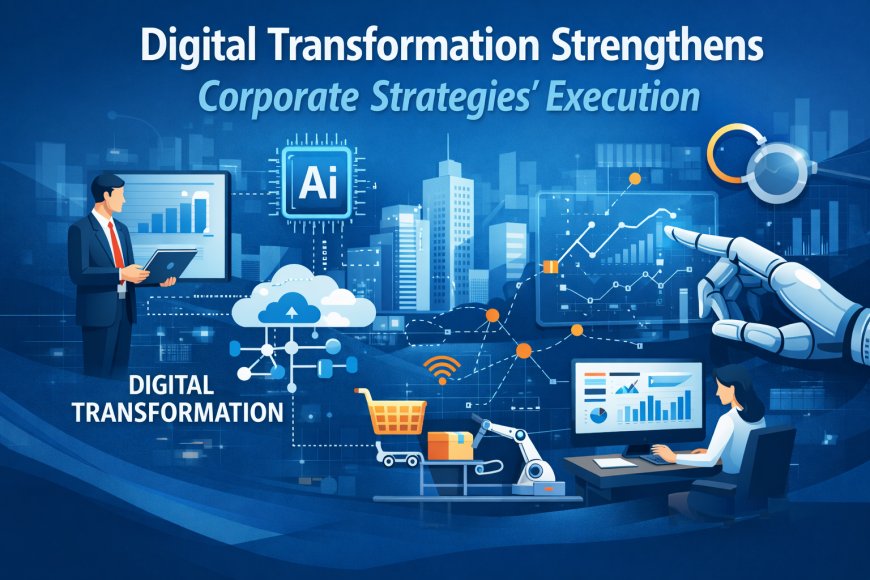
Technology adoption remains one of the most effective corporate strategies to achieve measurable results. Indian IT firms, including Infosys and Tata Consultancy Services, increased investments in automation, artificial intelligence, and cloud computing despite global IT spending moderation in 2024.
Infosys reported revenue of $18.5 billion for FY2024 and emphasized digital services as a primary growth driver, according to earnings coverage by Economic Times. CEO Salil Parekh stated that enterprise clients were prioritizing automation to reduce operational costs and improve efficiency.
Cloud computing adoption has played a central role in corporate strategies globally. Microsoft reported that its Azure cloud revenue grew by more than 30% year-on-year in multiple quarterly disclosures during 2024. This expansion reflected sustained enterprise demand for digital infrastructure solutions.
Companies have also used digital platforms to improve customer engagement. Retail businesses expanded e-commerce channels and data analytics capabilities, allowing them to optimize pricing and inventory management more precisely.
Supply Chain Diversification Becomes a Critical Component of Corporate Strategies
Supply chain restructuring emerged as a defining corporate strategy decision after disruptions caused by the COVID-19 pandemic and geopolitical tensions. Coverage in LiveMint and Reuters showed companies shifting manufacturing locations to reduce dependence on single markets.
Apple expanded its production footprint in India between 2023 and 2025, assembling iPhones locally through contract manufacturers. Government data cited by Business Standard showed that India’s electronics exports crossed $29 billion in FY2024, reflecting the success of policy-supported manufacturing diversification.
Government incentives also played a role. India’s Production-Linked Incentive (PLI) scheme allocated more than ₹1.97 lakh crore across sectors, including electronics, pharmaceuticals, and automobiles. These measures encouraged firms to align corporate strategies with domestic manufacturing expansion.
Executives said diversification improves operational stability and reduces exposure to geopolitical risk. Companies with flexible supply chains reported fewer disruptions and faster recovery times during global logistics constraints.
Financial Discipline and Performance Metrics Shape Corporate Strategies
Financial transparency and performance monitoring remain central to Corporate Strategies' execution. Corporate earnings reports increasingly emphasize metrics such as operating margin, return on capital employed (ROCE), and free cash flow.
According to analysis published by CNBC, companies prioritizing profitability over rapid expansion were able to sustain investor confidence during interest rate hikes in 2023 and 2024. Firms reduced debt exposure and strengthened balance sheets to maintain stability.
Technology firms, including Infosys and TCS, reported operating margins above 20% in multiple quarterly results between 2023 and 2025. These figures reflected careful cost management and targeted client acquisition strategies.
Public disclosures also highlighted share buybacks as part of corporate strategies to improve shareholder returns. Several companies used buybacks to optimize capital structure and signal confidence in long-term performance.
Leadership Decisions and Strategic Policy Alignment Influence Corporate Strategies
Executive leadership has played a decisive role in implementing corporate strategies aligned with national policy and economic trends. Governments introduced industrial incentives, infrastructure spending, and digital economy programs, influencing corporate planning.
India’s infrastructure investment increased significantly after the Union Budget 2024 allocated ₹11.1 lakh crore toward capital expenditure. This policy environment encouraged private firms to expand logistics, transportation, and construction capacity.
Reports from BBC and Bloomberg showed that companies responding quickly to policy changes achieved stronger revenue momentum. Strategic alignment with government initiatives enabled faster approvals and reduced operational risk.
Leadership communication also shaped investor perception. CEOs providing clear guidance on investment timelines, earnings projections, and strategic direction helped maintain market stability during volatile periods.
Market Impact and Future Direction of Corporate Strategies
Financial markets have responded positively to companies demonstrating disciplined corporate strategies. Stock performance data between 2023 and 2025 showed that firms with consistent earnings growth and strong balance sheets attracted sustained institutional investment.
Indian benchmark indices, including the Nifty 50, recorded multiple record highs during this period, reflecting investor confidence in corporate earnings resilience. Analysts cited structured capital deployment and digital transformation as major contributors.
Global investment trends also reflected strategic realignment. Bloomberg reported increased corporate spending on artificial intelligence, renewable energy, and automation as companies repositioned for long-term growth opportunities.
Executives continue to emphasize technology, supply chain flexibility, and financial discipline as primary corporate strategy priorities. Companies integrating operational efficiency with targeted innovation have demonstrated stronger resilience against inflation, demand volatility, and policy shifts.
Corporate disclosures suggest that organizations maintaining structured investment plans and measurable performance goals remain better positioned to sustain revenue growth, protect margins, and maintain investor confidence in evolving economic conditions.
What's Your Reaction?
 Like
0
Like
0
 Dislike
0
Dislike
0
 Love
0
Love
0
 Funny
0
Funny
0
 Angry
0
Angry
0
 Sad
0
Sad
0
 Wow
0
Wow
0

divya chawla
Author | Business & Startup Writer
Passionate about telling real stories behind business growth, entrepreneurship, and digital innovation. Focused on creating research-backed, human-centred content that highlights how ideas evolve into successful. Covers topics including startups, business strategy, creator economy, digital platforms, and emerging online opportunities.