


















































































































































































The New Era of Data Governance in India
India’s digital economy is scaling rapidly, but weak data governance, privacy concerns, and AI risks threaten long-term trust. This article explores how brands can build secure, compliant, transparent data ecosystems — and why digital trust will define India’s next market leaders.

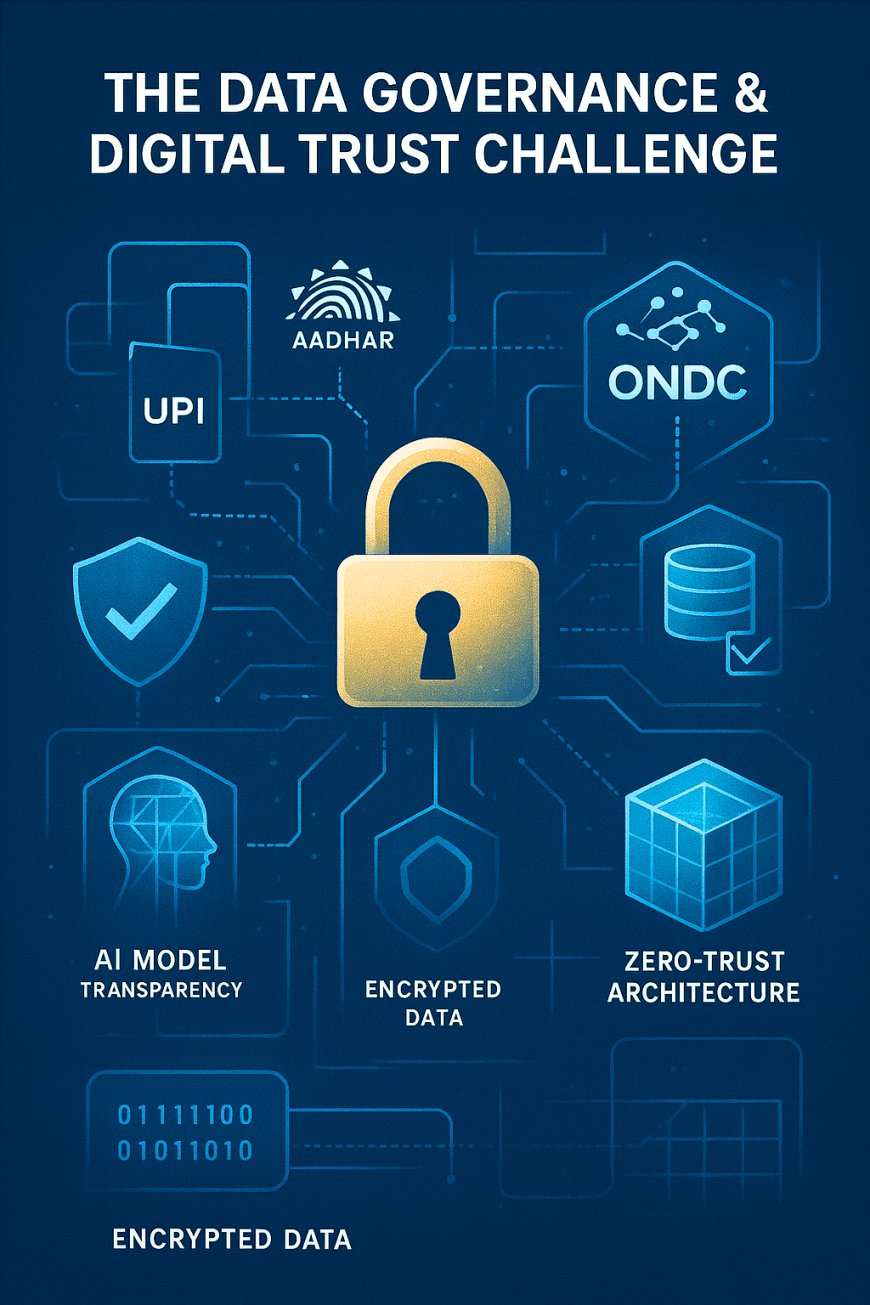
India is experiencing one of the fastest digital transformations in the world. From UPI powering 12+ billion monthly transactions to Aadhaar-enabled authentication, ONDC’s open commerce network, Account Aggregator (AA) frameworks, and DigiLocker-based digital credentialing—India is building a digital public infrastructure unmatched globally.
But with this rapid digitisation comes an equally rapid rise in data vulnerabilities.
As millions of Indians generate financial, identity, behavioural, and transactional footprints every day, concerns around data privacy, misuse, opaque algorithms, and unethical profiling are surging. Consumers are no longer passive participants—they are more aware, more vocal, and more demanding about how brands and platforms use their data.
Trust has emerged as the ultimate differentiator.
At the same time, India’s regulators—MeitY, RBI, NPCI—are pushing for secure, transparent, and auditable data ecosystems. With the DPDP Act, upcoming Digital India Act, and sector-specific compliance norms, organisations are under pressure to prove they can handle data responsibly.
Thesis:
The next decade of India’s digital economy will not be defined by who collects the most data, but by who manages it with integrity, security, and consent-driven transparency. Digital trust—not tech—will determine who wins consumer loyalty, regulatory confidence, and AI reliability.
The New Reality: Data Is No Longer Just an “Asset”
For years, companies treated data as gold: “collect everything, store everything, use everything.”
That era is over.
Today, data is a high-value asset AND a high-risk liability. Poor data governance increases the chances of breaches, compliance violations, loss of consumer trust, and AI model failures.
Why data now carries heavy liabilities
- Data breaches are becoming costlier—financially and reputationally.
- Regulators impose strict penalties for non-consensual use, unsafe storage, and excessive retention.
- Consumers punish bad actors by abandoning platforms that violate trust.
- AI systems break down if data quality, consent flows, and audit trails are weak.
How misuse erodes brand credibility
Even top brands have experienced backlash when consumers discovered:
- Hidden data-sharing arrangements
- Non-transparent tracking
- Confusing consent flows
- Dark patterns in app interfaces
In today’s environment, a single breach or controversy can take years to repair.
The shift: From “data maximisation” → to “data minimisation”
Businesses are being forced to rethink their data strategies:
- Collect only what is necessary
- Store only what has a purpose
- Process only with clear consent
- Share only with authorised, compliant partners
- Delete when no longer needed
Minimalism is becoming a smarter—safer—strategy than hoarding.
Global benchmarks shaping India’s direction
India’s approach to data governance is increasingly aligned with global frameworks like:
- GDPR (EU) – strict consent, rights to access/erase, heavy penalties
- Digital India Act (incoming) – platform accountability, algorithmic transparency
- DPDP Act (2023) – purpose limitation, consent rules, data fiduciary responsibilities
These frameworks signal a shift toward user rights, transparency, and auditability, pushing Indian companies to uprate their systems, policies, and technology architectures.
The Trust Gap: What Indian Consumers Are Worried About
India’s digital boom has brought convenience, but it has also created a deep, widening trust deficit. Consumers today are far more aware, informed, and sceptical about how companies collect and use their personal data. As digital journeys expand—from payments to healthcare to education—so does anxiety around misuse.
A. Apps Asking for Unnecessary Permissions
Consumers increasingly question why:
· A food-delivery app wants access to contacts
· A shopping app requests precise location 24/7
· A gaming app demands microphone or storage access
This mismatch between service needs and permission requests fuels distrust. Users are beginning to interpret over-permissioning as intentional data harvesting, not functionality.
B. Rising Fears Around Data Misuse
Indian users are now vocal about specific, real-world risks:
· Data selling: Apps sharing behavioural or personal data with advertisers and brokers
· Location tracking: Continuous monitoring without clear justification
· Aadhaar/identity misuse: Identity theft via leaked documents or weak KYC processes
· Financial fraud: OTP thefts, phishing, account takeovers triggered by data leaks
With digital fraud growing alongside digital services, Indians no longer assume platforms are secure by default.
C. How Breaches Have Reshaped Expectations (Generic Cases)
Several high-profile data leaks—across telcos, fintechs, edtechs, and job portals—have shifted consumer behaviour:
· Users uninstall apps that don’t clearly explain data practices
· They avoid giving permissions unless absolutely necessary
· They gravitate toward platforms with transparency badges, privacy pages, and visible trust signals
A single breach can permanently damage a brand’s reputation, regardless of its size or funding.
D. The Rise of the “Privacy-First” Indian Consumer
Privacy, once considered a Western concept, is now mainstream in India. The modern user:
· Reads privacy policies (even if briefly)
· Opts out of marketing communication
· Prefers apps with privacy modes or “lite” versions
· Values brands that explicitly promise no data selling
This shift marks a fundamental evolution: trust has become a precondition for digital adoption.
India’s Regulatory Push: Compliance Gets Teeth
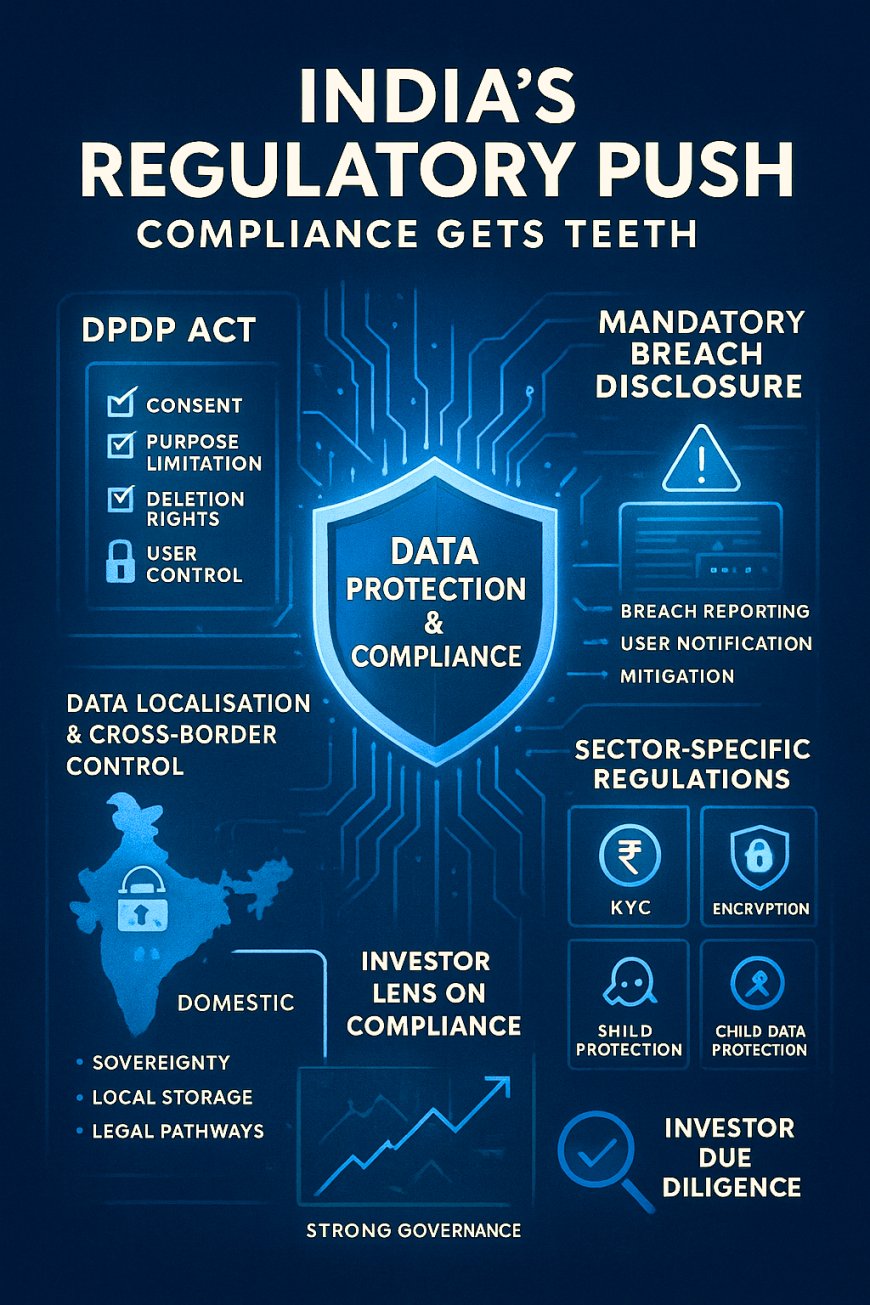
India has moved from a fragmented regulatory approach to a structured, enforceable, and increasingly stringent data governance framework. Compliance is no longer optional — it is becoming a core business function that directly influences valuation, partnerships, and customer growth.
A. DPDP Act: A New Era of Accountability
The Digital Personal Data Protection (DPDP) Act is India’s most comprehensive privacy law to date. Its implications for businesses are substantial:
· Explicit consent: Users must clearly understand what data is being collected and why.
· Purpose limitation: Data can only be used for the exact purpose stated at the time of consent.
· Revocable consent: Users can withdraw permissions at any time.
· Deletion rights: Platforms must delete user data when it’s no longer needed.
This shifts control back to the user — and forces businesses to justify every data touchpoint.
B. Mandatory Breach Disclosure
Companies are now required to:
· Report breaches promptly
· Notify affected users transparently
· Demonstrate mitigation steps
This eliminates the earlier practice of quietly burying breaches to avoid PR damage. Non-disclosure will now invite penalties.
C. Data Localisation & Cross-Border Restrictions
To strengthen sovereignty and security:
· Sensitive personal data must be stored within India
· Cross-border transfers require clear legal pathways
· Global companies must rearchitect data flows to comply
This impacts cloud architecture, vendor selection, and global data sync workflows.
D. Sector-Specific Tightening
Some industries face even stricter guardrails:
· Fintech: Strong KYC, transaction monitoring, risk scoring
· Health: Sensitive health data protection, encryption norms
· Edtech: Child data protection and restricted behavioural profiling
These rules elevate the operational burden but also protect users from irreversible harm.
E. Why Non-Compliance Now Hurts Valuations
Investors increasingly evaluate companies through a trust and compliance lens:
· Weak governance = higher regulatory risk
· Poor consent practices = future penalties
· Data leaks = reputation contagion
· Non-compliant models = lower IPO or acquisition potential
Simply put: Data governance is now directly tied to enterprise value.
Building Digital Trust: What the Best Companies Are Doing
As digital ecosystems expand, leading companies are realising a simple truth: trust is a product, not a compliance checkbox. The organisations that treat trust as a core design element — not an afterthought — are rapidly emerging as consumer favourites.
a) Clear, Human-Readable Privacy Policies
The era of 20-page legalistic privacy documents is over.
Winning brands now use:
- Simplified, jargon-free explanations
- Visual summaries (icons, diagrams, bullets)
- “What we collect & why” tables
Consumers want clarity, not complexity — and transparent communication builds credibility instantly.
b) Granular Consent Layers
Businesses are moving from blanket consent to purpose-driven, modular consent, allowing users to selectively opt in for:
- Personalisation
- Location access
- Behavioural tracking
- Marketing communication
This empowers the user — and sends a strong signal: your data, your choice.
c) Full Data Lifecycle Governance
Best-in-class companies govern data across its complete journey:
- Collection: Minimum necessary data, collected lawfully
- Storage: Encrypted, access-controlled, and decentralised systems
- Usage: Purpose-bound and auditable
- Deletion: Guaranteed user-triggered deletion pathways
This lifecycle approach reduces risk and increases accountability.
d) Zero-Trust Architecture + Role-Based Access
Zero-trust means:
- Every request must be authenticated
- Every user is verified, regardless of location
- Access is given strictly on a need-to-know basis
Combined with Role-Based Access Control (RBAC), companies minimise internal and external threats.
e) Encryption, Tokenisation & Anonymisation
Leaders in data governance employ multi-layered protection:
- End-to-end encryption for sensitive data
- Tokenisation for financial or identity markers
- Anonymisation for analytics models
This ensures that even if data is accessed, it remains unreadable or unlinkable.
f) Regular Compliance Audits & Transparency Dashboards
Externally validated audits (security, privacy, data lifecycle) ensure continuous adherence.
Some companies now offer:
- Real-time privacy dashboards
- Logs of third-party data sharing
- Status of user data requests
This builds unprecedented trust by giving consumers visibility and control.
g) Brand-Level Trust Initiatives
Forward-thinking digital-first brands are adopting:
- “Privacy Nutrition Labels”
- “Data Trust Badges”
- Public commitments to minimal data collection
These become powerful marketing and trust-building tools — signalling that safety and ethics are part of the product experience.
The AI Factor: Trustworthy AI Requires Trustworthy Data
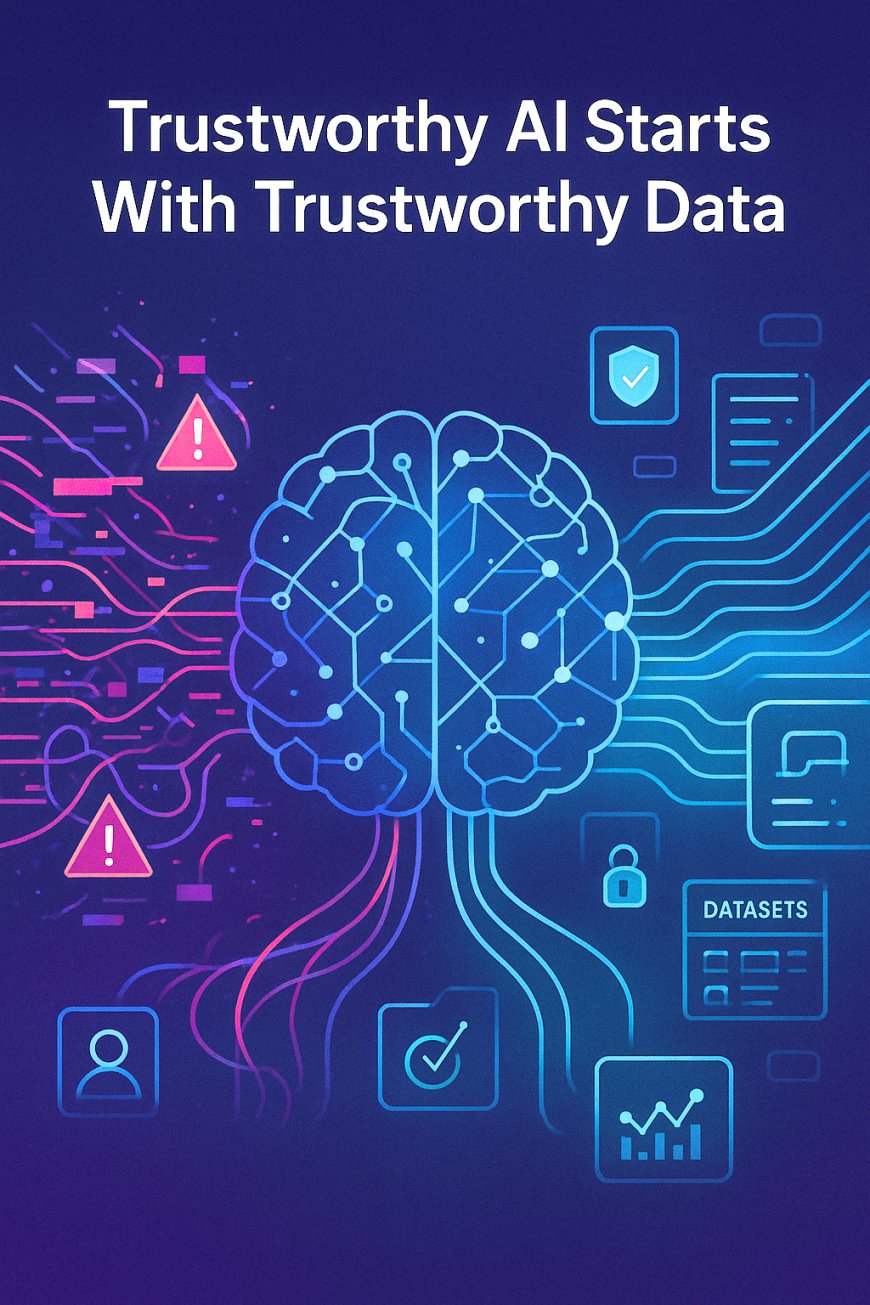
As AI becomes the engine powering personalisation, recommendations, fraud detection, and user interactions across India’s digital ecosystem, data quality, data safety, and data integrity determine whether AI helps or harms.
a) AI Amplifies Existing Data Problems
If the foundational data is:
- Biased
- Outdated
- Incomplete
- Poorly labelled
- Collected without consent
…then AI will magnify these flaws at scale.
Unclean data → inaccurate outputs
Unethical data → unethical AI
b) AI Predictions Become Unreliable When Data Governance Is Weak
Poor governance directly impacts AI reliability:
- Incorrect credit scoring
- Mispriced risk
- Faulty identity matches
- Wrong recommendations
- Security vulnerabilities
AI becomes high risk without a strong governance foundation.
c) Need for Audit Trails & Explainability
Trustworthy AI systems require:
- Full audit trails for training data
- Traceability of how each model was built
- Version control of datasets
- Ability to explain decisions, especially in regulated sectors
This is essential for compliance with DPDP and upcoming AI governance frameworks.
d) Training Data Transparency
The best companies disclose:
- Data sources
- Labeling processes
- Synthetic data usage
- Bias mitigation techniques
This protects them legally — and elevates consumer trust.
e) Guardrails Against Hallucinations & Misuse
Responsible AI involves:
- Filters for harmful outputs
- Real-time monitoring
- Human-in-loop for critical decisions
- Boundary checks for hallucinations
Especially crucial for fintech, healthtech, and edtech sectors.
f) Shift Toward Responsible AI Frameworks
Global and national pressure is pushing companies toward:
- Ethical AI playbooks
- Governance committees
- Bias testing pipelines
- Secure, privacy-preserving ML (PPML)
- Differential privacy
- Federated learning
The message is clear: there is no trustworthy AI without trustworthy data.
The Architecture of Modern Data Governance
India’s new digital economy runs on data — but only organisations with strong governance architectures will be able to protect, use, and scale it responsibly. Modern data governance is no longer an IT checklist; it’s an operational discipline woven into every function.
The Key Pillars of Strong Data Governance
1. Data Classification: Knowing What You Store
Companies must categorise data based on sensitivity:
· Public
· Internal
· Confidential
· Highly sensitive (Aadhaar, financial data, biometrics)
This helps determine protection levels, access, and usage restrictions.
2. Data Lineage: Traceability From Origin to Output
Every data point — from collection to storage to API access — must be traceable.
Data lineage answers:
· Where did this data come from?
· Who accessed it?
· How has it changed over time?
· Which models or dashboards rely on it?
This transparency is critical for audits, fraud investigation, and AI reliability.
3. Access Controls: Zero-Trust as the Default
Zero-trust architecture ensures:
· No implicit trust
· Access granted strictly on a need-to-know basis
· Multi-factor authentication
· Role-based access
· Automated revocation when employees change roles or leave
This helps prevent insider breaches — now one of India’s fastest-growing risks.
4. Quality Checks: Clean Data → Smart Decisions
If data is duplicated, outdated, or inconsistent, it weakens analytics and AI.
Modern systems deploy:
· Automated validations
· Schema checks
· Real-time anomaly detection
· Master Data Management (MDM) controls
Good data hygiene is foundational for trustworthy experiences.
5. Retention Policies: Keeping Only What You Must
The era of “store everything forever” is over.
Strong retention policies define:
· What data is required
· How long it must be stored
· When and how it should be deleted
This aligns with global frameworks like DPDP, GDPR, and Digital India Act.
6. Breach Response Playbooks: Prepared, Not Panicked
A breach isn’t just a security event — it’s a business event.
Modern playbooks include:
· Incident response teams
· Forensic analysis
· Mandatory reporting mechanisms
· User notification flows
· Post-breach audits
Brands are increasingly judged on how they respond, not just the breach itself.
How Companies Are Adopting Governance Platforms
Forward-thinking businesses are integrating:
· Centralised governance dashboards
· Automated compliance workflows
· AI-driven anomaly and policy violation alerts
· Privacy engineering toolkits (tokenisation, differential privacy, encryption)
These platforms create consistency across departments, cloud environments, and data lakes.
The Move Toward Decentralised, Privacy-Preserving Data Management
A major shift is underway:
Instead of storing raw data centrally, companies are adopting:
· Federated learning
· Privacy-enhancing computation
· Encrypted data collaboration
· On-device processing
This reduces risk while still enabling high-quality insights.
Result: Organisations can innovate rapidly — without compromising trust.
Who Will Lead India’s Digital Trust Economy?
As digital adoption deepens, trust becomes the new competitive currency. Businesses that embed privacy, transparency, and governance into their core DNA will define India’s next decade.
1. Companies With “Privacy by Design” Infrastructure
Winners are those who:
· Build products with privacy as a core feature
· Minimise data collection
· Offer granular consent
· Provide transparent user controls
These brands become the default choice for trust-conscious consumers.
2. Platforms Offering Trust, Transparency & Compliance as Differentiators
New category leaders will not just provide services — they will provide assurance.
Examples include:
· Platforms with audit logs visible to users
· Trust dashboards
· Privacy scorecards
· Secure data-sharing frameworks
Trust will be a selling point, not a footnote.
3. Fintechs & Healthtechs With Strong Data Guardrails
Sectors handling sensitive data — money, health, identity — face the highest scrutiny.
Winners in these spaces will:
· Adopt zero-trust architecture
· Use privacy-preserving AI
· Maintain real-time fraud monitoring
· Offer transparent data usage policies
These companies will attract better partnerships, regulatory goodwill, and consumer loyalty.
4. Consumer Brands That Win Loyalty With Trust-Led Marketing
A new wave of brands will differentiate through:
· Simple privacy explanations
· No hidden trackers
· Consent-based personalization
· Public commitment to not selling data
In a world full of dark patterns, clarity becomes a premium feature.
The Defining Insight
India’s data-driven future will not belong to companies that collect the most data — but to those that handle it with the highest integrity.
Businesses that build trust today will lead markets tomorrow.
What Happens to the Rest?
As India enters a trust-first digital era, companies that fail to build strong data governance frameworks will face the consequences quickly — and visibly.
Regulatory Penalties Become Business-Critical
With the DPDP Act and sector-specific guidelines becoming stricter, platforms that mishandle or misuse data will face:
- Heavy financial penalties
- Mandatory disclosures
- Investigations and operational restrictions
For high-risk sectors like fintech, healthtech, and edtech, even a minor breach can trigger major regulatory action.
Consumer Churn Accelerates
Indian consumers are no longer passive.
A single data breach or suspicious permission request can push users to uninstall an app immediately.
Platforms known for intrusive data practices will struggle to retain even loyal customers.
Partner & Platform Exits
Banks, NBFCs, insurers, hospitals, and large marketplaces increasingly demand:
- Strong data governance
- Verified security posture
- Transparent consent mechanisms
High-risk apps will be dropped from partner networks — costing them distribution, credibility, and revenue.
Loss of Investor Confidence
Investors now evaluate data governance as a core due-diligence parameter.
Startups with:
- Poor compliance
- Weak governance
- Ambiguous data policies
…face downrounds, funding delays, or complete rejections.
The Collapse of “Growth at Any Cost” Models
For years, companies scaled aggressively by collecting limitless data and pushing hyper-personalisation.
That era is over.
The new norm:
Sustainable growth requires responsible data practices.
Long-Term Reputational Damage
Once trust is broken, recovery is slow and expensive.
Brands that mishandle user data risk:
- Reduced engagement
- Social media backlash
- Negative PR cycles
- Permanent credibility loss
In India’s competitive digital landscape, reputational damage can be fatal.
Conclusion
India is entering a new phase of digital transformation — one where data governance and trust matter more than features, growth hacks, or even technology.
Trust Is a Competitive Moat
Brands that invest early in:
- Transparent data practices
- Responsible AI
- Secure digital infrastructure
- Privacy-by-design frameworks
…will earn deep, long-term consumer loyalty.
Compliance Is Now Strategy
Compliance is no longer paperwork — it is a core product capability.
Companies that treat it as a strategic pillar will:
- Scale faster
- Attract better partners
- Win premium customers
- Raise capital more easily
Only Trusted Brands Will Scale
India’s digital economy is expanding at record speed — but the real winners will be the ones that create trust, not exploit data.
The next generation of market leaders will be defined by one principle:
Only trusted brands scale — the rest get filtered out.
What's Your Reaction?
 Like
0
Like
0
 Dislike
0
Dislike
0
 Love
0
Love
0
 Funny
0
Funny
0
 Angry
0
Angry
0
 Sad
0
Sad
0
 Wow
0
Wow
0